


빠른 제작과 다양한 마감 옵션을 제공하는 박물관 품질의 지클레이 또는 캔버스 프린트. ( 손으로 그린 그림 구매 이미지 구매)





























작품의 원본 비율을 유지하는 미리 설정된 크기 중에서 선택하세요.

특정 프레임이나 공간에 맞춰 직접 치수를 입력하실 수 있습니다. 선택하신 사이즈가 원본 이미지의 비율과 일치하지 않을 경우, 작품을 크롭(자르기)하거나 이미지를 대칭 또는 단색 채우기로 확장하여 제작합니다. 제작 시작 전, 최종 확인을 위해 디지털 목업이 전송됩니다.
화면상의 미리보기는 실제 크롭이나 확장 상태를 반영하지 않으므로, 최종 구도는 오직 목업을 통해서만 정확하게 확인하실 수 있습니다.
맞춤 사이즈 제작도 가능하지만, 원본 비율을 유지하기 위해서는 사전 정의된 목록에서 치수를 선택하시는 것을 권장합니다.

Alligator Pears
복제본 크기
Georgia O'Keeffe’s “Alligator Pears,” painted in 1923, isn’t merely a depiction of fruit; it’s an immersion into the artist’s intensely personal world. This seemingly simple still life—three vibrant green pears resting on a dark cloth—holds within its deceptively quiet surface layers of symbolism, technical mastery, and a profound connection to the landscape of New Mexico. O'Keeffe, already establishing her distinctive style at this point in her career, moved beyond straightforward representation, favoring instead an exploration of form, color, and texture that resonated with her own emotional experience.
The painting’s genesis lies within O’Keeffe’s deliberate choice to paint the same subject multiple times over a period of years. This repetition wasn't born out of boredom but rather as a method for dissecting and understanding the essence of the pears themselves. She meticulously observed their subtle variations in shape, color, and surface—the velvety sheen of the skin, the delicate ridges, the way light played across their curves. The dark cloth beneath them isn’t merely a backdrop; it's an active participant, its shadows intensifying the pear’s luminosity and creating a sense of depth and mystery. The use of thick, impasto brushstrokes—particularly evident in the pears themselves—adds to this tactile quality, inviting the viewer to almost feel the fruit beneath their fingertips.
“Alligator Pears” exemplifies O’Keeffe's embrace of modernism, a movement that prioritized individual expression over traditional academic styles. Early in her career, she was deeply influenced by the teachings of Arthur Wesley Dow, who advocated for a simplified approach to color and line, emphasizing harmony and personal feeling. Dow encouraged artists to “paint what they know,” and O’Keeffe took this principle to heart, focusing on the intimate details of the natural world around her—particularly the flora and fauna of New Mexico.
The painting's composition echoes principles of abstraction that were gaining traction at the time. While recognizable as pears, the forms are subtly distorted and simplified, prioritizing their visual impact over literal accuracy. This deliberate ambiguity invites interpretation, prompting viewers to project their own emotions and experiences onto the scene. The dark background further contributes to this sense of detachment from reality, drawing attention solely to the luminous subject matter.
Beyond its formal qualities, “Alligator Pears” is rich in symbolic meaning. The pears themselves have been interpreted as representations of female genitalia—a recurring motif in O’Keeffe's work. However, it’s crucial to note that O’Keeffe herself vehemently denied any intentional sexual symbolism, stating she simply found the pears “beautiful.” Nevertheless, the association persists, adding another layer of complexity to the painting’s interpretation.
The setting—a dark cloth—references the stark, arid landscapes of New Mexico, a region that would become central to O'Keeffe's artistic vision. The desert’s harsh beauty and isolation are palpable in the painting’s muted tones and dramatic contrasts. The pears, seemingly vulnerable against this backdrop, evoke themes of resilience, survival, and the delicate balance between life and death—all potent symbols within the context of the American Southwest.
“Alligator Pears” is a testament to O’Keeffe's extraordinary ability to transform ordinary subjects into profound works of art. It’s a painting that rewards close observation, inviting viewers to linger over its subtle details and contemplate its layered meanings. More than just a still life, it’s a window into the artist’s mind—a glimpse into her unique perspective on beauty, symbolism, and the enduring power of nature. Today, reproductions of this iconic piece continue to captivate audiences worldwide, solidifying O'Keeffe's place as one of America’s most influential artists.

1887 - 1986 , 미국

Explore the captivating world of Georgia O'Keeffe! Discover her groundbreaking flower paintings, New Mexico landscapes & lasting impact on American Modernism. Expert analysis and insights.
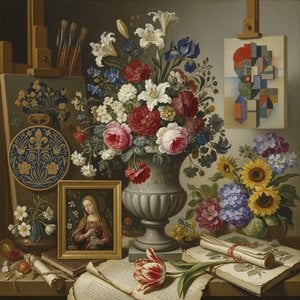
Explore the rich history of flower symbolism in Western painting! Discover how artists from the Renaissance to Modernism used blossoms to convey meaning, emotion & beauty. Learn about iconic artworks and movements.

Explore the rich history of floral painting! Discover symbolism, techniques & masterpieces from Van Huysum to O'Keeffe. Expert insights for art lovers & collectors at WahooArt.

Explore the captivating history of flower painting! Discover Dutch masters, symbolic meanings, & botanical art. Expert insights & high-quality reproductions at WahooArt.

Explore the life & work of Frank O. Salisbury, Britain's celebrated 'Painter Laureate'. Discover his masterful Victorian portraits, atmospheric realism, and captivating historical murals. A deep dive into a remarkable artistic legacy.


 미리보기
미리보기
 공유하기
공유하기 공유하기
공유하기
 상세 정보
상세 정보

 다운로드
다운로드
 유사 작품
유사 작품 X-레이
X-레이 슬라이드 쇼


 더 보기
더 보기









 유리 옵션은 110cm 미만 크기에서만 선택 가능합니다.


