
빠른 제작과 다양한 마감 옵션을 제공하는 박물관 품질의 지클레이 또는 캔버스 프린트. ( 손으로 그린 그림 구매 디지털 이미지로 전환)





























작품의 원본 비율을 유지하는 미리 설정된 크기 중에서 선택하세요.

특정 프레임이나 공간에 맞춰 직접 치수를 입력하실 수 있습니다. 선택하신 사이즈가 원본 이미지의 비율과 일치하지 않을 경우, 작품을 크롭(자르기)하거나 이미지를 대칭 또는 단색 채우기로 확장하여 제작합니다. 제작 시작 전, 최종 확인을 위해 디지털 목업이 전송됩니다.
화면상의 미리보기는 실제 크롭이나 확장 상태를 반영하지 않으므로, 최종 구도는 오직 목업을 통해서만 정확하게 확인하실 수 있습니다.
맞춤 사이즈 제작도 가능하지만, 원본 비율을 유지하기 위해서는 사전 정의된 목록에서 치수를 선택하시는 것을 권장합니다.

untitled (4494)
복제본 크기
Georges Pierre Seurat, a pivotal figure in Post-Impressionism and the originator of Pointillism, presents us with a remarkably intimate portrayal of domesticity in this untitled work (4494). While celebrated for expansive landscapes like “A Sunday on La Grande Jatte,” this painting offers a quieter, more focused exploration of everyday life – a woman absorbed in her work, rendered with a sensitivity that belies its seemingly simple subject matter.
The artwork depicts a woman seated at a table, diligently operating a sewing machine. She is not idealized; instead, she’s presented as an individual engaged in the practical realities of life. The inclusion of details such as her corset and earrings subtly allude to the societal expectations placed upon women during the late 19th century, while simultaneously emphasizing her personal presence and agency. A vase containing flowers and a potted plant introduce elements of domestic comfort, softening the industrial aspect of the sewing machine itself.
Although not as overtly Pointillist as some of his more famous creations, “untitled (4494)” demonstrably showcases Seurat’s meticulous approach to color and light. While a fully realized pointillist technique isn't present, the viewer can discern small, deliberate brushstrokes that build form and texture. This suggests an exploration of divisionism – the separation of colors into their constituent parts – which was central to his artistic philosophy. Seurat believed that applying pure hues in close proximity would allow the viewer’s eye to optically blend them, resulting in a more vibrant and luminous effect. The overall palette is muted yet harmonious, reflecting both the interior setting and the focused activity within it.
Created during Seurat's brief but profoundly influential career (1859-1891), this painting emerges from a period of significant social and technological transformation. The late 19th century witnessed accelerating industrialization, and the sewing machine was a relatively recent invention that dramatically altered domestic labor. Seurat’s decision to depict a woman utilizing this technology is particularly noteworthy; it acknowledges evolving gender roles and the impact of modernity on daily life. He dedicated himself to capturing modern life – not grand historical narratives, but rather the everyday experiences of Parisians.
“untitled (4494)” evokes a sense of quiet contemplation and focused industry. The woman’s absorbed posture suggests concentration, perhaps even a degree of independence within her domestic sphere. The painting isn't about dramatic action; it’s about the subtle poetry found in ordinary moments. It invites viewers to reflect on the labor – both physical and emotional – that underpins everyday existence. The work subtly celebrates the dignity of labor and the quiet strength of women navigating a changing world.
This artwork would be beautifully showcased in a variety of settings:
Consider pairing it with:
“untitled (4494)” is more than just a portrait; it’s a window into a moment in time, offering a glimpse of both artistic innovation and the quiet dignity of everyday life. It's a piece that rewards close observation and invites ongoing contemplation.


1859 - 1891 , 프랑스
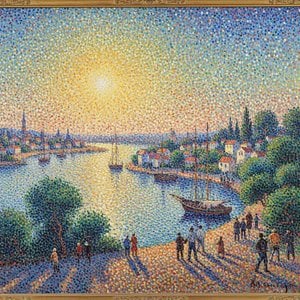
Embark on a sophisticated journey into the luminous world of Neo-Impressionism. Uncover the scientific brilliance of Pointillism, from Georges Seurat’s revolutionary color theory to the mesmerizing magic of the dot. An expert exploration for true art history enthusiasts.

Explore the scientific brilliance of Seurat and Signac. Discover how Pointillism revolutionized color through optical mixing and light, offering a profound look into the Neo-Impressionist movement for true art connoisseurs and collectors.

Explore the vibrant evolution of Post-Impressionism. From Seurat's revolutionary Pointillism to the emotional depth of masters, discover how this movement redefined modern art history through color, structure, and unparalleled creative expression.
Discover the mesmerizing world of Pointillism. Explore the revolutionary techniques of Georges Seurat, the science of optical color mixing, and the enduring legacy of Neo-Impressionism in this expert guide for classical art enthusiasts.


 미리보기
미리보기
 공유하기
공유하기 공유하기
공유하기
 상세 정보
상세 정보

 다운로드
다운로드
 유사 작품
유사 작품 X-레이
X-레이 슬라이드 쇼
 통계 정보
통계 정보

 더 보기
더 보기









 유리 옵션은 110cm 미만 크기에서만 선택 가능합니다.


