x
작품의 원본 비율을 유지하는 미리 설정된 크기 중에서 선택하세요.
특정 프레임이나 공간에 맞도록 직접 크기를 입력할 수 있습니다. 선택하신 크기가 원본 이미지의 비율과 일치하지 않는 경우, 작품을 자르거나 추가적인 손으로 그린 요소를 사용하여 그림을 확장합니다. 제작 시작 전 승인을 위해 디지털 목업을 보내드립니다.
화면 미리 보기는 실제 자르기 또는 확장을 반영하지 않습니다. 최종 구성은 목업을 통해서만 정확하게 확인하실 수 있습니다.
맞춤 크기 제작도 가능하지만, 원본 비율을 유지하기 위해 사전 정의된 목록에서 크기를 선택하시는 것을 권장합니다.
The Sideshowed
복제본 크기
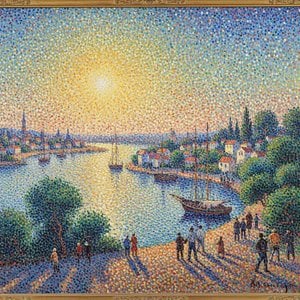
In the quiet brilliance of Georges Seurat’s 1888 masterpiece, “Circus Sideshow,” we find ourselves transported to the heart of a Parisian spectacle, where the boundaries between reality and illusion begin to dissolve. This work is far more than a mere depiction of a circus performance; it is a profound exploration of how light interacts with the human gaze. As a cornerstone of Post-Impressionism, the painting captures a moment of suspended animation, inviting the viewer to step into a world where every flicker of movement and every shadow is meticulously calculated to evoke a sense of wonder. The scene presents a woman on stage, her presence commanding the attention of a diverse crowd, creating an atmosphere thick with both excitement and the quiet anticipation of the unknown.
The emotional resonance of the piece lies in its ability to balance the grandiosity of the spectacle with the intimate, almost voyeuristic experience of the spectators. There is a palpable tension between the performers on stage and the audience—some individuals are deeply immersed in the magic of the moment, while others remain detached, lost in their own reflections. This duality mirrors the complexity of urban life in late 19th-century France, where the public spectacle served as both a shared social ritual and a collection of isolated, individual experiences. For the collector or interior designer, this painting offers a sophisticated layer of narrative depth, making it an ideal centerpiece for spaces that value intellectual stimulation and atmospheric storytelling.
To gaze upon “Circus Sideshow” is to witness the triumph of scientific rigor applied to the canvas. Seurat, a pioneer of the Pointillist technique, rejected the spontaneous, often blurred brushstrokes of his Impressionist predecessors in favor of a method rooted in optical theory. Rather than blending pigments on a palette, he painstakingly applied tiny, unrecorded dots of pure, unmixed color—shades of yellow ochre, cadmium red, and ultramarine blue—directly onto the surface. This revolutionary approach relies on the viewer's eye to perform the work of blending; as light hits these individual points of pigment, the brain synthesizes them into a luminous, vibrating whole.
This technique creates an effect of shimmering luminosity that traditional painting methods simply cannot replicate. The texture of the piece feels alive, as if the very air within the circus tent is composed of dancing particles of light. For those seeking to incorporate fine art into a modern interior, the structural integrity and rhythmic precision of Seurat’s dots provide a unique visual texture that complements both classical and contemporary decor. It is a technique that demands slow looking, rewarding the observer with a deeper understanding of how color and light can be manipulated to create a sense of profound depth and brilliance.
Historically, “Circus Sideshow” serves as a window into the cultural zeitgeist of the Belle Époque. The circus was a symbol of the era's fascination with exoticism, social mobility, and the marvels of modern entertainment. By choosing this subject, Seurat elevated a transient moment of popular culture to the status of high art, imbuing the ephemeral nature of the sideshow with a sense of permanence and monumental importance. The painting captures the essence of a society on the brink of a new century, caught between the traditional allure of the spectacle and the scientific advancements that were reshaping human perception.
Owning a high-quality reproduction of this masterpiece allows one to bring this historical elegance into the home. Whether placed in a sunlit gallery or a moody, dimly lit study, the painting acts as a bridge between eras. It offers more than just aesthetic beauty; it provides a conversation piece that speaks to the history of science, the evolution of art movements, and the eternal human fascination with the magic of the stage. It is an investment in a legacy of light, precision, and the enduring power of the human imagination.
1859 - 1891 , 프랑스
프로젝트에 대해 알려주시면 저희 미술 전문가들이 맞춤형 아트 제안 3가지를 전달해 드립니다.
당신만을 위한 맞춤형 옵션 3가지를 무료로 추천해 드립니다!