x


빠른 제작과 다양한 마감 옵션을 제공하는 박물관 품질의 지클레이 또는 캔버스 프린트. ( 손으로 그린 그림 구매 이미지 구매)





























작품의 원본 비율을 유지하는 미리 설정된 크기 중에서 선택하세요.

특정 프레임이나 공간에 맞춰 직접 치수를 입력하실 수 있습니다. 선택하신 사이즈가 원본 이미지의 비율과 일치하지 않을 경우, 작품을 크롭(자르기)하거나 이미지를 대칭 또는 단색 채우기로 확장하여 제작합니다. 제작 시작 전, 최종 확인을 위해 디지털 목업이 전송됩니다.
화면상의 미리보기는 실제 크롭이나 확장 상태를 반영하지 않으므로, 최종 구도는 오직 목업을 통해서만 정확하게 확인하실 수 있습니다.
맞춤 사이즈 제작도 가능하지만, 원본 비율을 유지하기 위해서는 사전 정의된 목록에서 치수를 선택하시는 것을 권장합니다.

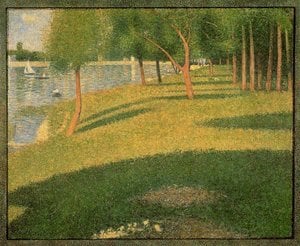
The Riverside
복제본 크기
Georges Pierre Seurat (1859-1891) stands as a singular figure in the artistic landscape of late 19th century France, marking a decisive break from the prevailing Impressionist movement and establishing himself as one of the foremost innovators of Neo-Impressionism. His brief but extraordinarily productive career wasn’t merely about capturing fleeting moments of beauty; it was driven by an intellectual curiosity that sought to fundamentally reshape how artists understood and represented light and color—a quest that resulted in a revolutionary technique known as Pointillism.
Born in Paris amidst the burgeoning artistic fervor of his time, Seurat’s upbringing fostered a passion for art from a young age. His father, Antoine Chrysostome Seurat, possessed considerable means and encouraged Georges's education, exposing him to influential artists and fostering an appreciation for scientific observation. This meticulous approach would become the cornerstone of Seurat’s artistic vision.
Unlike Impressionists who blended colors on the canvas to create a unified impression of light, Seurat championed a radically different methodology. Inspired by Eugène Chevreuil and Henri Edmond Cros—fellow proponents of optical blending—he meticulously applied tiny dots of pure pigment onto the surface of the painting. This seemingly simple technique concealed a profound understanding of color theory derived from Helmholtz’s experiments on perception. Seurat believed that by stimulating the eye with individual colored dots, he could achieve greater luminosity and vibrancy than conventional brushstrokes alone.
"A Sunday Afternoon on La Grande Jatte," arguably Seurat's most celebrated masterpiece, exemplifies this groundbreaking approach. The painting depicts Parisians enjoying a leisurely afternoon picnic in Grenouillère Park—a scene brimming with activity and bathed in dappled sunlight. However, it’s not merely the depiction of a picturesque landscape that captivates viewers; it’s the astonishing precision of Seurat's Pointillist technique.
Beyond its technical brilliance, “La Grande Jatte” carries significant symbolic weight. The figures represent a microcosm of Parisian society—bourgeois families, artists, and intellectuals—engaged in social interaction amidst the tranquility of nature. Seurat’s deliberate composition aims to convey a sense of calm contemplation and intellectual curiosity, reflecting his own philosophical leanings.
Furthermore, the painting's muted color palette contributes to its emotional impact. Rather than striving for dramatic contrasts, Seurat employs subtle hues that evoke feelings of serenity and understated beauty. The luminous dots create an ethereal glow, enhancing the atmosphere and inviting viewers into a meditative state.
Georges Pierre Seurat’s untimely death at the age of 31 tragically curtailed his artistic career, yet his legacy endured—inspiring generations of artists who embraced Pointillism and Neo-Impressionism. Today, reproductions of “La Grande Jatte” continue to resonate with audiences worldwide, serving as a testament to Seurat's unwavering commitment to scientific rigor and his profound ability to transform visual perception. His work remains an enduring symbol of artistic innovation and the pursuit of beauty through meticulous observation.


1859 - 1891 , 프랑스

Explore the scientific brilliance of Seurat and Signac. Discover how Pointillism revolutionized color through optical mixing and light, offering a profound look into the Neo-Impressionist movement for true art connoisseurs and collectors.
Discover the mesmerizing world of Pointillism. Explore the revolutionary techniques of Georges Seurat, the science of optical color mixing, and the enduring legacy of Neo-Impressionism in this expert guide for classical art enthusiasts.
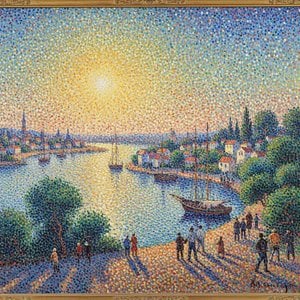
Embark on a sophisticated journey into the luminous world of Neo-Impressionism. Uncover the scientific brilliance of Pointillism, from Georges Seurat’s revolutionary color theory to the mesmerizing magic of the dot. An expert exploration for true art history enthusiasts.


최신 미술 뉴스, 특별 혜택 및 인테리어 아이디어를 가장 먼저 만나보세요.
프로젝트에 대해 알려주시면 저희 미술 전문가들이 맞춤형 아트 제안 3가지를 전달해 드립니다.
당신만을 위한 맞춤형 옵션 3가지를 무료로 추천해 드립니다!


 미리보기
미리보기
 공유하기
공유하기 공유하기
공유하기
 상세 정보
상세 정보

 다운로드
다운로드
 유사 작품
유사 작품 X-레이
X-레이 슬라이드 쇼

 더 보기
더 보기









 유리 옵션은 110cm 미만 크기에서만 선택 가능합니다.