
원하는 크기와 액자로 주문 제작되는, 작가들이 직접 캔버스에 손으로 그린 유화 작품입니다. ( 프린트 판매로 전환 디지털 이미지로 전환)





























작품의 원본 비율을 유지하는 미리 설정된 크기 중에서 선택하세요.

특정 프레임이나 공간에 맞도록 직접 크기를 입력할 수 있습니다. 선택하신 크기가 원본 이미지의 비율과 일치하지 않는 경우, 작품을 자르거나 추가적인 손으로 그린 요소를 사용하여 그림을 확장합니다. 제작 시작 전 승인을 위해 디지털 목업을 보내드립니다.
화면 미리 보기는 실제 자르기 또는 확장을 반영하지 않습니다. 최종 구성은 목업을 통해서만 정확하게 확인하실 수 있습니다.
맞춤 크기 제작도 가능하지만, 원본 비율을 유지하기 위해 사전 정의된 목록에서 크기를 선택하시는 것을 권장합니다.

The Gardener
복제본 크기
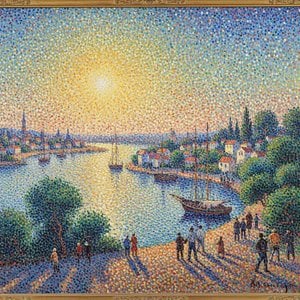
Georges Seurat's "The Gardener," painted in 1882, isn’t merely a depiction of a rural scene; it’s a meticulously constructed meditation on perception and the very nature of seeing. This work, often overshadowed by his more famous Pointillist masterpieces like “A Sunday Afternoon on La Grande Jatte,” offers a profound glimpse into the artist's revolutionary approach to painting – one rooted in scientific observation and an almost obsessive desire to capture the ephemeral effects of light. The image presents a solitary figure, presumably a farmer, traversing a field of tall grasses under a hazy sky, a scene imbued with a quiet dignity and a palpable sense of solitude. It’s a tableau that invites contemplation not just of the landscape itself, but of the act of observation – how we perceive color, form, and space.
Seurat's technique in “The Gardener” is undeniably central to its impact. He employed his signature method of Pointillism, a revolutionary approach that moved far beyond the loose brushstrokes of Impressionism. Instead of blending colors directly on the canvas, Seurat meticulously applied thousands of tiny, distinct dots – individual points of pure color – to create an optical illusion. When viewed from a distance, these dots coalesce and blend in the viewer’s eye, resulting in a vibrant and luminous effect that surpasses the capabilities of traditional brushwork. The artist's rigorous study of optics, informed by scientific theories about color perception, dictated every aspect of his process. He believed that by isolating individual colors and allowing the eye to synthesize them, he could achieve a greater degree of realism and luminosity than was previously possible. Notice how the greens shift subtly across the field – not through blending, but through the careful arrangement of yellows, blues, and whites.
Beyond its technical brilliance, “The Gardener” is rich in symbolic meaning. The solitary figure represents humanity’s relationship with the natural world – a connection both profound and often isolating. He's not actively engaged in labor, but rather simply *present* within the landscape, suggesting a quiet reverence for the land. The hazy sky, rendered in delicate washes of blue and gray, evokes a sense of timelessness and mystery. The field itself, with its undulating grasses, becomes a metaphor for life’s journey – a continuous flow and movement that is both beautiful and transient. It's important to note that Seurat was deeply interested in the philosophical implications of his work, exploring themes of order, harmony, and the pursuit of scientific truth through art.
“The Gardener” stands as a testament to Georges Seurat’s innovative spirit and his unwavering commitment to capturing the essence of light and color. WahooArt offers meticulously crafted, hand-painted reproductions that faithfully recreate the luminosity and precision of this remarkable work. Each reproduction is created by skilled artists who understand the nuances of Seurat's technique, ensuring that you receive a faithful representation of this iconic painting. Whether displayed in a contemporary setting or as a cherished addition to a classic interior, a WahooArt reproduction of “The Gardener” will bring a touch of artistic brilliance and intellectual depth to your space. Consider how the subtle shifts in color and texture – achieved through our painstaking process – evoke the same sense of quiet contemplation that defined Seurat’s original vision.


1859 - 1891 , 프랑스

Explore the vibrant evolution of Post-Impressionism. From Seurat's revolutionary Pointillism to the emotional depth of masters, discover how this movement redefined modern art history through color, structure, and unparalleled creative expression.
Discover the mesmerizing world of Pointillism. Explore the revolutionary techniques of Georges Seurat, the science of optical color mixing, and the enduring legacy of Neo-Impressionism in this expert guide for classical art enthusiasts.

Explore the scientific brilliance of Seurat and Signac. Discover how Pointillism revolutionized color through optical mixing and light, offering a profound look into the Neo-Impressionist movement for true art connoisseurs and collectors.
Embark on a sophisticated journey into the luminous world of Neo-Impressionism. Uncover the scientific brilliance of Pointillism, from Georges Seurat’s revolutionary color theory to the mesmerizing magic of the dot. An expert exploration for true art history enthusiasts.


 미리보기
미리보기
 공유하기
공유하기 공유하기
공유하기
 상세 정보
상세 정보

 다운로드
다운로드
 유사 작품
유사 작품 X-레이
X-레이 슬라이드 쇼
 통계 정보
통계 정보


 더 보기
더 보기









 유리 옵션은 110cm 미만 크기에서만 선택 가능합니다.


