
 Acrylic On CanvasWallArtNeo-Impressionism
 31.0 x 23.0 cm
빠른 제작과 다양한 마감 옵션을 제공하는 박물관 품질의 지클레이 또는 캔버스 프린트. ( 손으로 그린 그림 구매 디지털 이미지로 전환)





























작품의 원본 비율을 유지하는 미리 설정된 크기 중에서 선택하세요.

특정 프레임이나 공간에 맞춰 직접 치수를 입력하실 수 있습니다. 선택하신 사이즈가 원본 이미지의 비율과 일치하지 않을 경우, 작품을 크롭(자르기)하거나 이미지를 대칭 또는 단색 채우기로 확장하여 제작합니다. 제작 시작 전, 최종 확인을 위해 디지털 목업이 전송됩니다.
화면상의 미리보기는 실제 크롭이나 확장 상태를 반영하지 않으므로, 최종 구도는 오직 목업을 통해서만 정확하게 확인하실 수 있습니다.
맞춤 사이즈 제작도 가능하지만, 원본 비율을 유지하기 위해서는 사전 정의된 목록에서 치수를 선택하시는 것을 권장합니다.

The black bow
복제본 크기
Georges Pierre Seurat (1859-1891), a name synonymous with innovation in late 19th-century art, stands as a monumental figure in the transition from Impressionism to Modern Art. His tragically brief life yielded an artistic legacy that fundamentally altered painting practice—specifically through his groundbreaking development of Pointillism, a technique rooted in scientific observation and driven by an unwavering desire for optical realism.
Born in Paris on December 2nd, 1859, Seurat’s formative years were marked by a privileged upbringing fostered by his father, Antoine Chrysostome Seurat—a former legal official who skillfully transitioned into property speculation. This familial stability afforded young Georges access to exceptional artistic education, propelling him towards mastering the foundational skills necessary for his future endeavors.
Before Seurat’s arrival on the art scene, Impressionists wrestled with capturing fleeting moments of light and color. However, Seurat approached this challenge with a radically different perspective—one informed by Henri Poincaré’s theories on optics. Recognizing that human perception is influenced by how our eyes combine colors, Seurat meticulously applied scientific principles to his artistic process.
Instead of blending pigments directly onto the canvas, Seurat employed tiny dots – or “points” – of pure color—typically juxtaposed in complementary hues—to create an illusion of luminosity and depth. This method, dubbed Pointillism by Roger Fry in 1906, demanded painstaking precision and unwavering attention to detail. It represented a decisive break from Impressionistic brushstrokes, prioritizing scientific accuracy over subjective interpretation.
"The Black Bow," created around 1882, exemplifies Seurat’s meticulous approach perfectly. The painting depicts a woman's face alongside a black bow—a seemingly simple subject rendered with extraordinary complexity. As documented in Google Arts & Culture (
The rough surface of the paper serves as a crucial element in conveying the painting’s atmosphere—a deliberate choice reflecting Seurat's belief that texture contributes significantly to the perception of color and form. The composition itself is carefully balanced, guiding the viewer’s gaze across the canvas with subtle directional cues.
Beyond its technical brilliance, “The Black Bow” speaks volumes about Seurat's artistic vision. It embodies his fascination with capturing the essence of modern life—a preoccupation evident in numerous other works exploring urban landscapes and social interactions. Like many Impressionist paintings, it seeks to evoke emotion through color and light—though Seurat achieves this goal not through blending hues but by orchestrating a dazzling interplay of complementary dots.
As showcased on WikiArt (


1859 - 1891 , 프랑스
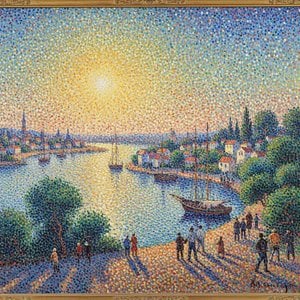
Embark on a sophisticated journey into the luminous world of Neo-Impressionism. Uncover the scientific brilliance of Pointillism, from Georges Seurat’s revolutionary color theory to the mesmerizing magic of the dot. An expert exploration for true art history enthusiasts.
Discover the mesmerizing world of Pointillism. Explore the revolutionary techniques of Georges Seurat, the science of optical color mixing, and the enduring legacy of Neo-Impressionism in this expert guide for classical art enthusiasts.

Explore the vibrant evolution of Post-Impressionism. From Seurat's revolutionary Pointillism to the emotional depth of masters, discover how this movement redefined modern art history through color, structure, and unparalleled creative expression.

Explore the scientific brilliance of Seurat and Signac. Discover how Pointillism revolutionized color through optical mixing and light, offering a profound look into the Neo-Impressionist movement for true art connoisseurs and collectors.


 미리보기
미리보기
 공유하기
공유하기 공유하기
공유하기
 상세 정보
상세 정보

 다운로드
다운로드
 유사 작품
유사 작품 X-레이
X-레이 슬라이드 쇼
 통계 정보
통계 정보 더 보기
더 보기









 유리 옵션은 110cm 미만 크기에서만 선택 가능합니다.


