

빠른 제작과 다양한 마감 옵션을 제공하는 박물관 품질의 지클레이 또는 캔버스 프린트. ( 손으로 그린 그림 구매 Switch to Digital Image)





























작품의 원본 비율을 유지하는 미리 설정된 크기 중에서 선택하세요.

특정 프레임이나 공간에 맞춰 직접 치수를 입력하실 수 있습니다. 선택하신 사이즈가 원본 이미지의 비율과 일치하지 않을 경우, 작품을 크롭(자르기)하거나 이미지를 대칭 또는 단색 채우기로 확장하여 제작합니다. 제작 시작 전, 최종 확인을 위해 디지털 목업이 전송됩니다.
화면상의 미리보기는 실제 크롭이나 확장 상태를 반영하지 않으므로, 최종 구도는 오직 목업을 통해서만 정확하게 확인하실 수 있습니다.
맞춤 사이즈 제작도 가능하지만, 원본 비율을 유지하기 위해서는 사전 정의된 목록에서 치수를 선택하시는 것을 권장합니다.

Study for Le Chahut 1
복제본 크기
Georges Seurat's “Study for Le Chahut” offers a captivating, almost hallucinatory glimpse into the vibrant heart of late 19th-century Paris. Completed in 1890, this preparatory sketch isn’t merely a preliminary study; it’s a fully realized miniature world brimming with energy and meticulously constructed observation. It anticipates the grandeur of his final painting, “Le Chahut,” which depicted a lively dance hall scene, but here, we are granted an intimate preview – a concentrated distillation of the composition and its underlying scientific principles.
The image itself is dominated by a central female figure, poised mid-movement, her body angled towards the viewer with a captivating directness. Around her swirl other figures: musicians playing instruments—a violin prominent on the left, a guitar to the right—and onlookers absorbed in the performance. The scene isn’t chaotic; rather, it possesses an almost geometric order, reflecting Seurat's dedication to scientific rigor. He wasn’t simply capturing a moment of spontaneous joy; he was analyzing and reconstructing it through the lens of color theory and optical perception.
Seurat’s revolutionary approach, known as Pointillism or Neo-Impressionism, fundamentally altered the course of painting. Rejecting the blending of colors traditionally employed by Impressionists, Seurat advocated for applying tiny, distinct dots of pure color to a canvas. The viewer's eye, he believed, would then optically blend these colors together, creating a richer and more luminous effect than could be achieved through direct brushstrokes. “Study for Le Chahut” vividly demonstrates this technique; observe how the individual dots coalesce into broader areas of tone and hue – the warm reds and oranges of the stage lights, the cool blues and greens of the surrounding figures.
This wasn’t a random exercise in color manipulation. Seurat meticulously calculated the precise hues needed to achieve specific effects of light and shadow, drawing upon his studies of optics and color perception. He essentially treated painting as a scientific experiment, documenting his process with detailed notes and preparatory sketches like this one. The meticulousness is astonishing; each tiny dot represents hours of careful consideration.
“Le Chahut” itself depicted a dance hall, a popular entertainment venue in late 19th-century Paris – a space where social hierarchies blurred and pleasure was openly celebrated. The figures within “Study for Le Chahut” represent this dynamic environment. While the central dancer commands attention, the musicians and onlookers contribute to a sense of collective experience. The instruments—the violin and guitar—are not merely decorative elements; they are integral to the scene’s musicality and atmosphere.
Furthermore, the composition subtly hints at the social stratification of the time. The figures in the foreground are more sharply defined, while those further back fade into a hazy abstraction. This creates a sense of depth and perspective, mirroring the tiered seating arrangements common in dance halls. The overall effect is both visually arresting and psychologically complex – a snapshot of Parisian life filtered through Seurat’s unique artistic vision.
WahooArt offers meticulously hand-painted reproductions of “Study for Le Chahut,” capturing the luminosity and precision of Seurat's original technique. Our artists recreate the delicate pointillist dots with exceptional skill, ensuring that every nuance of color and texture is faithfully reproduced. This artwork isn’t just a print; it’s an authentic representation of a pivotal moment in art history – a vibrant testament to Georges Seurat’s revolutionary approach to painting. Whether you're an art enthusiast, a collector seeking a significant addition to your collection, or simply someone looking for a captivating piece to enhance your interior space, our reproduction offers a beautiful and enduring connection to this extraordinary work.


1859 - 1891 , 프랑스

Explore the vibrant evolution of Post-Impressionism. From Seurat's revolutionary Pointillism to the emotional depth of masters, discover how this movement redefined modern art history through color, structure, and unparalleled creative expression.
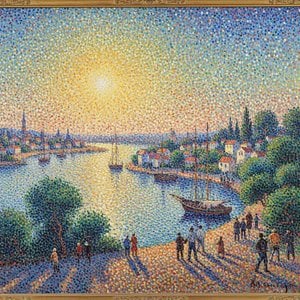
Embark on a sophisticated journey into the luminous world of Neo-Impressionism. Uncover the scientific brilliance of Pointillism, from Georges Seurat’s revolutionary color theory to the mesmerizing magic of the dot. An expert exploration for true art history enthusiasts.
Discover the mesmerizing world of Pointillism. Explore the revolutionary techniques of Georges Seurat, the science of optical color mixing, and the enduring legacy of Neo-Impressionism in this expert guide for classical art enthusiasts.

Explore the scientific brilliance of Seurat and Signac. Discover how Pointillism revolutionized color through optical mixing and light, offering a profound look into the Neo-Impressionist movement for true art connoisseurs and collectors.

 미리보기
미리보기
 공유하기
공유하기 공유하기
공유하기
 상세 정보
상세 정보

 다운로드
다운로드
 유사 작품
유사 작품 X-레이
X-레이 슬라이드 쇼
 Stats
Stats

 더 보기
더 보기









 유리 옵션은 110cm 미만 크기에서만 선택 가능합니다.


