

빠른 제작과 다양한 마감 옵션을 선택할 수 있는 박물관 수준의 지클레이 및 캔버스 프린트. ( 수작업 채색 복제본 주문하기 디지털 이미지 판매 채널로 전환)





























작품의 원본 비율을 그대로 유지하는 프리셋 사이즈 중에서 선택해 보세요.

특정 프레임이나 공간에 맞춰 직접 치수를 입력하실 수 있습니다. 선택하신 사이즈가 원본 이미지의 비율과 일치하지 않을 경우, 작품을 크롭(자르기)하거나 이미지를 대칭 또는 단색 채우기로 확장하여 제작합니다. 제작 시작 전, 최종 확인을 위해 디지털 목업이 전송됩니다.
화면상의 미리보기는 실제 크롭이나 확장 상태를 반영하지 않으므로, 최종 구도는 오직 목업을 통해서만 정확하게 확인하실 수 있습니다.
맞춤 사이즈 제작도 가능하지만, 원본 비율을 유지하기 위해서는 사전 정의된 목록에서 치수를 선택하시는 것을 권장합니다.

Leg
복제본 규격
In the vibrant, bustling atmosphere of late nineteenth-century Paris, a quiet revolution was unfolding, one not of loud proclamations, but of microscopic precision. While the Impressionists were busy capturing the fleeting, ephemeral dance of light with rapid and emotional brushstrokes, Georges Pierre Seurat sought a deeper, more permanent truth. His masterpiece, "Leg," stands as a profound testament to this pursuit. This intimate study, currently preserved in the hallowed halls of the Musée d’Orsay, invites the viewer into a world where science and art converge. The painting depicts a nude male leg resting upon a surface, yet through Seurat's visionary lens, it becomes much more than a mere anatomical study; it is an exploration of how light itself inhabits form.
To gaze upon "Leg" is to witness the birth of Pointillism, a technique that demands a different kind of looking. Rather than blending pigments on a palette to create smooth transitions, Seurat applied tiny, rhythmic pulses of pure color side-by-side. This method, often referred to as Chromoluminarism, relies on the viewer's own retina to perform the final act of creation. As your eyes move across the canvas, these individual dots of pigment undergo a magical synthesis, merging in the mind to create an illusion of shimmering luminosity and soft, tactile texture. The result is an ethereal quality that traditional blending simply cannot achieve—a sense that the subject is not merely painted, but is actually vibrating with light.
Seurat’s approach was far from accidental; it was a disciplined, almost mathematical endeavor. Influenced by contemporary optical theories, he meticulously mapped out the contours of the leg and torso using a precise grid system. This structural rigor allowed him to capture the subtle weight of the limb and the delicate interplay of shadow and highlight with unprecedented accuracy. In "Leg," the way the light catches the curve of the knee and fades into the soft shadows of the foot demonstrates a masterful command over tonal variation. For the collector or the interior designer, this piece offers a unique aesthetic tension: it possesses the structural stability of classical art while maintaining the modern, atmospheric energy of the avant-garde.
Beyond its technical brilliance, the painting carries an emotional resonance that is both tranquil and profound. There is a stillness in the composition, a moment of suspended animation that allows for deep contemplation. The absence of a complex background focuses all attention on the interplay of light upon skin, evoking a sense of vulnerability and grace. For those seeking to bring a piece of art history into a contemporary living space, a high-quality reproduction of "Leg" serves as a sophisticated focal point. It does not merely decorate a wall; it introduces a conversation about perception, inviting guests to slow down and rediscover the beauty in the smallest, most meticulously placed details.

1859 - 1891 , 프랑스

Explore the scientific brilliance of Seurat and Signac. Discover how Pointillism revolutionized color through optical mixing and light, offering a profound look into the Neo-Impressionist movement for true art connoisseurs and collectors.

Explore the vibrant evolution of Post-Impressionism. From Seurat's revolutionary Pointillism to the emotional depth of masters, discover how this movement redefined modern art history through color, structure, and unparalleled creative expression.
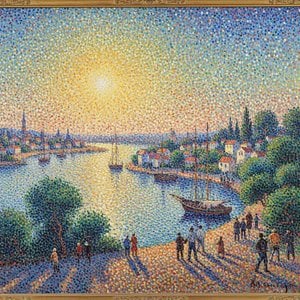
Embark on a sophisticated journey into the luminous world of Neo-Impressionism. Uncover the scientific brilliance of Pointillism, from Georges Seurat’s revolutionary color theory to the mesmerizing magic of the dot. An expert exploration for true art history enthusiasts.

Discover the mesmerizing world of Pointillism. Explore the revolutionary techniques of Georges Seurat, the science of optical color mixing, and the enduring legacy of Neo-Impressionism in this expert guide for classical art enthusiasts.

 실제 크기로 보기
 보내기
보내기 공유하기
공유하기
 상세 보기
상세 보기 가이드 보기

 이미지 다운로드
 유사 작품 더 보기
 X-레이
X-레이 슬라이드 쇼 보기
 통계 정보
통계 정보

 상세 보기
상세 보기









 유리 옵션은 110cm 미만 크기에서만 선택 가능합니다.


