
빠른 제작과 다양한 마감 옵션을 제공하는 박물관 품질의 지클레이 또는 캔버스 프린트. ( 손으로 그린 그림 구매 디지털 이미지로 전환)





























작품의 원본 비율을 유지하는 미리 설정된 크기 중에서 선택하세요.

특정 프레임이나 공간에 맞춰 직접 치수를 입력하실 수 있습니다. 선택하신 사이즈가 원본 이미지의 비율과 일치하지 않을 경우, 작품을 크롭(자르기)하거나 이미지를 대칭 또는 단색 채우기로 확장하여 제작합니다. 제작 시작 전, 최종 확인을 위해 디지털 목업이 전송됩니다.
화면상의 미리보기는 실제 크롭이나 확장 상태를 반영하지 않으므로, 최종 구도는 오직 목업을 통해서만 정확하게 확인하실 수 있습니다.
맞춤 사이즈 제작도 가능하지만, 원본 비율을 유지하기 위해서는 사전 정의된 목록에서 치수를 선택하시는 것을 권장합니다.

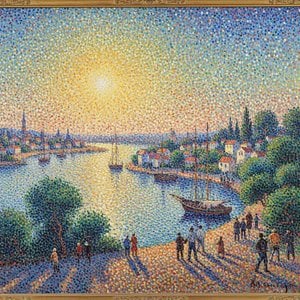
Grandcamp Evening
복제본 크기
In the quiet transition between day and night, Georges Seurat’s “Grandcamp, Evening” captures a moment where the world seems to hold its breath. Painted in 1885, this masterpiece transports the viewer to the tranquil harbor of Grandcamp-sur-Mer in Normandy, France. It is not merely a landscape; it is a profound meditation on the fading light of dusk. As the sun retreats, the canvas reveals a serene seascape where the calm waters reflect the soft, muted hues of twilight. A distant lighthouse stands as a silent sentinel, its beacon promising guidance amidst the encroaching shadows, while small boats and scattered figures move with a gentle grace across the coastal scene. The presence of a single bird in flight adds a delicate touch of movement, breathing life into an otherwise still and contemplative atmosphere.
To gaze upon this work is to witness the birth of a revolution. Seurat, moving beyond the spontaneous, often hazy impressions of his predecessors, sought to anchor art in the immutable laws of science. This painting serves as a cornerstone of Pointillism, a technique that demands both immense patience and intellectual rigor. Rather than blending pigments on a palette, Seurat applied thousands of minuscule, distinct dots of pure color directly onto the canvas. This method, known as chromoluminarism, relies on the viewer's eye to perform the final act of creation—blending these tiny points of light into a luminous, shimmering whole. The result is an optical brilliance that traditional brushstrokes simply cannot replicate, creating a sense of vibration and depth that feels almost alive.
The technical brilliance of “Grandcamp, Evening” is deeply rooted in the scientific theories of the era, specifically the research into color perception by Eugène Chevreuil. Seurat utilized a systematic approach to capture the objective reality of light, treating the canvas as a laboratory for optical truth. Every dot was a deliberate choice, calculated to maximize luminosity and simulate the way light interacts with the atmosphere at dusk. This meticulousness does not strip the painting of its soul; rather, it enhances its emotional depth. The structured precision of his technique provides a stable foundation for the profound sense of peace that radiates from the scene.
For the discerning collector or interior designer, this artwork offers more than just aesthetic appeal; it offers an atmosphere of sophisticated tranquility. The muted palette and balanced composition make it a versatile centerpiece, capable of anchoring a room with its quiet dignity. Whether placed in a contemporary gallery setting or a classic study, “Grandcamp, Evening” invites the observer into a state of calm contemplation. It is a piece that rewards long periods of looking, revealing new nuances of color and light with every glance. Owning a high-quality reproduction of this work means bringing a fragment of art history’s most luminous revolution into one's personal space—a permanent window into a sunset that never truly ends.


1859 - 1891 , 프랑스
Embark on a sophisticated journey into the luminous world of Neo-Impressionism. Uncover the scientific brilliance of Pointillism, from Georges Seurat’s revolutionary color theory to the mesmerizing magic of the dot. An expert exploration for true art history enthusiasts.
Discover the mesmerizing world of Pointillism. Explore the revolutionary techniques of Georges Seurat, the science of optical color mixing, and the enduring legacy of Neo-Impressionism in this expert guide for classical art enthusiasts.

Explore the vibrant evolution of Post-Impressionism. From Seurat's revolutionary Pointillism to the emotional depth of masters, discover how this movement redefined modern art history through color, structure, and unparalleled creative expression.

Explore the scientific brilliance of Seurat and Signac. Discover how Pointillism revolutionized color through optical mixing and light, offering a profound look into the Neo-Impressionist movement for true art connoisseurs and collectors.


 미리보기
미리보기
 공유하기
공유하기 공유하기
공유하기
 상세 정보
상세 정보 Guide
Guide

 다운로드
다운로드
 유사 작품
유사 작품 X-레이
X-레이 슬라이드 쇼
 통계 정보
통계 정보

 더 보기
더 보기









 유리 옵션은 110cm 미만 크기에서만 선택 가능합니다.


