빠른 제작과 다양한 마감 옵션을 제공하는 박물관 품질의 지클레이 또는 캔버스 프린트. ( 손으로 그린 그림 구매 디지털 이미지로 전환)





























작품의 원본 비율을 유지하는 미리 설정된 크기 중에서 선택하세요.

특정 프레임이나 공간에 맞춰 직접 치수를 입력하실 수 있습니다. 선택하신 사이즈가 원본 이미지의 비율과 일치하지 않을 경우, 작품을 크롭(자르기)하거나 이미지를 대칭 또는 단색 채우기로 확장하여 제작합니다. 제작 시작 전, 최종 확인을 위해 디지털 목업이 전송됩니다.
화면상의 미리보기는 실제 크롭이나 확장 상태를 반영하지 않으므로, 최종 구도는 오직 목업을 통해서만 정확하게 확인하실 수 있습니다.
맞춤 사이즈 제작도 가능하지만, 원본 비율을 유지하기 위해서는 사전 정의된 목록에서 치수를 선택하시는 것을 권장합니다.

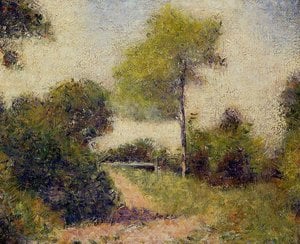
Barbizon Forest
복제본 크기
To stand before Georges Seurat’s Forest of Barbizon is to witness a profound moment in the evolution of modern art, where the fleeting magic of Impressionism meets the rigorous precision of science. Completed in 1883, this masterpiece serves as a breathtaking gateway into the world of Neo-Impressionism. The painting captures a tranquil woodland scene, yet it transcends mere landscape; it is a meticulously constructed meditation on how we perceive the very essence of light. Through his revolutionary approach, Seurat invites the viewer to step away from the chaotic energy of the urbanizing 19th century and find solace in a structured, idealized version of nature that feels both deeply organic and mathematically sublime.
The subject matter—a serene corner of the French forest—represents a deliberate departure from the dramatic, emotional landscapes favored by the Romantic movement. Instead, Seurat seeks a harmonious blend of observation and intellectual contemplation. In this lush composition, a majestic central tree anchors the scene, surrounded by a delicate arrangement of smaller trees and verdant bushes that create a sense of depth and enclosure. High above the canopy, two birds soar through the sky, their presence adding a subtle layer of life and movement to an otherwise still and contemplative atmosphere. For the collector or interior designer, this piece offers a sense of profound peace, making it an ideal focal point for spaces designed for reflection and quiet elegance.
What truly distinguishes this work is Seurat’s groundbreaking technique, known as Pointillism or Chromoluminarism. Rejecting the traditional method of blending pigments on a palette, Seurat applied tiny, individual dots of pure, unmixed color directly onto the canvas. This was not merely an aesthetic choice but a scientific one. He relied on the principle of optical mixture, trusting that the viewer’s eye, when viewing the canvas from a distance, would synthesize these myriad dots into a vibrant, shimmering whole. This technique allows the air itself to seem to vibrate with light, creating a luminous quality that traditional brushstrokes simply cannot achieve.
The emotional impact of this method is nothing short of transformative. As one moves closer to the painting, the structured geometry of the dots becomes apparent, revealing the artist's intense intellectual rigor and passion for logical abstraction. Yet, as one retreats, the precision dissolves into a soft, atmospheric glow where colors dance and merge. This duality—the tension between scientific order and natural beauty—is what gives the Forest of Barbizon its enduring power. It is a work that rewards deep study and provides a captivating visual experience that changes with every glance, offering an unparalleled sense of sophistication to any curated art collection.


1859 - 1891 , 프랑스
조르주 브라크의 시대를 초월한 25개의 걸작을 만나보세요. 입체주의를 개척한 프랑스 화가의 예술 세계와 숨겨진 이야기를 WahooArt에서 감상하고, 명작 유화 복제본으로 공간에 특별함을 더하세요. 지금 바로 컬렉션을 탐험하세요!

조르주 쇠라의 대표작 25선을 만나보세요. 점묘법의 혁신과 빛, 색채의 아름다움이 담긴 명작들을 감상하고, 인테리어에 예술적인 영감을 더하세요. WahooArt.com에서 고품질 미술 작품을 컬렉션해보세요.

Explore the scientific revolution of Pointillism. Discover how Georges Seurat and Paul Signac utilized optical color mixing and light theory to transform modern art through Neo-Impressionist precision and luminous technique.

Explore the revolutionary art of Georges Seurat and the science behind Pointillism. Discover chromoluminarism, optical mixing, and the lasting impact of Neo-Impressionism on modern art history.

Explore the scientific brilliance of Neo-Impressionism. Discover how masters like Georges Seurat revolutionized art through optical mixing, color theory, and the precision of Pointillism to capture the true essence of light.


 미리보기
미리보기
 공유하기
공유하기 공유하기
공유하기
 상세 정보
상세 정보

 다운로드
다운로드
 유사 작품
유사 작품 X-레이
X-레이 슬라이드 쇼
 통계 정보
통계 정보

 더 보기
더 보기









 유리 옵션은 110cm 미만 크기에서만 선택 가능합니다.