


x

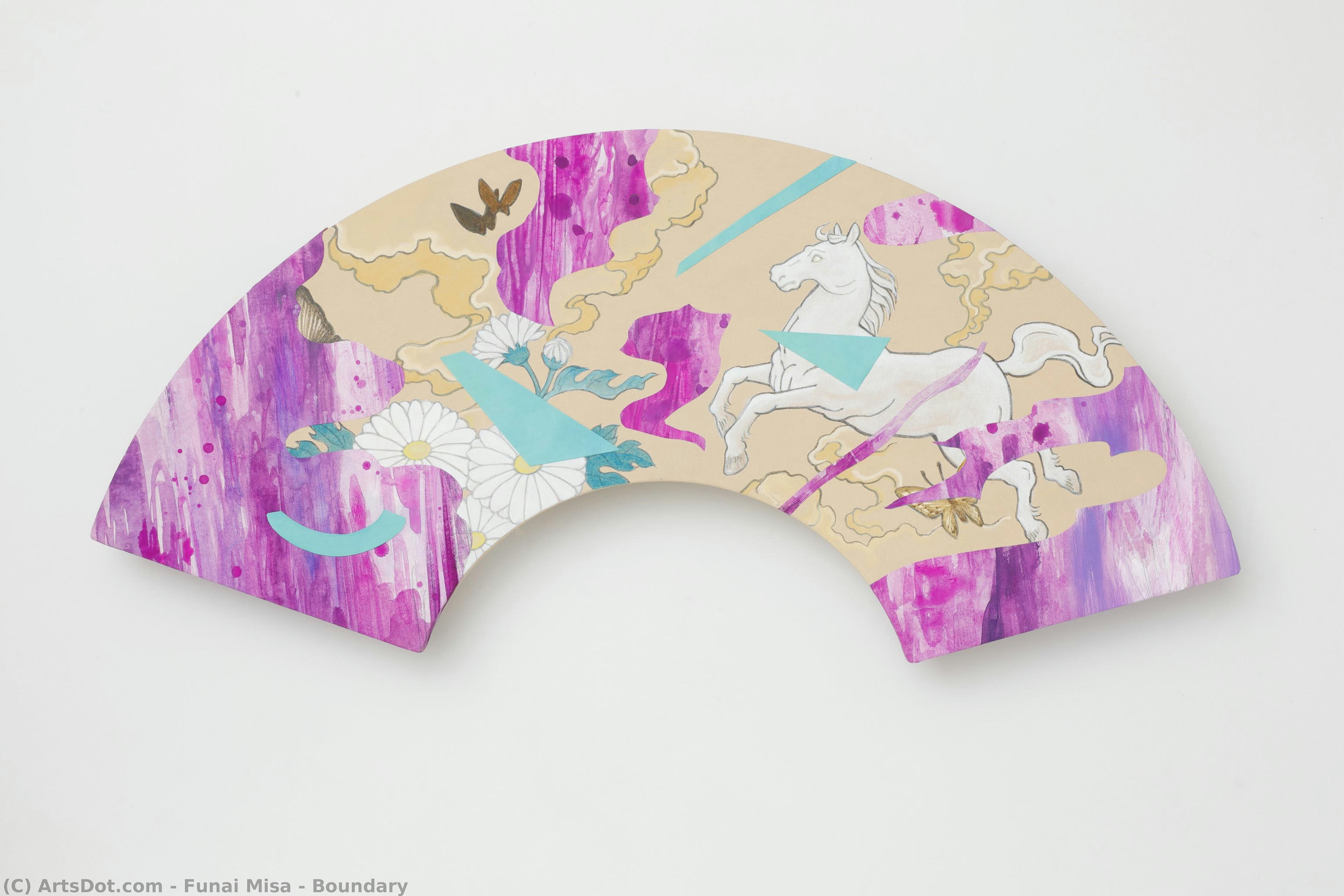
 2020
2020 28.0 x 59.0 cm
 Meiji Jingu Forest Festival of Art
작품의 원본 비율을 유지하는 미리 설정된 크기 중에서 선택하세요.

특정 프레임이나 공간에 맞춰 직접 치수를 입력하실 수 있습니다. 선택하신 사이즈가 원본 이미지의 비율과 일치하지 않을 경우, 작품을 크롭(자르기)하거나 이미지를 대칭 또는 단색 채우기로 확장하여 제작합니다. 제작 시작 전, 최종 확인을 위해 디지털 목업이 전송됩니다.
화면상의 미리보기는 실제 크롭이나 확장 상태를 반영하지 않으므로, 최종 구도는 오직 목업을 통해서만 정확하게 확인하실 수 있습니다.
맞춤 사이즈 제작도 가능하지만, 원본 비율을 유지하기 위해서는 사전 정의된 목록에서 치수를 선택하시는 것을 권장합니다.

Boundary
복제본 크기
Born in Kyoto, Japan, in 1974, funai misa’s artistic journey began within a rich cultural landscape deeply rooted in traditional Japanese aesthetics. Her childhood in Kyoto, a city renowned for its temples, gardens, and centuries-old art practices, undoubtedly instilled in her a profound appreciation for nature, symbolism, and the delicate balance between tradition and innovation. She initially studied painting at the Kyoto City University of Arts and Design, honing her foundational skills in classical Japanese techniques while simultaneously exploring contemporary approaches to visual expression. Furthering her education at Tsukuba University’s Department of Art and Design provided her with a broader understanding of design principles and artistic theory, shaping her approach to both traditional and experimental forms.
funai misa’s work is characterized by a compelling exploration of dualities – particularly the concepts of “paradise” and “boundaries.” These themes aren't presented as simple contrasts but rather as interwoven layers that invite introspection and contemplation. Her paintings and installations frequently depict spaces where the familiar dissolves into the surreal, where the tangible merges with the imagined. A key element of her style involves the strategic use of mirrors, creating an illusionistic depth and blurring the lines between reality and reflection. This technique isn’t merely decorative; it serves as a metaphor for perception, identity, and the shifting nature of experience. She often incorporates elements of Japanese folklore and mythology, subtly layering these narratives within her contemporary works.
Her artistic process is described as improvisational, with a focus on intuitive mark-making and a willingness to embrace chance encounters between materials and ideas. This approach results in pieces that possess an organic quality, reflecting the artist’s deep connection to the natural world and her belief in the power of spontaneous creativity.
funai misa's work has garnered significant attention within both the Japanese art scene and internationally. Her paintings have been exhibited at prestigious galleries such as Aki Gallery in Taipei and Tokyo Arts and Space, showcasing her talent to a diverse audience. She’s also participated in notable events like the Rokko Meets Art Festival and the Meiji Jingu Forest Festival of Art, further solidifying her position within Japan's vibrant contemporary art community. Notably, her work has been featured in publications such as Spoon & Tamago, highlighting her unique approach to spatial illusion and thematic exploration.
Several of funai misa’s pieces stand out for their conceptual depth and technical execution. “Boundary” (2018) is a particularly compelling example, utilizing mirrors to create an immersive environment that challenges the viewer's perception of space and self. “Paradise/Boundary/Portrait” (2017) further explores this thematic tension, blending portraiture with landscape elements within a mirrored setting. Her work “COMET : Open the earth, look up at the stars” (2019), exhibited at the Rokko Museum, is a testament to her ability to create evocative and dreamlike spaces that invite viewers to contemplate their place in the universe. Her collaboration with the Japigozzi Collection has also brought attention to her work, particularly through pieces like “Paradise/Boundary Hole Rabbit, Sky” (2010) and "Paradise/Boundary Magnolia" (2010).
funai misa’s work represents a significant contribution to contemporary Japanese art. Her exploration of themes like paradise and boundaries, combined with her innovative use of mirrors and other materials, challenges conventional notions of space, perception, and identity. She skillfully blends traditional Japanese aesthetics with modern artistic techniques, creating pieces that are both visually stunning and intellectually stimulating. Her work invites viewers to engage in a dialogue about the nature of reality, the limits of human experience, and the enduring power of imagination – solidifying her place as an artist deeply attuned to the complexities of the 21st century.

1974 - , Japan


최신 미술 뉴스, 특별 혜택 및 인테리어 아이디어를 가장 먼저 만나보세요.
프로젝트에 대해 알려주시면 저희 미술 전문가들이 맞춤형 아트 제안 3가지를 전달해 드립니다.
당신만을 위한 맞춤형 옵션 3가지를 무료로 추천해 드립니다!
 작품 구매하기
 공유하기
공유하기 공유하기
공유하기
 상세 정보
상세 정보

 다운로드
다운로드
 유사 작품
유사 작품 X-레이
X-레이 슬라이드 쇼
 더 보기
더 보기






































 유리 옵션은 110cm 미만 크기에서만 선택 가능합니다.


