작가 약력
A Rediscovered Visionary: The Life and Art of Fukuda Kodōjin
Fukuda Kodōjin (1865–1944), a name largely absent from mainstream art historical narratives until recently, represents a fascinating bridge between the fading traditions of Japanese literati painting and the burgeoning modern era. Born in Osaka, Japan, Kodōjin emerged as one of the last dedicated practitioners of *nanga* – a style deeply rooted in Chinese scholar-painting that emphasized calligraphy, poetry, and an intimate connection with nature. His story is not merely one of artistic talent but also of resilience, patronage, and eventual obscurity, followed by a remarkable rediscovery in the 21st century. For decades after his death, Kodōjin’s work remained largely forgotten, known only to a small circle of collectors, primarily in the United States. This relative anonymity makes his current resurgence all the more compelling, offering a fresh perspective on Japanese art history and challenging conventional timelines of stylistic evolution.
The Scholar-Painter Tradition and Early Influences
To understand Kodōjin’s work, one must first appreciate the context of *nanga*. Emerging during the Edo period (1603–1868), this style was embraced by educated elites who sought to emulate the artistic pursuits of Chinese scholar-officials. It wasn't simply about technical skill; it was a holistic practice encompassing poetry, calligraphy, painting, and seal carving – all expressions of refined sensibility and intellectual depth. Kodōjin wholeheartedly adopted these principles, dedicating himself to scholarship alongside his artistic endeavors. While the traditional Chinese literati ideal had undergone significant transformations by the late 19th century in Japan, Kodōjin remained committed to its core values. His early training likely involved meticulous study of classical texts and the works of renowned *nanga* masters, though specific details regarding his formal education remain scarce. What is clear is that he possessed a profound understanding of Chinese art history and literature, which profoundly shaped his aesthetic sensibilities. He wasn’t simply copying past styles; he was engaging in a dialogue with them, reinterpreting them through the lens of his own experiences and artistic vision.
A Unique Style: Bizarre Forms and Vibrant Colors
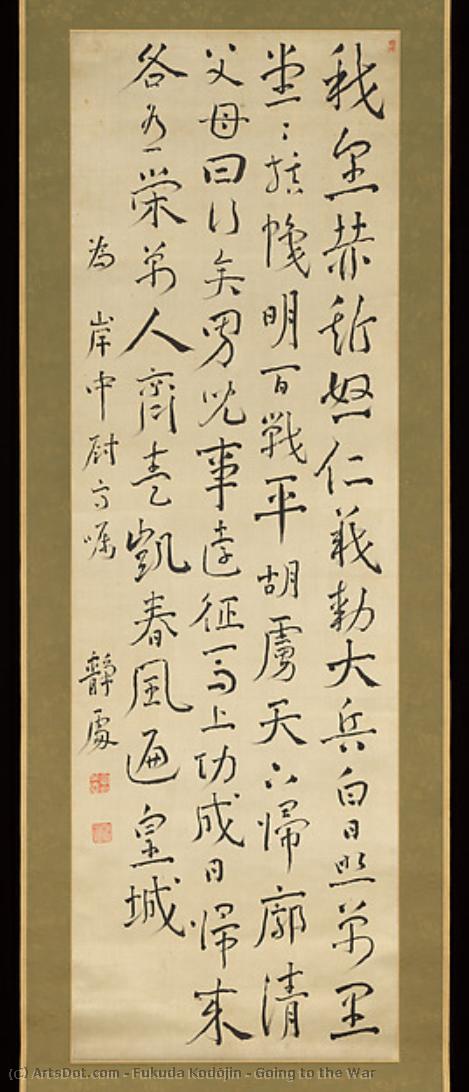
Kodōjin's paintings are immediately recognizable for their distinctive character. Departing from the more subdued palettes often associated with *nanga*, he embraced bold, vibrant colors – a striking choice that set him apart from many of his contemporaries. His landscapes are populated by bizarrely exaggerated mountain forms, rendered with a playful energy and a unique sense of humor. These aren’t realistic depictions of nature; they're imaginative constructions, imbued with symbolic meaning and emotional resonance. Solitary scholars frequently appear within these scenes, often depicted contemplating the beauty of the natural world or engaging in poetic pursuits. The inclusion of poetry is integral to his work – verses inscribed directly onto the paintings, adding another layer of depth and interpretation. He masterfully combined ink washes with rich mineral pigments, creating a dynamic interplay of texture and color that captivates the eye. His calligraphy, equally accomplished as his painting, further enhances the overall aesthetic harmony of his compositions.
Patronage, Obscurity, and Rediscovery
Kodōjin benefited from the patronage of influential figures in pre-war Japan – prime ministers, parliament members, industrialists, and scholars who recognized and supported his artistic talent. This support allowed him to dedicate himself fully to his art, but it also meant that his work was largely confined to private collections. Following his death in 1944, a period of economic hardship and social upheaval contributed to his gradual disappearance from the art historical record. For decades, his paintings remained hidden from public view, known only to a select few collectors. The rediscovery of Kodōjin’s work began in earnest around 2008, spearheaded by Andreas Marks, Curator of Japanese and Korean Art at the Minneapolis Institute of Arts. Through meticulous research – including visits to his descendants in Japan – Marks unearthed over 800 paintings and calligraphies, along with more than 1,000 poems, revealing the full scope of Kodōjin’s artistic output. This extensive investigation culminated in a major exhibition at Mia in 2023, accompanied by a comprehensive catalogue, introducing Kodōjin to a wider audience for the first time.
Historical Significance and Lasting Legacy
Fukuda Kodōjin's story challenges conventional narratives of Japanese art history, demonstrating that the tradition of *nanga* persisted well into the 20th century, evolving in unexpected ways. His unique style – characterized by bold colors, bizarre forms, and a playful sensibility – represents a fascinating departure from established norms. He wasn’t simply preserving a dying tradition; he was revitalizing it, infusing it with his own artistic vision and personal experiences. The rediscovery of his work has sparked renewed interest in Japanese literati painting, prompting scholars to re-evaluate the understanding of stylistic boundaries and influences. Kodōjin's legacy lies not only in his stunning paintings but also in his ability to bridge the gap between tradition and modernity, offering a compelling example of artistic resilience and individual expression. His art invites viewers to contemplate the beauty of nature, the power of poetry, and the enduring importance of intellectual pursuits – themes that resonate deeply with audiences today. His work stands as a testament to the enduring power of artistic vision and the importance of rediscovering forgotten masters.



 미리보기
미리보기
 손으로 그린 그림 구매
 공유하기
공유하기 공유하기
공유하기
 상세 정보
상세 정보

 다운로드
다운로드
 유사 작품
유사 작품 X-레이
X-레이 슬라이드 쇼

 더 보기
더 보기






































 유리 옵션은 110cm 미만 크기에서만 선택 가능합니다.