

작가가 직접 캔버스에 손으로 그린 유화 작품으로, 원하는 크기와 액자로 맞춤 제작해 드립니다. ( 프린트 판매로 전환 디지털 이미지 판매 채널로 전환)





























작품의 원본 비율을 그대로 유지하는 프리셋 사이즈 중에서 선택해 보세요.

특정 프레임이나 공간에 맞춰 원하는 크기를 직접 입력하실 수 있습니다. 선택하신 크기가 원본 이미지의 비율과 일치하지 않을 경우, 작품을 자르거나 추가적인 수작업 요소를 더해 그림을 확장하여 제작합니다. 제작 시작 전, 최종 확인을 위해 디지털 목업을 보내드립니다.
화면상의 미리 보기는 실제 크롭(자르기)이나 확장된 상태를 완벽히 반영하지 않을 수 있습니다. 최종 구도는 오직 목업을 통해서만 정확하게 확인하실 수 있습니다.
맞춤 크기 제작도 가능하지만, 원본의 비율을 그대로 유지하기 위해서는 미리 정의된 목록에서 크기를 선택하시는 것을 권장합니다.
Ridden Down
복제본 규격
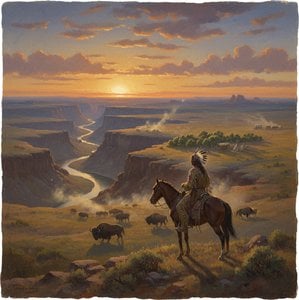
Frederic Remington's "Ridden Down," painted in 1905, isn’t merely a depiction of cowboys and horses; it’s a profound meditation on solitude, resilience, and the enduring spirit of the American West. This oil-on-canvas masterpiece, currently residing within the Amon Carter Museum of American Art in Fort Worth, Texas, captures a pivotal moment – a lone Native American rider silhouetted against an expansive, undulating sand dune landscape under a brilliant, cloudless sky. Remington, a master of portraying the frontier, expertly blends realism with an impressionistic sensibility, creating an image that simultaneously feels immediate and deeply symbolic.
The painting’s composition immediately draws the eye to the central figures: a man, clad in a simple green shirt, riding a powerful mustang. The horse is positioned behind him, its head lowered as if acknowledging the immensity of the terrain. Remington skillfully employs horizontal lines created by the towering sand dunes, which dominate the scene and establish a sense of overwhelming scale. These sweeping forms contrast sharply with the verticality of the rider and horse, emphasizing their vulnerability against the backdrop of nature’s grandeur. Two birds soar high above, adding a touch of fleeting beauty to this otherwise stark landscape – perhaps representing freedom or a distant hope.
Remington’s technique is immediately recognizable—bold, expressive brushstrokes that convey both the physicality of the scene and an underlying sense of movement. He doesn’t shy away from visible texture; the sand dunes are rendered with a rough, grainy quality, while the horse’s coat appears almost sculpted by the artist's hand. The color palette is dominated by warm yellows and ochres, reflecting the sun-baked earth and creating a feeling of intense heat. Cool blues in the sky provide a striking contrast, highlighting the vastness of the space and adding depth to the composition. Remington masterfully uses light and shadow to sculpt the forms, lending them a remarkable three-dimensionality.
The painting’s dynamic energy is further enhanced by his use of color—a vibrant, almost feverish application that captures the intensity of the desert environment. Notice how he subtly shifts tones within the sand dunes, suggesting variations in texture and depth. This attention to detail, combined with his confident brushwork, elevates “Ridden Down” beyond a simple landscape painting; it becomes a visceral experience for the viewer.
"Ridden Down" is more than just a visual record of the American West; it’s imbued with layers of symbolic meaning. The lone rider, often interpreted as a Native American figure, embodies themes of survival, adaptation, and resilience in the face of an increasingly encroaching civilization. The posture of the horse—lowered head, steady gait—suggests both respect for the land and a quiet determination to endure. Considering Remington’s own career, which coincided with a period of significant change and displacement for Native American communities, the painting can be viewed as a poignant commentary on this historical context.
Painted in 1905, “Ridden Down” reflects the waning days of the frontier era. Remington’s work often depicted scenes of cowboys, Indians, and the wild west—a romanticized vision that captured the imagination of a nation eager to define its identity. However, it's important to note that Remington’s portrayal was not without its complexities; he sometimes perpetuated stereotypes while simultaneously capturing the raw beauty and inherent drama of the West. The painting stands as a testament to his skill as an artist and a valuable window into a transformative period in American history.
To delve deeper into Frederic Remington’s artistic legacy, consider examining "The Wounded Buffalo," another iconic work showcasing his mastery of capturing the spirit of the West. You can explore more of his paintings and writings at WahooArt.com, where you'll find a curated selection of his most celebrated works. For further insights into Remington’s life and career, visit the Amon Carter Museum of American Art (here) or explore his biography on Wikipedia (here). And for a visual journey through the world of Frederic Remington, be sure to visit this page.
프레데릭 레밍턴의 기록된 주제들인 western expansion influence, native american culture", frontier life depiction, military & exploration, remington's iconic style, american identity theme, landscapes & human scale, key work in artist corpus 중에서도, "Ridden Down"은 american west, native american, horseback riding, desert landscape, remington art, western theme, lone figure, dynamic scene”에 독자적인 초점을 맞추고 있습니다.
"Ridden Down"은 미국 출신의 프레데릭 레밍턴가 American Regionalism” 운동의 흐름 속에서 제작한 작품입니다. 작가의 출신 배경은 이 작품을 미국 예술가들이 선보인 American Regionalism” 양식과 연결해 줍니다.
"Ridden Down"은(는) 1905년에 프레데릭 레밍턴에 의해 제작되었습니다.
프레데릭 레밍턴의 "Ridden Down"은(는) Living Room에 추천하는 작품입니다. 이 제안은 작품의 주제, 색상 및 분위기를 바탕으로 합니다.
"Ridden Down"의 색상은 Luminous 정도의 휘도를 나타냅니다.
"Ridden Down"의 뒤에는 프레데릭 레밍턴와 American Regionalism” 운동이 자리하고 있습니다.
"Ridden Down"은(는) 1905년에 American Regionalism” 사조의 작품으로 제작되었습니다. 제작 연도와 미술 사조는 미술사적 맥락에서 이 작품의 위치를 확고히 해줍니다.
프레데릭 레밍턴의 "Ridden Down"의 저작권 정보: 해당 작품은 퍼블릭 도메인 - 저작권 보호 기간이 만료되었습니다 상태입니다. 이는 이미지 복제 가능 여부를 결정하는 기준이 됩니다.


1861 - 1909 , 미국

Explore the life & legacy of Benjamin West, pioneering American artist and Royal Academy president. Discover his Neoclassical masterpieces, transatlantic influence, and lasting impact on art history. Learn more at WahooArt.
Explore the evocative paintings of Henry Farny, renowned for his romantic realism & depictions of Native American life in the 19th-century West. Discover his legacy and key artworks at WahooArt.

Explore the world of Grant Wood & American Regionalism with WahooArt. Discover the symbolism behind 'American Gothic', recurring themes, and the movement's lasting impact on art history. High-quality reproductions available.

Explore the captivating world of Charles Marion Russell, 'the cowboy artist.' Discover his life, iconic paintings, advocacy for Native Americans, and investment potential. A guide for discerning art collectors.

Explore the captivating art of Alfred Jacob Miller, chronicler of the American West. Discover his iconic paintings, techniques & lasting legacy – a valuable addition to any serious collection. Learn more at WahooArt.

 실제 크기로 보기
 보내기
보내기 공유하기
공유하기
 상세 보기
상세 보기 가이드 보기

 이미지 다운로드
 유사 작품 더 보기
 X-레이
X-레이 슬라이드 쇼 보기
 통계 정보
통계 정보


 상세 보기
상세 보기









 유리 옵션은 110cm 미만 크기에서만 선택 가능합니다.


