
원하는 크기와 액자로 주문 제작되는, 작가들이 직접 캔버스에 손으로 그린 유화 작품입니다. ( 프린트 판매로 전환 디지털 이미지로 전환)





























작품의 원본 비율을 유지하는 미리 설정된 크기 중에서 선택하세요.

특정 프레임이나 공간에 맞도록 직접 크기를 입력할 수 있습니다. 선택하신 크기가 원본 이미지의 비율과 일치하지 않는 경우, 작품을 자르거나 추가적인 손으로 그린 요소를 사용하여 그림을 확장합니다. 제작 시작 전 승인을 위해 디지털 목업을 보내드립니다.
화면 미리 보기는 실제 자르기 또는 확장을 반영하지 않습니다. 최종 구성은 목업을 통해서만 정확하게 확인하실 수 있습니다.
맞춤 크기 제작도 가능하지만, 원본 비율을 유지하기 위해 사전 정의된 목록에서 크기를 선택하시는 것을 권장합니다.

Village street
복제본 크기
Franz Marc’s “Village Street,” painted in 1908, is far more than a mere depiction of rural life; it serves as a profound embodiment of the artist’s deeply held spiritual convictions translated onto canvas. Created during the formative years of German Expressionism, specifically within the influential Der Blaue Reiter (The Blue Rider) group, this artwork stands as a testament to Marc’s unwavering belief in art’s capacity to communicate profound truths about existence and the sacredness of nature. The painting captures a tranquil village scene, dominated by a cobblestone street lined with modest houses painted in earthy hues—ochre, terracotta, and muted greens—fostering an atmosphere of serene simplicity that invites the viewer into a world of quiet contemplation.
As one gazes upon the composition, the eye is drawn to the rhythmic movement of life within the village. The street serves as a stage where two figures can be seen walking down the road, while other individuals are scattered throughout the scene, some nestled in the foreground and others receding into the distance. This sense of community is further enriched by the presence of multiple potted plants placed along the street, adding delicate touches of greenery that breathe life into the village atmosphere. The houses themselves feature a variety of colors and architectural styles, creating a lively and diverse environment that feels both grounded in reality and elevated by artistic vision.
Marc’s stylistic approach in this piece is undeniably distinctive, eschewing naturalistic representation in favor of bold color palettes and simplified geometric forms. He employed a technique reminiscent of cloisonné painting—a method often seen in Byzantine icons—where thick black outlines delineate shapes to create an almost sculptural effect on the flat surface. This deliberate simplification was not an attempt to reduce complexity, but rather a way to distill essence, identifying the fundamental spiritual qualities underlying observable reality. Through this technique, Marc transforms a simple streetscape into a structured, symbolic landscape.
The use of color in “Village Street” is particularly masterful, serving as a vehicle for emotion rather than just a tool for mimicry. While the buildings are anchored by muted tones, vibrant reds and yellows punctuate the composition, injecting a sudden burst of energy and hinting at an underlying inner vitality. For collectors and interior designers, this interplay of stability and vibrancy makes the piece exceptionally versatile; it possesses the quietude necessary for a peaceful study yet holds enough chromatic intensity to serve as a captivating focal point in a modern living space.
To understand the weight of this painting, one must consider its historical context within the Blaue Reiter movement. Founded by Marc alongside Wassily Kandinsky and Alexej von Jawlensky, this group sought to liberate art from the suffocating grip of academic conventions. They aimed to explore the potential for art to convey spiritual experience—a direct reaction against the prevailing materialism of the early 20th century. Influenced by Nietzschean philosophy and a deep reverence for the natural world, Marc used his brush to seek out the "inner truth" of his subjects.
Ultimately, “Village Street” offers an emotional impact that transcends its era. It captures a moment of harmony between humanity and their environment, wrapped in the bold, fractured beauty of Expressionism. For those seeking to adorn their homes with a piece that speaks of both historical significance and timeless aesthetic beauty, this reproduction offers a gateway into the heart of a movement that forever changed the trajectory of modern art. It is an invitation to look past the surface of the everyday and discover the vibrant, spiritual pulse that beats beneath the cobblestones.


1880 - 1916 , 독일
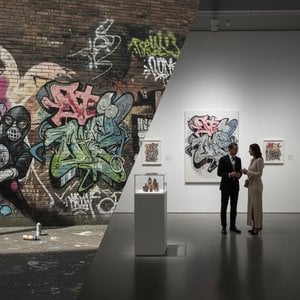
Explore the captivating journey of street art from urban walls to prestigious galleries. Discover how contemporary graffiti has evolved into a high-end collectible movement, redefining modern interior design and global art culture.

Explore the raw emotion of German Expressionism through a definitive guide to Ernst Ludwig Kirchner. Discover how his bold colors and distorted forms redefined modern art history, from Berlin street scenes to iconic masterpieces.


 미리보기
미리보기
 공유하기
공유하기 공유하기
공유하기
 상세 정보
상세 정보

 다운로드
다운로드
 유사 작품
유사 작품 X-레이
X-레이 슬라이드 쇼
 통계 정보
통계 정보

 더 보기
더 보기









 유리 옵션은 110cm 미만 크기에서만 선택 가능합니다.


![Village Street In Auvers [1890] — 빈센트 반 고흐, Post-impressionism](/media/artworks/images-thumb/29/e8/29e8888c1430389da7200da0366960ce.jpg)


