

빠른 제작과 다양한 마감 옵션을 선택할 수 있는 박물관 수준의 지클레이 및 캔버스 프린트. ( 수작업 채색 복제본 주문하기 디지털 이미지 판매 채널로 전환)





























작품의 원본 비율을 그대로 유지하는 프리셋 사이즈 중에서 선택해 보세요.

액자나 벽면 크기에 맞춰 필요한 가로와 세로 길이를 입력해 주세요. 프린트는 원본 이미지보다 크게 제작할 수 없으며 오직 자르는 것만 가능하므로, 비율이 다른 사이즈를 선택할 경우 이미지의 일부가 잘려 나갈 수 있습니다. 인쇄 작업에 들어가기 전, 최종 확인을 위해 디지털 목업을 보내드립니다. 이 페이지에 표시된 이미지는 실제 잘리는 영역을 나타내지 않으며, 오직 목업을 통해서만 정확한 확인이 가능합니다.
Playing Forms
복제본 규격
Franz Marc's "Playing Forms," painted in 1914 and currently residing within the hallowed halls of the Museum Folkwang in Essen, Germany, is more than just a painting; it’s an immersion into the heart of Expressionist thought. This vibrant canvas pulsates with a raw, almost primal energy, born from Marc's profound desire to capture not merely what he *saw*, but what he *felt* – the essence of life itself. The work immediately draws the eye with its bold color palette and dynamic arrangement of circles, inviting viewers into a world where form and emotion intertwine seamlessly.
At first glance, the composition appears deceptively simple: a dominant red circle anchors the center, surrounded by a swirling dance of blues – varying in intensity from pale washes to deep, saturated hues. These smaller circles aren’t merely decorative; they possess a rhythmic quality, suggesting movement and interconnectedness. A flash of yellow adds a touch of warmth and vitality on the right, while a subtle blue circle near the top left hints at an underlying harmony. But beneath this surface lies a complex exploration of color theory and its expressive potential. Marc wasn’t interested in replicating reality; he sought to distill it down to its purest emotional components.
To fully appreciate “Playing Forms,” one must consider its context within the burgeoning artistic landscape of early 20th-century Germany. Marc's work was profoundly influenced by his friend Robert Delaunay, particularly their shared fascination with color and abstraction. Delaunay’s “Les Fenêtres sur la Ville” series, with its fragmented planes of color, served as a crucial catalyst for Marc’s own explorations. However, Marc diverged from Delaunay's approach, forging his own distinct path towards what he termed ‘pure’ painting – an attempt to strip away representational elements and focus solely on the emotive power of color itself.
Marc’s method involved a deliberate manipulation of proportion and rhythm, creating a visual flow that guides the viewer’s eye. The arrangement of circles isn't random; it’s carefully orchestrated to evoke a sense of movement and energy. The crystalline structures hinted at on the left edge contrast sharply with the explosive bursts of color towards the center, mirroring perhaps the duality of experience – the ordered and the chaotic, the rational and the instinctive.
Like many artists of his time, Marc was deeply interested in the role of light. He wasn't simply depicting illumination; he was harnessing it to shape the very mood and meaning of the painting. This engagement with light aligns closely with the principles of “luminism,” a technique championed by figures like Caravaggio and later embraced by Impressionists – an emphasis on capturing the effects of light and shadow, not just their source. In "Playing Forms," Marc skillfully uses color to simulate light, creating a dynamic visual experience that seems to radiate outwards from the central red circle.
The interplay between light and shadow isn’t merely aesthetic; it's deeply symbolic. The brighter circles suggest vitality and joy, while the darker shades hint at introspection and perhaps even melancholy. This careful orchestration of tonal values contributes significantly to the painting’s emotional resonance, inviting viewers to contemplate the complexities of human experience.
Franz Marc's work is steeped in symbolism, reflecting his lifelong interest in spirituality and the natural world. The circles themselves can be interpreted as representing animals – particularly horses, which held a profound significance for Marc. He believed that animals possessed a deeper understanding of life’s mysteries than humans, and sought to capture their essence through his art. “Playing Forms” isn't simply an abstract composition; it’s a visual meditation on the interconnectedness of all living things and the search for spiritual truth.
The painting’s vibrant colors and dynamic forms evoke a sense of primal energy, suggesting a connection to something larger than ourselves. It’s a testament to Marc's ability to translate his inner world onto canvas, creating a work that continues to resonate with viewers today. A high-quality reproduction from WahooArt.com offers an exceptional opportunity to bring this powerful and evocative masterpiece into your home or studio – a window into the soul of one of Expressionism’s most visionary artists.
시각적 밝기 측면에서 볼 때, 프란츠 마크의 "Playing Forms"은(는) bright 수준입니다.
German Expressionism 사조 내에서, "Playing Forms"은(는) Recognized 정도의 인지도를 보유하고 있습니다.
"Playing Forms"의 Spiritual한 감정은 그 German Expressionism 양식과 함께 어우러집니다.

1880 - 1916 , 독일

Explore 10 defining German Expressionism masterpieces – from Munch's 'The Scream' to Kandinsky’s abstracts. Discover the artists, stories & bold colors behind this powerful art movement. Find museum-quality reproductions at WahooArt.com.

추상표현주의의 심장을 뛰게 한 10대 걸작을 만나보세요. 폴록, 로스코 등 거장의 작품 비하인드 스토리와 예술적 영감을 WahooArt에서! 지금 바로 미술품 컬렉션을 탐험하고, 당신의 공간에 특별한 예술적 감성을 더하세요. WahooArt.com

Journey through Wassily Kandinsky's 25 most iconic abstract paintings. Explore his revolutionary use of color, form & spiritual expressionism. Find museum-quality Kandinsky reproductions and elevate your home decor with WahooArt.com. Discover all masterpieces on WahooArt.com!

몬드리안, 말레비치 등 거장들의 기하학적 추상 미술 명작 10선을 만나보세요. 각 작품의 예술사적 의미와 색채, 구성을 탐구하고 WahooArt.com에서 고품질 아트 프린트를 소장하세요. 지금 바로 온라인 컬렉션을 확인하세요!
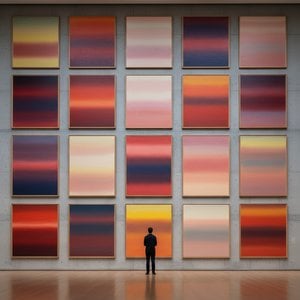
마크 로스코 최고작 25선을 만나보세요. 추상 표현주의 거장의 색채로 표현된 심오한 감정과 예술의 세계를 탐험하고, WahooArt에서 명화 복제본과 특별한 인테리어 아이디어를 찾아보세요. 지금 바로 컬렉션을 확인하세요!

 실제 크기로 보기
 보내기
보내기 공유하기
공유하기
 상세 보기
상세 보기 가이드 보기

 이미지 다운로드
 유사 작품 더 보기
 X-레이
X-레이 슬라이드 쇼 보기
 통계 정보
통계 정보


 상세 보기
상세 보기









 유리 옵션은 110cm 미만 크기에서만 선택 가능합니다.


