
 Impressionism
 1930
1930 40.0 x 50.0 cm
빠른 제작과 다양한 마감 옵션을 제공하는 박물관 품질의 지클레이 또는 캔버스 프린트. ( 손으로 그린 그림 구매 디지털 이미지로 전환)
작품의 원본 비율을 유지하는 미리 설정된 크기 중에서 선택하세요.

특정 프레임이나 공간에 맞춰 직접 치수를 입력하실 수 있습니다. 선택하신 사이즈가 원본 이미지의 비율과 일치하지 않을 경우, 작품을 크롭(자르기)하거나 이미지를 대칭 또는 단색 채우기로 확장하여 제작합니다. 제작 시작 전, 최종 확인을 위해 디지털 목업이 전송됩니다.
화면상의 미리보기는 실제 크롭이나 확장 상태를 반영하지 않으므로, 최종 구도는 오직 목업을 통해서만 정확하게 확인하실 수 있습니다.
맞춤 사이즈 제작도 가능하지만, 원본 비율을 유지하기 위해서는 사전 정의된 목록에서 치수를 선택하시는 것을 권장합니다.

Trees and Rocky Headland
복제본 크기

In the quiet, salt-kissed corners of the Channel Islands, there exists a particular quality of light that seems to dance between the sea and the shore. It was this very atmosphere that Sir Francis Grant Faed (1897–1964) dedicated his life to capturing. A true master of Jersey’s natural splendor, Faed possessed an uncanny ability to translate the fleeting textures of the British landscape into enduring oil paintings. Born in Saint Helier, his connection to the island was not merely geographical but deeply spiritual. His early years were shaped by a rigorous Victorian tradition of observation, instilled in him by his father, William Grant Faed. This foundation of meticulous detail would later serve as the structural skeleton upon which he draped the more fluid, emotive layers of his Impressionistic style.
The evolution of Faed’s artistry took a transformative turn when he moved to London to study at the prestigious Slade School of Fine Art between 1915 and 1918. It was within these hallowed halls that the artist encountered the revolutionary spirit of Impressionism. Absorbing the techniques of masters like Claude Monet and Pierre-Auguste Renoir, Faed began to move away from rigid photographic accuracy, seeking instead to capture the ephemeral essence of a moment. He learned to see light not as a static element, but as a living force that could dissolve edges and alter colors with every passing minute. This period marked his transition from a student of detail to a poet of atmosphere, a shift that would define his most celebrated works.
Upon returning to his roots, Faed turned his gaze toward the rugged coastlines and verdant meadows of Jersey. His body of work serves as a visual chronicle of an island caught between the wild energy of the Atlantic and the serene tranquility of rural life. He was particularly drawn to the dramatic interplay of textures—the jagged, ancient cliffs plunging into turquoise waters and the soft, rhythmic swaying of wildflowers in summer breezes. Unlike many of his contemporaries who sought out grand, sweeping vistas to impress the viewer, Faed often favored a more intimate, human-scaled perspective. His canvases frequently focused on smaller, nuanced scenes that invited the observer to linger on subtle tonal gradations.
His technical approach, often described as Impressionistic realism, allowed him to maintain a sense of topographical truth while embracing painterly freedom. In works such as Trees and Rocky Headland, one can observe his skillful use of visible brushstrokes to suggest movement and depth. His palette was masterfully tuned to the local climate, leaning heavily into muted greens, soft blues, and warm yellows that reflected the specific, hazy light characteristic of the Channel Islands. Whether depicting a sun-drenched garden in Garden Space or the nostalgic charm of A Jersey Farmhouse, his work consistently evokes a sense of peace and timelessness.
The historical significance of Frank Grant Faed lies in his role as a custodian of Jersey’s aesthetic heritage. Through his eyes, the island's landscape became more than just scenery; it became a character in its own right, imbued with emotion and history. His ability to blend the precision of his early training with the light-centric philosophy of the Impressionists created a unique niche in British landscape painting. He did not merely paint what he saw; he painted how the light felt upon the skin and how the wind moved through the grass.
Today, Faed’s contributions are celebrated within the annals of British art, with many of his most precious pieces residing in collections such as the Jersey Museum and Art Gallery. His legacy continues to inspire those who find beauty in the quiet, overlooked corners of the natural world. To look upon a Faed painting is to experience a moment of profound stillness, a brief respite where the light of the past illuminates the present with unmistakable clarity.
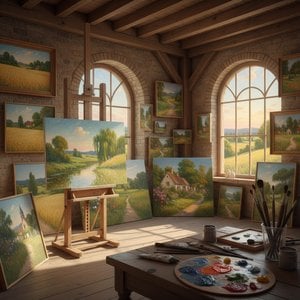
Discover the profound tranquility of rural art through an expert exploration of Impressionist landscapes. From pastoral scenes to textured oil masterpieces, learn how timeless nature-inspired artworks bring enduring elegance and serenity to sophisticated collectors.

Explore the ethereal beauty of Impressionist landscapes. Discover how masters like Monet captured fleeting light through color and texture, and learn to curate these timeless, luminous masterpieces for your home collection.

Discover the profound emotional depth of Post-Impressionist landscapes. Explore how masters like Van Gogh revolutionized art through vibrant color, textured impasto, and symbolic expression in this expert guide to the movement that redefined modern art history.

Embark on a visual journey through history's most iconic landscapes. Discover the mastery of Impressionism and the sublime power of nature through our expert guide to classical landscape art, curated for the discerning collector and fine art enthusiast.


 미리보기
미리보기
 공유하기
공유하기 공유하기
공유하기
 상세 정보
상세 정보 가이드 보기

 다운로드
다운로드
 유사 작품
유사 작품 X-레이
X-레이 슬라이드 쇼
 통계 정보
통계 정보 더 보기
더 보기






































 유리 옵션은 110cm 미만 크기에서만 선택 가능합니다.


