
 Acrylic On CanvasWallArtRenaissance
 1515
1515 180.0 x 120.0 cm
 Gallerie dell'Accademia
원하는 크기와 액자로 주문 제작되는, 작가들이 직접 캔버스에 손으로 그린 유화 작품입니다. ( 프린트 판매로 전환 디지털 이미지로 전환)





























작품의 원본 비율을 유지하는 미리 설정된 크기 중에서 선택하세요.

특정 프레임이나 공간에 맞도록 직접 크기를 입력할 수 있습니다. 선택하신 크기가 원본 이미지의 비율과 일치하지 않는 경우, 작품을 자르거나 추가적인 손으로 그린 요소를 사용하여 그림을 확장합니다. 제작 시작 전 승인을 위해 디지털 목업을 보내드립니다.
화면 미리 보기는 실제 자르기 또는 확장을 반영하지 않습니다. 최종 구성은 목업을 통해서만 정확하게 확인하실 수 있습니다.
맞춤 크기 제작도 가능하지만, 원본 비율을 유지하기 위해 사전 정의된 목록에서 크기를 선택하시는 것을 권장합니다.

Seven caricatures
복제본 크기
Francesco Melzi’s “Seven Caricatures” stands as a poignant testament to the Renaissance fascination with human anatomy and psychological observation—a rare pen and ink study executed in 1515, capturing the essence of character through exaggerated features. Housed at the Gallerie dell'Accademia in Venice, Italy, this artwork transcends mere visual representation; it’s an invitation into a profound contemplation of humanity itself.
Francesco Melzi’s contribution to art history isn’t defined by grand canvases or revolutionary innovations. Instead, he secured Leonardo da Vinci’s legacy—a devoted pupil who meticulously documented and preserved the genius of his mentor. This dedication is palpable in “Seven Caricatures,” where Melzi skillfully employs a technique rooted in anatomical study, mirroring Da Vinci's own groundbreaking explorations.
The High Renaissance, flourishing during Melzi’s lifetime, prioritized humanist ideals—a shift away from medieval dogma toward an appreciation for human intellect and physicality. This intellectual climate fueled artists like Melzi to dissect the human form, striving to capture not just its appearance but also its inner workings. The resulting sketches are imbued with a palpable sense of concentration; each caricature is rendered with painstaking detail, reflecting the artist’s unwavering commitment to accuracy.
Beyond mere technical prowess lies a deeper symbolic resonance. Melzi's deliberate exaggeration—the oversized nose, diminutive mouth—isn’t simply playful distortion; it serves as a conduit for conveying complex emotions and psychological states. Consider the first figure: its prominent chin speaks volumes about confidence and self-assuredness, while the fifth embodies melancholy and introspection. These caricatures tap into universal human experiences – ambition, vanity, sorrow – mirroring Da Vinci's own explorations of emotion.
Comparing Melzi’s work to Da Vinci’s “Study of a Rider” reveals striking similarities in stylistic approach and conceptual underpinning. Both artists prioritized anatomical precision alongside expressive rendering—a hallmark of Renaissance art that sought to elevate observation beyond mere imitation. The subtle shading employed by Melzi creates depth and dimensionality, mirroring Da Vinci's masterful manipulation of chiaroscuro.
For those seeking inspiration or contemplating acquiring a high-quality reproduction, “Seven Caricatures” offers more than just an aesthetically pleasing image; it embodies the spirit of the Renaissance—a celebration of human intellect and artistic mastery. To delve deeper into Melzi’s oeuvre and Leonardo da Vinci's enduring influence, visit WahooArt.com’s page on the artist.

1491 - 1570 , 이탈리아
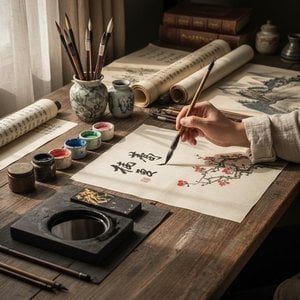
Embark on a sophisticated exploration of ink wash painting and Sumi-e. Uncover the profound historical lineages, Zen philosophies, and technical mastery behind this timeless medium in our authoritative guide for fine art enthusiasts.

Discover the sophisticated mastery of graphite drawing. Explore expert techniques for achieving profound depth, intricate texture, and hyper-realistic detail through the alchemy of carbon, curated for the discerning art enthusiast and professional collector.

Elevate your artistic practice with this expert guide to mastering the line. Discover advanced techniques in graphite, charcoal, and contour drawing designed for art students seeking technical precision and expressive depth in their fine art studies.

Embark on a profound journey through the soul of Chinese calligraphy. Explore the historical mastery of ink, brush, and script, from ancient Zhuanshu to elegant running script, and discover how this timeless art form reflects the enduring spirit of classical East Asian aesthetics.

Explore the profound artistry of graphite drawing. Discover professional techniques for mastering depth, texture, and detail through a lens of art history, from classical sketches to modern masterpieces. Elevate your understanding of the pencil medium with our expert guide.


 미리보기
미리보기
 공유하기
공유하기 공유하기
공유하기
 상세 정보
상세 정보

 다운로드
다운로드
 유사 작품
유사 작품 X-레이
X-레이 슬라이드 쇼
 통계 정보
통계 정보 더 보기
더 보기









 유리 옵션은 110cm 미만 크기에서만 선택 가능합니다.


