Oil On CanvasWallArtRenaissance
 1477
1477 124.0 x 234.0 cm
 슈타틸리체 무제엔
빠른 제작과 다양한 마감 옵션을 선택할 수 있는 박물관 수준의 지클레이 및 캔버스 프린트. ( 수작업 채색 복제본 주문하기 디지털 이미지 판매 채널로 전환)





























작품의 원본 비율을 그대로 유지하는 프리셋 사이즈 중에서 선택해 보세요.

특정 프레임이나 공간에 맞춰 직접 치수를 입력하실 수 있습니다. 선택하신 사이즈가 원본 이미지의 비율과 일치하지 않을 경우, 작품을 크롭(자르기)하거나 이미지를 대칭 또는 단색 채우기로 확장하여 제작합니다. 제작 시작 전, 최종 확인을 위해 디지털 목업이 전송됩니다.
화면상의 미리보기는 실제 크롭이나 확장 상태를 반영하지 않으므로, 최종 구도는 오직 목업을 통해서만 정확하게 확인하실 수 있습니다.
맞춤 사이즈 제작도 가능하지만, 원본 비율을 유지하기 위해서는 사전 정의된 목록에서 치수를 선택하시는 것을 권장합니다.

Architectural View
복제본 규격
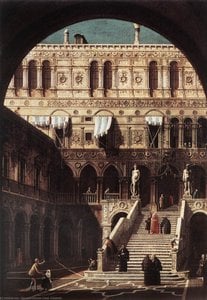
The Staatliche Museen in Berlin houses a painting that transcends mere representation; it offers a meticulously crafted glimpse into the heart of Renaissance architectural thought – Francesco di Giorgio Martini's "Architectural View," completed around 1477. More than simply a depiction of a courtyard, this work is a profound meditation on space, perspective, and the burgeoning humanist ideals shaping Europe’s artistic landscape. Martini, a polymath whose talents spanned painting, sculpture, architecture, and engineering, imbued this piece with an intellectual rigor rarely found in contemporary art, making it a cornerstone of his legacy.
The scene unfolds within a classically inspired courtyard, a carefully orchestrated composition dominated by muted earth tones – ochres, siennas, and umbers – that evoke the weathered grandeur of ancient Rome. Columns, arches, and domes rise with an almost mathematical precision, each element contributing to a sense of ordered harmony. Martini’s mastery lies not just in his technical skill but in his ability to capture the *illusion* of depth and volume. The use of linear perspective draws the viewer's eye towards the central fountain or pool, creating a powerful focal point that anchors the entire composition. Notice how the diminishing size of objects in the distance – a subtle yet crucial element of Renaissance painting – reinforces this sense of spatial recession.
Martini's "Architectural View" stands as a pivotal work, representing a significant departure from the prevailing artistic conventions of his time. While other artists were primarily focused on portraying realistic appearances, Martini was deeply invested in understanding and replicating the principles of linear perspective – a technique that had been developing for centuries but was only beginning to be fully embraced by Renaissance painters. This painting isn’t merely a representation of an existing space; it's a demonstration of how that space *could* be rendered on a two-dimensional surface, reflecting Martini’s own architectural theories.
The influence of Leon Battista Alberti and Filarete, prominent architects and theorists of the early 15th century, is evident in Martini’s approach. However, Martini pushed beyond their established methods, incorporating elements of his own innovative designs – particularly concerning staircase planning and the arrangement of spaces within a building. The meticulous detailing of the columns, arches, and domes speaks to a deep understanding of architectural construction, suggesting that Martini intended this painting to serve as both an artistic statement and a practical guide for aspiring architects.
Beyond its technical brilliance, “Architectural View” is rich in symbolic meaning. The courtyard itself represents a microcosm of the ideal city – a carefully planned space designed for civic life, contemplation, and social interaction. The central fountain or pool, often associated with abundance and prosperity, further reinforces this theme. The muted color palette contributes to an atmosphere of timelessness and serenity, evoking a sense of classical antiquity while simultaneously suggesting the potential for future innovation.
Interestingly, Martini’s architectural treatise, “Trattato di architettura, ingegneria e arte militare,” reveals his fascination with creating an ‘ideal city,’ a concept deeply rooted in humanist philosophy. This painting can be seen as a visual manifestation of that vision – a carefully constructed representation of the principles governing harmonious urban design. The influence of this treatise is further evidenced by the inclusion of geometric patterns within the ceiling, echoing the mathematical precision underlying Martini’s architectural theories.
Today, “Architectural View” remains a testament to Francesco di Giorgio Martini's extraordinary talent and intellectual curiosity. Reproductions by WahooArt offer an exceptional opportunity to bring this masterpiece into your home or office, allowing you to appreciate its beauty and complexity in exquisite detail. The careful attention to color, texture, and perspective ensures that these reproductions capture the essence of Martini’s original vision, transporting you back to the heart of the Renaissance.
For those seeking a deeper understanding of this remarkable work, we encourage you to explore the supplementary resources provided: links to scholarly articles, online exhibitions, and detailed analyses of Martini's artistic techniques. Discovering the rich history and symbolism behind “Architectural View” is an enriching experience in itself – a journey into the mind of one of Renaissance Italy’s most innovative thinkers.

이탈리아 콰트로첸토(Quattrocento)라는 찬란한 태피스트리 속에서, 프란chesco di Giorgio Martini만큼 거대하고 다재다능한 인물은 찾아보기 어렵습니다. 진정한 homo universalis(보편적 인간)였던 그의 지성은 순수 예술의 천상적인 아름다움과 공학의 엄격한 정밀함 사이의 경계를 자유로이 넘나들었습니다. 1439년 시에나에서 태어난 마르티니는 중세의 그림자가 인문주의의 빛에 의해 물러가던 심오한 문화적 변혁의 시기에 등장했습니다. 그의 삶은 단순히 예술가로서의 경력을 넘어, 성모 마리아를 그려낸 섬세한 붓터치부터 이상 도시의 견고한 성벽에 이르기까지 우주를 관통하는 근원적인 기하학을 이해하고자 했던 평생의 탐구 과정이었습니다.
마르티니의 예술적 여정은 리듬감 넘치는 프리즈(frieze) 양식의 구도를 추구했던 시에나 학파의 거장, 베키에타의 세심한 지도 아래 시작되었습니다. 초기 훈련을 통해 종교적 도상학에 대한 깊은 경외심과 시에나의 우아한 전통을 체득했음에도 불구하고, 프란체스토는 혁신을 향한 갈증을 멈출 수 없었습니다. 그는 지역적 전통에 안주하는 대신, 선원근법과 고전 고대에 대한 피렌체의 급성장하는 관심에 주목했습니다. 이러한 지적 호기심은 그가 이전 세대의 장식적인 화풍을 넘어설 수 있게 해주었으며, 훗날 레오나르도 다 빈치의 천재성을 예견하는 듯한 심리적 깊이와 정교한 공간 관계의 통제력을 그의 작품 속에 불어넣었습니다.
마르티니가 남긴 창조적 성취의 폭은 실로 경이롭습니다. 화가로서 그는 신성함과 실재감을 결합하는 보기 드문 능력을 지니고 있었습니다. 성인들과 천사들이 함께한 성모자와 같은 걸작에서는 깊은 자애로움이 엄격한 구조적 명료함과 완벽하게 어우러지는 것을 볼 수 있습니다. 시에나 대성당을 위해 제작된 기념비적인 성모 대관을 포함한 그의 종교화들은 고전적인 웅장함과 성스러운 예술에 요구되는 감정적 힘을 통합해내는 그의 역량을 증명합니다. 그는 단순히 성스러운 인물을 묘사하는 데 그치지 않고, 건축적으로 견고하며 물리적으로 실재하는 듯한 세계 속에 그들을 배치했습니다.
그러나 마르티니를 단지 화가의 관점으로만 바라보는 것은 그의 진정한 천재성이 지닌 심장 박동을 놓치는 것과 같습니다. 건축과 군사 공학에 기여한 그의 업적 또한 혁신적이었습니다. 그는 저서인 건축론(Trattato di architettura)을 통해 단순한 기술적 도면 그 이상의 것을 제시했습니다. 그는 città ideale(이상 도시), 즉 이상적인 도시에 대한 선구적인 청사진을 제안했습니다. 그의 상세한 삽화와 원고들은 비례의 조화와 방어의 전략적 필요성에 매료되었던 한 지성의 흔적을 보여줍니다. 이러한 스케치 속에서 우리는 아름다움과 유용성이 정교하고 계산된 균형 속에 공존하는 현대 도시 계획의 씨앗을 발견하게 됩니다.
프란체스코 디 조르조 마르티니의 역사적 의의는 예술가의 직관과 공학자의 논리 사이의 간극을 메운 능력에 있습니다. 그는 조각된 신체의 우아함과 석조 보루의 강인함 사이에서 어떠한 차이도 느끼지 못했던 인물이었습니다. 그의 영향력은 르네상스 전역으로 퍼져나가, 후대 세대가 디자인이라는 개념을 통합된 학문으로 접근하는 방식에 큰 궤적을 남겼습니다. 1502년 시에나에서 생을 마감한 그의 삶은 미술사와 건축 이론 연구 모두에서 오늘날까지도 깊은 울림을 주는 유산으로 남아 있습니다.
그가 남긴 영속적인 영향력을 되새기며, 우리는 그의 위대함을 지탱하는 다음과 같은 기둥들을 떠올릴 수 있습니다.

1439 - 1502 , 이탈리아

Explore 10 iconic paintings with captivating 'mushroom' tones! Discover Van Gogh, Monet & Rembrandt’s masterpieces—earthy palettes, rich history & artistic techniques. Find museum-quality art reproductions and curated decor ideas at

Explore the captivating world of earth tones! Discover their historical significance, psychological impact & artistic techniques. Find inspiration for your home decor and museum-quality reproductions at WahooArt.

Explore the captivating world of earth tones in art! Discover historical context, emotional resonance & artistic techniques behind these timeless colors. Find inspiration for your home decor and museum-quality reproductions.

Explore 10 famous paintings dominated by captivating tan tones! From Renaissance portraits to Impressionist landscapes, discover art history's most serene masterpieces. Find museum-quality reproductions & elevate your home decor on .

Journey through 10 iconic paintings bathed in 'sand' tones – from Van Gogh to Monet. Explore the stories, techniques & warm palettes of these timeless masterpieces. Find museum-quality art reproductions at and bring classic beauty home.

 실제 크기로 보기
 보내기
보내기 공유하기
공유하기
 상세 보기
상세 보기 가이드 보기

 이미지 다운로드
 유사 작품 더 보기
 X-레이
X-레이 슬라이드 쇼 보기
 통계 정보
통계 정보 상세 보기
상세 보기









 유리 옵션은 110cm 미만 크기에서만 선택 가능합니다.