


이 페이지에 표시된 작품은 저작권법의 보호를 받으며, 이에 따라 동일한 복제품을 제작하거나 판매하는 것은 법으로 금지되어 있습니다. 이러한 권리 보호는 다음과 같은 국제 협약에 따라 시행됩니다. 베른 협약 또한 다음에서 명시하는 법률을 포함한 국내법에 의해 보호됩니다. 미국 저작권법 제17조.
이 방식은 저작권 보호를 받는 예술 작품을 복제하거나 그대로 재현하는 것이 아니기에 저작권 규정을 완벽히 준수합니다. 대신, 이는 창의적인 재해석의 과정을 거칩니다. 즉, 원작에서 영감을 받되 원작과 동일하지 않은 새로운 회화 작품을 의미합니다.
빠른 제작과 다양한 마감 옵션을 제공하는 박물관 수준의 지클레이 및 캔버스 프린트. ( 수작업 채색 복제본 주문하기 디지털 이미지로 전환)
작품의 원본 비율을 그대로 유지하는 프리셋 사이즈 중에서 선택해 보세요.

액자나 벽면 크기에 맞춰 필요한 가로와 세로 길이를 입력해 주세요. 프린트는 원본 이미지보다 크게 제작할 수 없으며 오직 자르는 것만 가능하므로, 비율이 다른 사이즈를 선택할 경우 이미지의 일부가 잘려 나갈 수 있습니다. 인쇄 작업에 들어가기 전, 최종 확인을 위해 디지털 목업을 보내드립니다. 이 페이지에 표시된 이미지는 실제 잘리는 영역을 나타내지 않으며, 오직 목업을 통해서만 정확한 확인이 가능합니다.
Sans Titre
복제본 크기
Fouad Bellamine, a prominent figure in the Moroccan and international artistic landscape, possesses a practice that transcends mere representation to explore the very architecture of perception. Born in the imperial city of Fez, his early years were steeped in the rich textures of the madina, where watching his grandfather work as a weaver provided a foundational connection to pattern and craft. This deep-rooted cultural heritage, combined with an academic rigor developed at the École des Arts Appulated de Casablanca, allowed him to forge a unique visual language. Bellamine’s work is famously characterized by his philosophical stance on identity, famously asserting that “there is no Moroccan painting, there are only Moroccan painters.” This sentiment underscores his refusal to be confined by nationalistic labels, choosing instead to engage with universal themes of light, space, and the physical act of creation.
His artistic journey took him from the vibrant streets of Morocco to the intellectual hubs of Europe. After traveling through France, Yugoslavia, and Italy in the early 1970s, Bellamine’s exposure to Western art movements profoundly shaped his trajectory. His time in Paris, supported by a governmental scholarship at the Cité des Arts, became a period of intense theoretical and practical development. It was here that he pursued advanced studies in art history and theory at Saint-Denis University - Paris VIII, focusing his doctoral research on the concept of murality in contemporary painting. This academic pursuit of how art interacts with and constructs space became a cornerstone of his mature style.
In the works of Bellamine, the canvas is not merely a surface for pigment but a site of construction. His paintings often revolve around the motifs of arcs, arches, and vaults, elements that evoke both classical architecture and the rhythmic patterns found in Moroccan design. These forms are never static; they are brought to life through a dynamic interplay of light and gesture. For Bellamine, the movement of the body during the act of painting is inseparable from the creation of space itself. He utilizes light as a structural tool, using it to define volumes and reveal the hidden depths within his compositions.
The technique often involves a masterful use of mixed media, where rich textures invite the viewer into a state of contemplation. His palettes frequently employ vibrant tones—such as deep reds and warm oranges—to guide the eye through complex, nonfigurative landscapes. This approach creates a sense of tranquility and "calm silence," inviting an emotional response that is both meditative and profound. The following elements are central to his aesthetic development:
Bellamine’s influence extends far beyond the borders of Morocco, as his work has been integrated into some of the most prestigious collections in the world. His presence in institutions such as the Institut du Monde Arabe in Paris, the Mathaf Museum of Modern Art in Qatar, and the Sharjah Art Museum in the United Arab Emirates speaks to his global significance. In 2020, he achieved a historic milestone as the first Moroccan artist to be honored with a retrospective exhibition at the Mohammed VI Museum of Modern and Contemporary Art in Rabat, titled Entrée en matière.
Living and working between Paris and Rabat, Bellamine continues to bridge the gap between different cultural perspectives. His career, which includes roles as a teacher and lecturer, has allowed him to mentor new generations of artists while maintaining a rigorous personal practice. Through his dedication to nonfigurative painting and his profound inquiry into the nature of space, Fouad Bellamine remains a vital voice in contemporary art, reminding us that the act of painting is an eternal quest for light and meaning.

1940 - , Morocco

Elevate your artistic practice with our expert guide to mastering mixed media art. Discover professional techniques for layering, material integration, and creating structural depth to transform your creative vision into sophisticated, multi-dimensional masterpieces.

Discover the exquisite mastery of pastel and chalk in fine art. Explore how texture, light, and softness create depth in Impressionist masterpieces and learn to curate these velvety textures for sophisticated, luxury interiors with expert guidance.
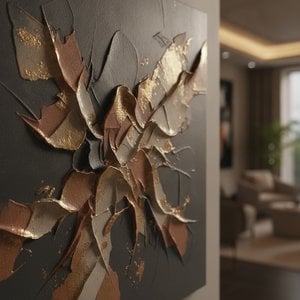
Elevate hospitality interiors with the sculptural depth of plaster and impasto art. Explore how tactile textures and relief techniques create immersive, luxurious environments for modern hotel design through expert curation and bespoke fine art commissions.
 미리보기
미리보기
 공유하기
공유하기 공유하기
공유하기
 상세 정보
상세 정보 가이드 보기

 다운로드
다운로드
 유사 작품 더 보기
 X-레이
X-레이 슬라이드 쇼 보기
 질의응답
질의응답
 통계 정보
통계 정보


 더 보기
더 보기






































 유리 옵션은 110cm 미만 크기에서만 선택 가능합니다.


