

작가가 직접 캔버스에 손으로 그린 유화 작품으로, 원하는 크기와 액자로 맞춤 제작해 드립니다. ( 프린트 판매로 전환 디지털 이미지 판매 채널로 전환)
작품의 원본 비율을 그대로 유지하는 프리셋 사이즈 중에서 선택해 보세요.

액자나 벽면 크기에 맞춰 필요한 가로와 세로 길이를 입력해 주세요. 본 작품은 수작업으로 제작되므로, 요청하신 비율에 따라 작가가 그림의 가장자리를 조금 더 넓게 그리거나 일부를 조정하여 작업할 수 있습니다. 작업 시작 전, 최종 확인을 위해 디지털 목업 이미지를 보내드립니다. 이 페이지에 표시된 이미지는 실제 결과물과 다를 수 있으며, 오직 목업 이미지만이 정확한 결과물을 보여줍니다.
Teddy
복제본 규격
Margarete Steiff was not a painter or a sculptor, but a seamstress who transformed a physical limitation into a commercial empire. Born in Giengen an der Brenz, Germany, her life was shaped by the onset of poliomyelitis at just one year old. This disease dictated her mobility but did not halt her industry. By age 17, she had enrolled in sewing school, acquiring the technical precision that would later define her brand. She did not seek to create fine art; she sought to master a craft that could sustain her despite an incurable condition.
Her workshop began within her father's house in 1874. What started as a small operation producing hand-made felt clothing eventually expanded under the influence of her cousin’s husband, Adolf Glatz, who pushed for a dedicated company. The transition from garments to stuffed animals happened by chance on December 8, 1879, when she spotted a pattern for a baby elephant in Modenwelt magazine. She intended the creation to be a pin cushion, yet the market saw something else entirely. By 1880, she had sold over 5,000 of these stuffed elephants.
The expansion of her catalog moved beyond elephants to include monkeys, donkeys, horses, camels, mice, dogs, cats, hares, and giraffes. This growth was fueled by a specific technical shift brought about by her nephew, Richard. An art school graduate from Stuttgart, Richard applied his training in detailed animal sketches to the production process. His influence moved the company away from simple felt toward more sophisticated textures.
In 1902, Richard introduced a bear covered in mohair. This change was significant because it moved the product from a stiff object to something tactile and soft. While Margarete initially viewed these bears with skepticism, the commercial reality was undeniable. The introduction of this material changed the nature of the toy industry.
The success of the brand reached a tipping point through American commerce. In 1906, an American buyer purchased 3,000 bears, which were subsequently marketed in the United States as "Teddy Bears," a name derived from President Theodore Roosevelt. This connection between a German workshop and American political culture solidified the product's place in global markets. By 1907, production had reached one million units.
Margarete Steiff died on May 9, 1909, at age 61 due to complications from a lung infection. Her legacy is measured in the continued existence of the company, which maintains a massive catalog of approximately 20,000 animal designs. The business model she established—centered on the motto "For children...only the best is good enough!"—remains the foundation of the brand's current production of Teddy Bears and other animals.

1847 - 1909 , Germany

Explore the captivating world of vintage art prints! Discover their history, collecting tips & enduring appeal. Expert insights on chromolithography and building a legacy collection with WahooArt.

Explore the captivating world of vintage paintings! Discover key styles, cultural significance & collecting tips from art experts at WahooArt. Find authentic reproductions and elevate your home décor.

Explore the evocative world of vintage landscape art! Discover the history, artists & emotional power behind masterpieces from the Hudson River School & beyond. Expert insights for collectors & enthusiasts.

Explore the captivating world of vintage art! Discover historical movements, iconic themes & collecting tips. Find handmade reproductions & expert appraisal at WahooArt.
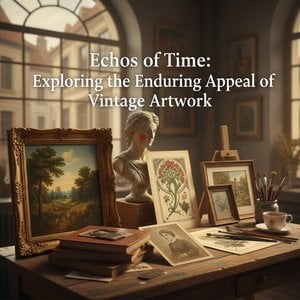
Explore the captivating world of vintage art! Discover its history, enduring appeal, & how to build your own collection. Expert advice, custom reproductions & museum-quality prints at WahooArt.

 실제 크기로 보기
 보내기
보내기 공유하기
공유하기
 상세 보기
상세 보기 가이드 보기

 이미지 다운로드
 유사 작품 더 보기
 X-레이
X-레이 슬라이드 쇼 보기
 통계 정보
통계 정보


 상세 보기
상세 보기






































 유리 옵션은 110cm 미만 크기에서만 선택 가능합니다.


