작품 상세 설명
A Bold Vision of Modernity
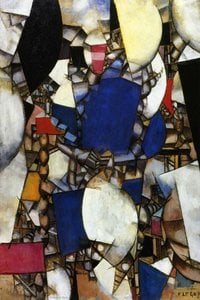
This captivating work by Fernand Léger exemplifies his distinctive contribution to early 20th-century art – a powerful synthesis of Cubist principles and a uniquely modern aesthetic. Featuring three fragmented nude figures interwoven in a dynamic composition, the painting is a striking exploration of form, color, and the human condition within an increasingly industrialized world.
Deconstructing Form & Embracing “Tubism”
Léger moved beyond traditional representation, breaking down the human figure into simplified geometric shapes – cylinders, cones, and planes – earning his style the moniker "Tubism." This deliberate deconstruction isn’t about distortion; rather, it's a re-imagining of form, emphasizing structure and solidity. The strong black outlines defining each shape contribute to the artwork’s graphic quality and assertive presence. Notice how the overlapping forms create spatial ambiguity, rejecting conventional perspective in favor of a flattened picture plane.
A Palette of Power & Emotion
The restricted yet vibrant color palette – dominated by reds, blues, yellows, oranges, white, and black – is applied in bold, flat areas with minimal blending. This technique amplifies the artwork’s impact, creating visual tension through contrasting hues. The dominance of red in the lower portion grounds the composition, while cooler blues and yellows animate the upper sections. White serves as a highlighting element, drawing attention to key forms within the complex arrangement.
Historical Context & Artistic Influences
Created around 1954, this piece reflects Léger’s ongoing engagement with the principles of Cubism, which he adapted into his own highly recognizable style. While influenced by Picasso and Braque, Léger distinguished himself through his focus on machine-like forms and a celebration of modern life. His work foreshadowed elements of Pop Art, anticipating its embrace of popular culture and bold visual language.
Symbolism & Emotional Resonance
The intertwined figures suggest intimacy and connection, yet their fragmented representation evokes a sense of alienation or detachment – a common theme in early 20th-century art reflecting the anxieties of modernity. The lack of facial expression adds to this ambiguity, inviting viewers to project their own interpretations onto the scene. Are these figures embracing, struggling, or simply existing within a disjointed reality?
A Statement Piece for Modern Interiors
This artwork is more than just a visual experience; it’s a statement piece that commands attention and sparks conversation. Its bold colors and dynamic composition make it ideal for modern interiors seeking an injection of artistic energy. Whether displayed in a living room, office, or gallery space, this reproduction will undoubtedly become a focal point, inspiring creativity and contemplation. It's a testament to Léger’s enduring legacy as a pioneer of modern art – a work that continues to resonate with audiences today.