빠른 제작과 다양한 마감 옵션을 선택할 수 있는 박물관 수준의 지클레이 및 캔버스 프린트. ( 수작업 채색 복제본 주문하기 디지털 이미지 판매 채널로 전환)





























작품의 원본 비율을 그대로 유지하는 프리셋 사이즈 중에서 선택해 보세요.

액자나 벽면 크기에 맞춰 필요한 가로와 세로 길이를 입력해 주세요. 프린트는 원본 이미지보다 크게 제작할 수 없으며 오직 자르는 것만 가능하므로, 비율이 다른 사이즈를 선택할 경우 이미지의 일부가 잘려 나갈 수 있습니다. 인쇄 작업에 들어가기 전, 최종 확인을 위해 디지털 목업을 보내드립니다. 이 페이지에 표시된 이미지는 실제 잘리는 영역을 나타내지 않으며, 오직 목업을 통해서만 정확한 확인이 가능합니다.
The viaduct
복제본 규격
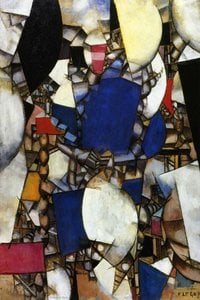
Fernand Léger's The Viaduct isn’t simply a depiction of an industrial scene; it is a bold declaration of faith in the machine age, rendered with his signature “Tubism” – a uniquely powerful evolution of Cubist principles. This painting transforms steel, brick, and the dynamism of transportation into a compelling visual symphony of form and color.
The composition is anchored by a robust, predominantly yellow building dramatically intersected by a viaduct – an elevated railway bridge. A speeding train on the right injects immediate energy and movement. Léger masterfully employs cylindrical forms, breaking down architectural elements and even human figures into simplified geometric shapes. These aren’t merely representations; they are *constructions*, emphasizing the underlying structural logic of the modern world.
Two subtly integrated human figures appear within this mechanical landscape – one positioned near the left edge and another closer to the center. They almost function as components within the larger machine, rather than independent observers, hinting at humanity’s evolving relationship with technology. A clock prominently placed in the top-left corner isn't a mere detail; it symbolizes Léger’s fascination with time, efficiency, and the rhythmic pulse of modern life.
Léger achieves his striking effect through flat planes of color – primarily yellows, reds, blues, and grays – and strong contrasts. He deliberately rejects traditional modeling techniques in favor of a more graphic, almost poster-like approach, enhancing the painting’s visual impact and immediacy.
Born in 1881, Léger lived through a period of rapid industrialization. Unlike many artists who mourned the loss of tradition, he wholeheartedly embraced it. He perceived beauty and heroism within machinery, believing it represented a new aesthetic possibility. Developing his distinctive style around 1910, he moved beyond analytical Cubism towards a more figurative and accessible form – “Tubism” – which focused on the inherent structural qualities of objects.
The Viaduct perfectly exemplifies this artistic evolution. It’s not just *about* industry; it's an attempt to capture its very essence, its underlying structure, and its profound impact on human experience. Léger’s work anticipated the Pop Art movement decades later with its embrace of everyday objects and mass-produced imagery.
The painting evokes a sense of dynamism and optimism, yet also carries an undercurrent of detachment. The anonymized figures suggest the individual’s place within the vast industrial system. It's a powerful statement about modernity – its energy, scale, and potential for both progress *and* alienation.
The Viaduct is more than just a painting; it’s a visual manifesto celebrating the beauty and complexity of the modern world – a testament to Fernand Léger’s visionary artistry. It invites viewers to contemplate not only what we build, but also how those creations shape our lives.
"The viaduct"은(는) 페르난 레제의 Cubism 시기 작품으로, 이 작가의 주요 주제로는 cubist abstraction, industrial cityscape, geometric dynamism, modern urban life, leger's machine age, early 20th century, form and movement, simplified reality 등이 있습니다.
"The viaduct"은(는) Acrylic On Canvas 기법으로 제작되었습니다.
페르난 레제의 "The viaduct"에 관한 통계 정보는 작품의 통계 페이지에서 확인하실 수 있습니다: 해당 작품의 월간 방문 횟수, 작가 작품의 방문 횟수, 그리고 최근 방문자의 국가 및 언어별 상세 현황을 제공합니다.

1881 - 1955 , 프랑스

Explore the vibrant world of Fernand Léger. Discover how his 'Tubism' and Machine Age aesthetics redefined modern art, offering profound inspiration for discerning collectors seeking geometric beauty and industrial dynamism.

Explore the profound evolution of Cubist still life, from Cézanne's structural foundations to the fragmented brilliance of Braque and Léger. Discover how geometric abstraction redefined reality through a sophisticated lens of form, color, and modern artistic mastery.

Explore the profound intersection of industry and artistry. Discover museum-quality reproductions of Machine Age masterpieces by Léger and Rivera, curated for elite collectors seeking to infuse luxury interiors with the powerful, geometric soul of industrial progress.

 실제 크기로 보기
 보내기
보내기 공유하기
공유하기
 상세 보기
상세 보기 가이드 보기

 이미지 다운로드
 유사 작품 더 보기
 X-레이
X-레이 슬라이드 쇼 보기
 통계 정보
통계 정보

 상세 보기
상세 보기









 유리 옵션은 110cm 미만 크기에서만 선택 가능합니다.