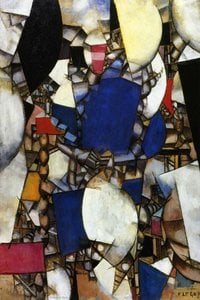
Acrylic On CanvasWallArtCubist
 1920Modern
 65.0 x 92.0 cm
온라인 미리보기보다 훨씬 뛰어난 품질의 고해상도 디지털 이미지를 구매해 보세요.
각 파일은 사내 전문가가 고급 도구와 숙련된 수동 리터칭 기술을 사용하여 세심하게 준비합니다. 우리는 모든 이미지가 탁월한 선명도, 정확한 색상 재현력, 그리고 미세한 디테일까지 완벽하게 갖추도록 보장합니다.
최종 파일은 전문적인 편집 및 인쇄 환경에서 즉시 사용할 수 있도록 최적화되어 72시간 이내에 이메일로 발송됩니다. 이는 세계적인 디자인 스튜디오, 출판사 및 갤러리가 신뢰하는 것과 동일한 품질입니다.
개인 소장 및 전시, 인쇄, 창작 프로젝트를 위한 고해상도 파일을 다운로드하세요. ( 프린트 판매로 전환 수작업 채색 복제본 주문하기)
WahooArt.com를 선택하시면 단순히 이미지를 받는 것을 넘어, 정밀한 보정 과정을 거쳐 완성된 전문적인 디지털 예술 작품을 만나보실 수 있습니다. 모든 작품에는 만족 보장 서비스가 함께 제공되며, 주문 시 다음과 같은 사항들이 자동으로 포함됩니다:
주문 후 72시간 이내에 고해상도 디지털 이미지 파일이 이메일로 발송되며, 즉시 사용하실 수 있습니다.
귀하의 작품은 고급 AI 기술과 정교한 수동 편집 과정을 거쳐 전문적으로 최적화되며, 이를 통해 디테일과 선명도, 색상의 정확도를 극대화합니다.
파일을 실수로 삭제하거나 분실하셨나요? 걱정 마세요. 언제든 무료로 다시 보내드립니다.
관세나 부가세, 배송비 부담 없이 작품을 즉시 소장하세요 - 디지털 다운로드는 언제나 면세 혜택이 적용됩니다.
전문적인 도구와 색상 관리 시스템을 통해 디지털 이미지가 원본의 색상을 최대한 정확하게 구현하도록 보장합니다.
구매하신 디지털 이미지에 만족하지 못하실 경우, 100일 이내에 별도의 조건 없이 수정 또는 100% 환불을 진행해 드립니다.
만족스럽지 않으신가요? 디지털 파일을 받으신 후 100일 이내에 조건 없이 전액 환불해 드립니다.
이미지 3매 구매 시 10% 할인 - 5매 구매 시 15% 할인 - 10매 이상 구매 시 20% 할인. 크리에이티브 프로젝트, 갤러리, 에이전시에 매우 유용합니다.
Fernand Léger’s “The Builders,” completed in 1920, stands as a cornerstone of Cubist aesthetics and embodies the fervent optimism surrounding technological advancement during the tumultuous years of World War I. More than just a depiction of laborers engaged in manual labor—though undeniably present—the painting transcends mere observation to become an impassioned manifesto for Léger’s belief that art could actively engage with the transformative forces reshaping human existence.
Born Joseph Fernand Henri Léger in Argentan, Normandy, 1881, Léger’s artistic trajectory began with a fascination for architecture but swiftly pivoted toward painting after relocating to Paris around 1900. Unlike many of his contemporaries who sought refuge in abstraction as an escape from representational concerns, Léger deliberately confronted the burgeoning machine age head-on. He wasn't interested in simply mirroring reality; he aimed to distill its essence—its geometric precision and rhythmic dynamism—into a new visual language.
Léger’s stylistic breakthrough arrived with Cubism, spearheaded by Picasso and Braque. Rejecting traditional perspective and illusionistic depth, Cubists shattered objects into interlocking planes, presenting multiple viewpoints simultaneously. Léger brilliantly adapted this technique to portray figures—specifically three workers—whose bodies are rendered as fragmented assemblages of industrial parts: cylinders, spheres, and cubes. This deliberate simplification wasn’t merely stylistic; it served a profound conceptual purpose.
"The Builders" isn't simply illustrating physical activity; it’s conveying an intellectual understanding of how the machine is reshaping human anatomy and environment. Léger famously articulated this concern in 1922, stating that “the contemporary environment is clearly the manufactured and ‘mechanical’ object; this is slowly subjugating the breasts and curves of women, fruit, the soft landscape.” This quote encapsulates Léger's conviction that art should actively engage with the anxieties and aspirations inherent in modernity.
Beyond its formal innovation, “The Builders” resonates with symbolic significance. The tennis rackets held by the figures represent leisure and recreation—a deliberate contrast to the grueling realities of wartime labor. However, Léger’s meticulous attention to detail—the carefully positioned sports balls, the clock on the wall—suggests a broader commentary on time and progress. These elements underscore Léger's belief that art could capture not only the present moment but also its trajectory toward an uncertain future.
Fernand Léger’s “The Builders” remains a testament to his unwavering artistic conviction—a bold declaration that art could embrace complexity while simultaneously distilling it into powerful geometric forms. It foreshadowed the stylistic developments of Pop Art and cemented Léger's place as one of the most influential artists of the 20th century, continuing to inspire collectors and interior designers alike with its striking visual language and enduring message about humanity’s relationship with technology.
"The Builders"은(는) 페르난 레제의 다른 작품들과 마찬가지로 Cubist 양식과 더불어 cubist vision, industrial spirit, sport celebration, geometric abstraction, modern aesthetic라는 작가의 반복되는 주제 의식을 공유합니다.
페르난 레제의 "The Builders"의 역사적 시기는 Modern입니다. 이러한 분류는 미술사적 맥락에서 해당 작품의 위치를 정의합니다.
페르난 레제의 "The Builders"의 기록된 인기도는 Iconic입니다.

1881 - 1955 , 프랑스

 실제 크기로 보기
 보내기
보내기 공유하기
공유하기
 상세 보기
상세 보기 가이드 보기

 이미지 다운로드
 유사 작품 더 보기
 X-레이
X-레이 슬라이드 쇼 보기
 통계 정보
통계 정보 상세 보기
상세 보기