Oil On CanvasWallArtCubism
 1926Modern
 65.0 x 92.0 cm
작가가 직접 캔버스에 손으로 그린 유화 작품으로, 원하는 크기와 액자로 맞춤 제작해 드립니다. ( 프린트 판매로 전환 디지털 이미지 판매 채널로 전환)





























작품의 원본 비율을 그대로 유지하는 프리셋 사이즈 중에서 선택해 보세요.

액자나 벽면 크기에 맞춰 필요한 가로와 세로 길이를 입력해 주세요. 본 작품은 수작업으로 제작되므로, 요청하신 비율에 따라 작가가 그림의 가장자리를 조금 더 넓게 그리거나 일부를 조정하여 작업할 수 있습니다. 작업 시작 전, 최종 확인을 위해 디지털 목업 이미지를 보내드립니다. 이 페이지에 표시된 이미지는 실제 결과물과 다를 수 있으며, 오직 목업 이미지만이 정확한 결과물을 보여줍니다.
Red Pot
복제본 규격
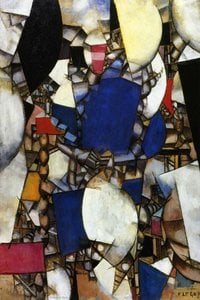
In the vibrant landscape of early twentieth-century modernism, few works capture the rhythmic pulse of the machine age as elegantly as Fernand Léger’s Red Pot. Created in 1926, this masterful still life serves as a profound exploration of how we perceive reality through a fractured lens. Rather than offering a traditional, sentimental depiction of domestic objects, Léger invites us into a world where vases, bottles, and delicate plant stems are meticulously dissected and reconstructed. The composition is far from static; it is a dynamic arrangement where strong diagonal lines propel the viewer's eye across the canvas, creating an exhilarating sense of movement within a highly structured geometric framework.
The painting is a cornerstone of the Cubist movement, yet it bears the unmistakable fingerprint of Léger’s unique vision. While his contemporaries, such as Picasso and Braque, often focused on the intellectual deconstruction of space, Léger pioneered what critics famously termed Tubism. In Red Pot, we see this signature style manifest through the reduction of organic forms into robust cylinders, cones, and planes. This aesthetic choice was not merely an artistic whim but a celebration of the industrial era—a visual language that found beauty in the sleek, mechanical precision of the modern world.
Technically, the artwork is a triumph of oil on canvas, showcasing Léger’s disciplined and meticulous approach to medium. The artist utilizes precise brushwork and a careful layering of pigments to build up volume, creating subtle tonal variations that suggest texture without relying on explicit realism. The lighting within the piece is notably even and diffused, which serves to flatten the picture plane and emphasize the fascinating interplay of shapes rather than dramatic shadows. This deliberate lack of chiaroscuro allows the viewer to focus entirely on the structural integrity of the composition.
The color palette is a masterclass in balance, offering a sophisticated dialogue between cool and warm tones. A grounding foundation of blues, grays, and crisp whites provides a neutral stage upon which the more striking elements perform. The sudden, brilliant punctuations of deep reds and earthy browns act as visual anchors, drawing the eye to key focal points within the arrangement. This careful chromatic strategy ensures that while the painting is intellectually stimulating, it remains visually harmonious and deeply captivating.
For the discerning collector or interior designer, Red Pot offers much more than historical significance; it provides a timeless aesthetic anchor for contemporary spaces. The artwork’s ability to evoke intellectual curiosity through its abstract geometry makes it an ideal centerpiece for environments that value sophistication and modernism. Its clean lines and structured composition possess a sculptural quality that complements both minimalist and eclectic decor, bringing a sense of ordered energy to any room.
Beyond its physical beauty, the painting resonates with an emotional sense of stability and progress. It captures a moment in history when the world was being rebuilt through technology and new perspectives. Owning a high-quality reproduction of this masterpiece allows one to invite that spirit of innovation and structural beauty into their personal sanctuary, turning a wall into a window onto the transformative power of modern art.

1881 - 1955 , 프랑스

Explore the profound evolution of Cubist still life, from Cézanne's structural foundations to the fragmented brilliance of Braque and Léger. Discover how geometric abstraction redefined reality through a sophisticated lens of form, color, and modern artistic mastery.

Explore the profound evolution of Cubist landscapes. Discover how masters like Braque and Picasso redefined perspective through geometric mastery, transforming nature into an intellectual mosaic of form and light for the discerning modern art collector.

Explore the vibrant world of Fernand Léger. Discover how his 'Tubism' and Machine Age aesthetics redefined modern art, offering profound inspiration for discerning collectors seeking geometric beauty and industrial dynamism.

 실제 크기로 보기
 보내기
보내기 공유하기
공유하기
 상세 보기
상세 보기 가이드 보기

 이미지 다운로드
 유사 작품 더 보기
 X-레이
X-레이 슬라이드 쇼 보기
 Q&A
Q&A 통계 정보
통계 정보 상세 보기
상세 보기









 유리 옵션은 110cm 미만 크기에서만 선택 가능합니다.