A Portrait of Melancholy: Ferdinand Hodler's Figure Study
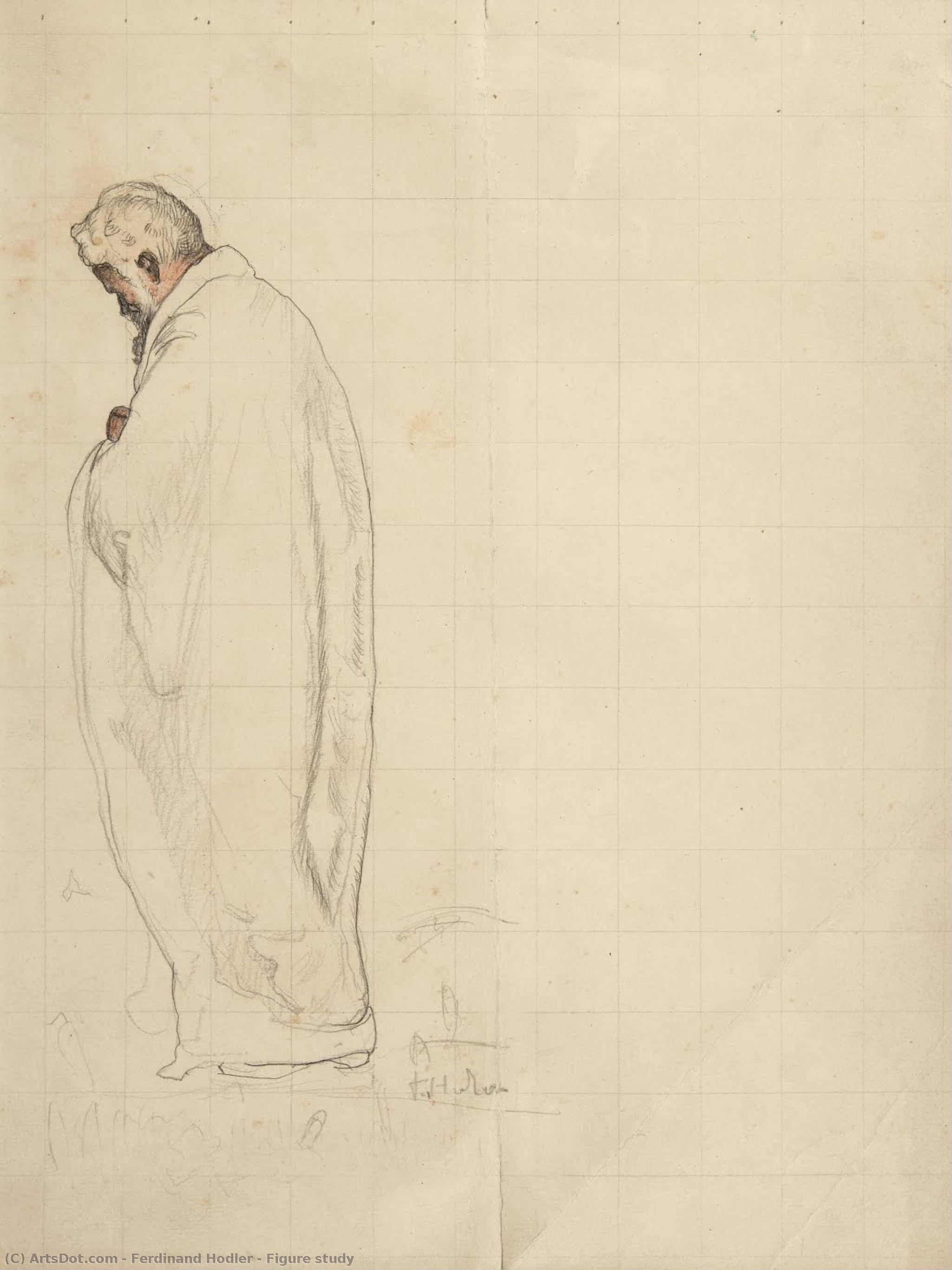
Ferdinand Hodler’s “Figure study,” completed in 1895, stands as a testament to the artist’s profound engagement with themes of mortality and psychological introspection—characteristics that would define his entire artistic career. Born in Bern, Switzerland, in 1853, Hodler experienced early familial tragedy, shaping him into an artist acutely attuned to the fragility of human existence.
Style and Technique: Embracing Symbolism
Hodler’s style is instantly recognizable for its distinctive blend of realism and symbolic representation. Departing from Impressionistic tendencies prevalent at the time, he prioritized conveying inner emotional states over mere visual accuracy. The meticulous rendering of anatomical detail—evident in the depiction of the man’s musculature—contrasts sharply with the muted palette and flattened perspective employed throughout the composition. Hodler skillfully utilized a technique known as “tonal painting,” layering shades of grey to create depth and atmosphere, effectively capturing the pervasive sense of melancholy that permeates the artwork.
Historical Context: The Fin de Siècle Spirit
"Figure study" emerged during the "Fin de siècle," or End of Century, a period marked by intellectual ferment and societal anxieties in Europe. Artists like Hodler wrestled with existential questions—the inevitability of death, the complexities of human consciousness—reflecting the broader cultural preoccupation with these themes. The influence of Nietzsche’s philosophy – particularly his concept of “eternal recurrence” – can be discerned in Hodler's exploration of cyclical time and psychological repetition.
Symbolism Unleashed: Gestures and Expression
Beyond its formal qualities, "Figure study" is laden with symbolic significance. The man’s outstretched hand—a gesture simultaneously vulnerable and assertive—suggests a yearning for connection amidst isolation. The gaze directed upwards conveys contemplation and perhaps even acceptance of fate. Hodler's masterful use of expressive brushstrokes amplifies these emotional resonances, conveying not just what the figure looks like but also how it feels to be human.
Emotional Impact: A Meditation on Loss
Ultimately, “Figure study” transcends mere visual representation; it functions as a profound meditation on loss and remembrance. Hodler’s ability to distill complex psychological ideas into a single image speaks to the enduring power of art to grapple with universal human experiences. The artwork invites viewers to confront their own mortality and consider the significance of fleeting moments—a poignant reminder of the beauty and sorrow inherent in life itself.
- Size: 33 x 25 cm
- Date: 1895



 미리보기
미리보기
 프린트 구매
 공유하기
공유하기 공유하기
공유하기
 상세 정보
상세 정보

 다운로드
다운로드
 유사 작품
유사 작품 X-레이
X-레이 슬라이드 쇼


 더 보기
더 보기






































 유리 옵션은 110cm 미만 크기에서만 선택 가능합니다.