The Genesis of a Symbolist Masterpiece
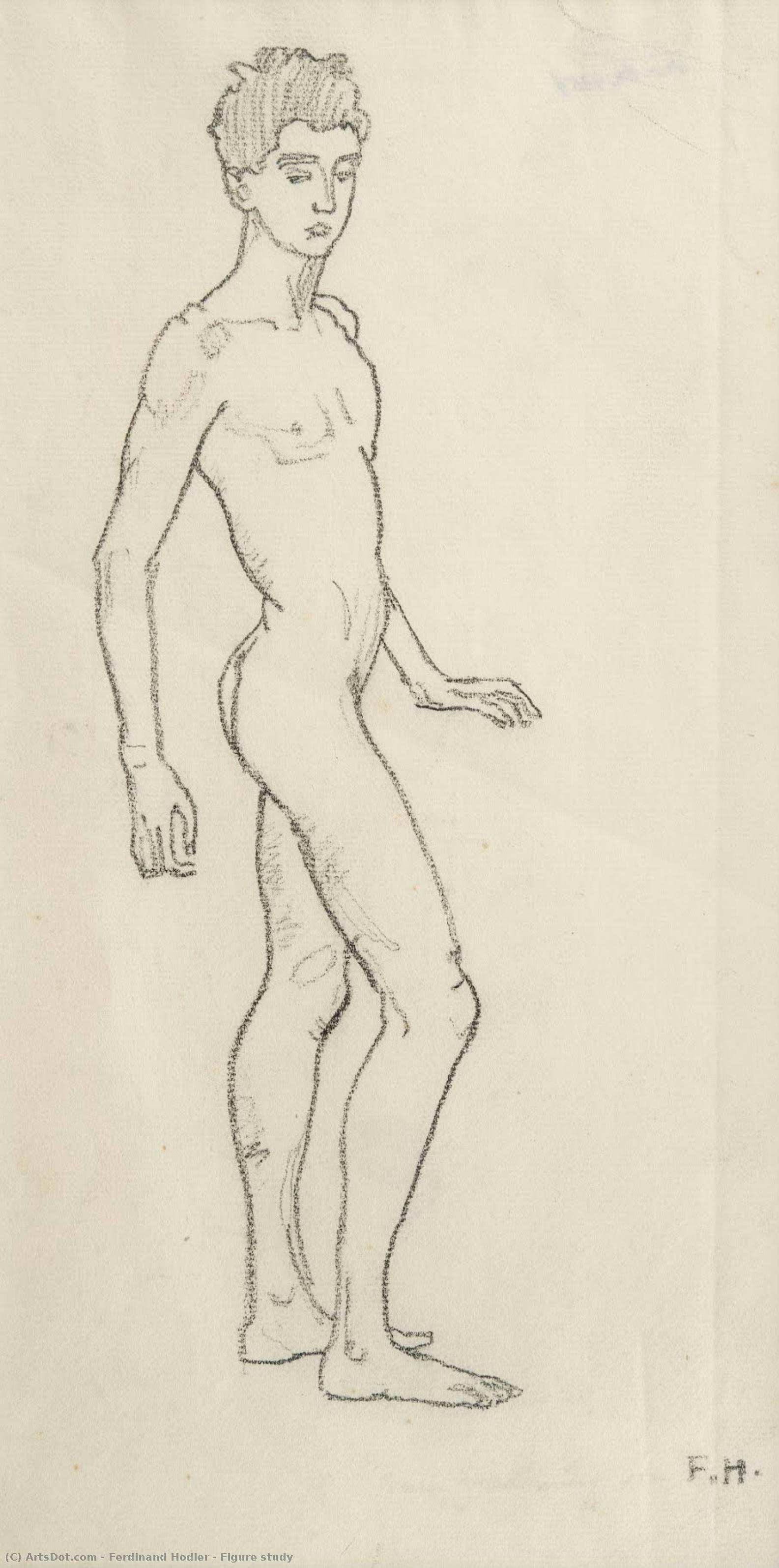
Ferdinand Hodler's “Figure Study,” created in 1901, isn’t merely a drawing; it’s a distilled essence of late 19th-century Swiss Symbolism. Born amidst profound personal loss – the untimely deaths of his father and brothers casting a long shadow over his early life – Hodler channeled these experiences into an artistic language deeply rooted in introspection and the exploration of universal themes. This particular work, executed with charcoal on paper, exemplifies his signature style: a deliberate rejection of photographic realism in favor of capturing the *feeling* of a subject, imbuing it with emotional resonance rather than precise detail.
The image depicts a solitary male figure standing with his hands resting comfortably on his hips. The pose is deceptively simple, yet brimming with quiet dignity and a subtle sense of contemplation. Hodler’s masterful use of line – loose, flowing, and almost hesitant – creates an atmosphere of dreamlike serenity. Notice how the shading isn't about rendering volume or texture; it’s about suggesting form through tonal variations, creating an ethereal quality that transcends the limitations of the medium.
Decoding the Symbolism: Parallelism in Action
Hodler developed a unique artistic philosophy he termed “parallelism,” and this concept is powerfully evident within "Figure Study." He believed that human life operated according to underlying rhythms and symmetries, mirroring the patterns found in nature. This principle manifests here through the figure’s balanced posture, his relaxed stance, and the deliberate arrangement of lines – they create a visual harmony that speaks to an innate sense of order. The drawing isn't about depicting a specific individual; it’s about representing a universal archetype of human experience: stillness, reflection, and perhaps even a touch of melancholy.
The choice of a nude male figure is also significant within the context of Hodler’s work. It’s not presented as overtly sexual but rather as an embodiment of vulnerability and humanity stripped bare – both literally and figuratively. The lack of background further isolates the subject, intensifying his introspection and inviting the viewer to project their own emotions and interpretations onto the image.
A Glimpse into a Lost Era: Context and Legacy
“Figure Study” was created during a period of immense artistic ferment in Europe. The Symbolist movement, with its emphasis on subjective experience, dream imagery, and spiritual themes, offered a powerful counterpoint to the prevailing realism and naturalism of the time. Hodler’s work aligns perfectly with this aesthetic, yet he possessed a distinctive voice – one characterized by a profound sensitivity to color, line, and form. The drawing is currently housed at the National Gallery of Bosnia and Herzegovina in Sarajevo, a testament to its enduring artistic value.
Hodler's influence extends far beyond Switzerland. His work paved the way for later movements such as Art Nouveau and Expressionism, demonstrating his remarkable ability to synthesize diverse influences into a cohesive and deeply personal style. Reproductions of “Figure Study” offer a beautiful opportunity to bring this evocative image into your home or office – a subtle reminder of the power of art to capture the essence of human emotion and experience.



 미리보기
미리보기
 손으로 그린 그림 구매
 공유하기
공유하기 공유하기
공유하기
 상세 정보
상세 정보

 다운로드
다운로드
 유사 작품
유사 작품 X-레이
X-레이 슬라이드 쇼


 더 보기
더 보기






































 유리 옵션은 110cm 미만 크기에서만 선택 가능합니다.