x


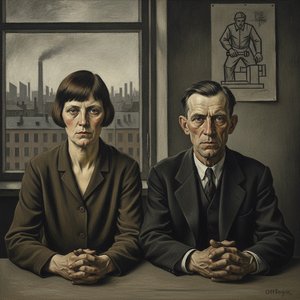
 Contemporary Realism
 2016
2016 40.0 x 60.0 cm
빠른 제작과 다양한 마감 옵션을 제공하는 박물관 품질의 지클레이 또는 캔버스 프린트. ( 손으로 그린 그림 구매 이미지 구매)





























작품의 원본 비율을 유지하는 미리 설정된 크기 중에서 선택하세요.

특정 프레임이나 공간에 맞춰 직접 치수를 입력하실 수 있습니다. 선택하신 사이즈가 원본 이미지의 비율과 일치하지 않을 경우, 작품을 크롭(자르기)하거나 이미지를 대칭 또는 단색 채우기로 확장하여 제작합니다. 제작 시작 전, 최종 확인을 위해 디지털 목업이 전송됩니다.
화면상의 미리보기는 실제 크롭이나 확장 상태를 반영하지 않으므로, 최종 구도는 오직 목업을 통해서만 정확하게 확인하실 수 있습니다.
맞춤 사이즈 제작도 가능하지만, 원본 비율을 유지하기 위해서는 사전 정의된 목록에서 치수를 선택하시는 것을 권장합니다.

Aleppo
복제본 크기

In the quiet, creative atmosphere of Brühl, Germany, the works of Eva Janina Wieczorek emerge as profound meditations on the duality of existence. Born in Katowice, Poland, on May 23, 1951, Wieczorek carries within her a rich, multicultural heritage that informs her visual language. Her early life was marked by a technical precision, having completed an apprenticeship as a technician in Poland, yet it was the gentle influence of her uncle, a fellow painter, that ignited a lifelong devotion to the fine arts. This foundational period, rooted in discipline and observation, would later become the bedrock upon which she built her mastery of oil on canvas, allowing her to bridge the gap between the tangible world and the ethereal realms of the subconscious.
The evolution of Wieczondere’s style is a testament to her relentless pursuit of new modes of expression. Her formal training under Professor Roman Kalarus at the Academy of Fine Arts in Katowice provided her with the classical tools necessary to manipulate light and shadow with breathtaking intensity. While her early explorations involved the delicate transparency of watercolours and the vibrant immediacy of acrylics, she eventually found her true voice in the rich, layered depths of oil painting. This mastery allows her to achieve a level of realism that feels almost tactile, yet she frequently subverts this accuracy by introducing surrealist motifs—dreamlike imagery that invites the viewer to question the boundaries between reality and fantasy.
As her career progressed, Wieczorek demonstrated an extraordinary ability to adapt to the changing tides of the art world. A pivotal moment occurred around 2010 when, inspired by the pioneering digital explorations of David Hockney, she embraced the possibilities of digital painting. This transition did not represent a departure from her classical roots but rather an expansion of them. By integrating graphic software into her repertoire, she found new ways to experiment with color-themed series and spontaneous mental imagery. Her digital works often possess the same emotional weight as her oils, characterized by a keen sense of interpersonal relationships and a fascination with the human form, ranging from intimate portraits of women and children to stylized depictions of cultural icons.
Her thematic preoccupations are as diverse as her mediums. In her more recent large-scale works, Wieczorek has utilized her technical prowess to address pressing socio-political narratives. Through series such as "Unsere Welt" (Our World), she juxtaposes contrasting realities—peace and war, wealth and poverty, opportunity and inequality. By utilizing a striking contrast between monochromatic black-and-white elements and soft, pastel hues, she forces a confrontation with the complexities of modern life. This ability to weave heavy, contemporary themes into a visually captivating aesthetic has earned her recognition across Europe, with her works finding homes in collections and exhibitions throughout Germany, Great Britain, Croatia, Poland, and Belgium.
The significance of Eva Janina Wieczorek’s oeuvre lies in its capacity to act as a mirror to both the individual psyche and the global landscape. Whether she is rendering an underwater scene that evokes a sense of profound solitude or a portrait that captures the fleeting essence of fame, her work remains anchored by a powerful implementation of light. Her art does not merely depict subjects; it breathes life into them, using the interplay of luminance and obscurity to tell stories that are often wordless yet deeply resonant.
As she continues to create in Brühl, Wieczorek’s legacy is defined by several key artistic pillars:

1951 - , Poland
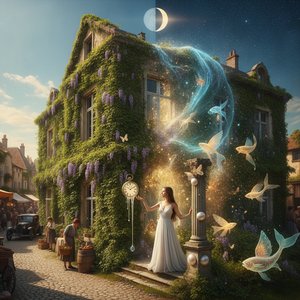
Explore the enigmatic world of Magic Realism. From its German origins to Latin American mastery, discover how this sophisticated movement blends reality with the extraordinary—perfect for discerning collectors seeking depth and wonder in fine art.


최신 미술 뉴스, 특별 혜택 및 인테리어 아이디어를 가장 먼저 만나보세요.
프로젝트에 대해 알려주시면 저희 미술 전문가들이 맞춤형 아트 제안 3가지를 전달해 드립니다.
당신만을 위한 맞춤형 옵션 3가지를 무료로 추천해 드립니다!


 미리보기
미리보기
 공유하기
공유하기 공유하기
공유하기
 상세 정보
상세 정보

 다운로드
다운로드
 유사 작품
유사 작품 X-레이
X-레이 슬라이드 쇼
 더 보기
더 보기









 유리 옵션은 110cm 미만 크기에서만 선택 가능합니다.