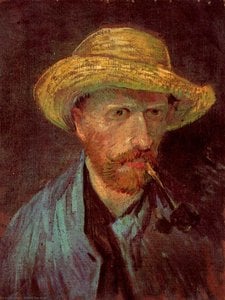
작가가 직접 캔버스에 손으로 그린 유화 작품으로, 원하는 크기와 액자로 맞춤 제작해 드립니다. ( 프린트 판매로 전환 디지털 이미지 판매 채널로 전환)
작품의 원본 비율을 그대로 유지하는 프리셋 사이즈 중에서 선택해 보세요.

액자나 벽면 크기에 맞춰 필요한 가로와 세로 길이를 입력해 주세요. 본 작품은 수작업으로 제작되므로, 요청하신 비율에 따라 작가가 그림의 가장자리를 조금 더 넓게 그리거나 일부를 조정하여 작업할 수 있습니다. 작업 시작 전, 최종 확인을 위해 디지털 목업 이미지를 보내드립니다. 이 페이지에 표시된 이미지는 실제 결과물과 다를 수 있으며, 오직 목업 이미지만이 정확한 결과물을 보여줍니다.
Self-Portrait
복제본 규격
저작권과 관련하여, "Self-Portrait"은(는) 퍼블릭 도메인 - 저작권 보호 기간이 만료되었습니다 상태입니다.
Eugène Lawrence Vail의 "Self-Portrait"의 수작업 복제화는 본 웹사이트의 수작업 유화 복제화 페이지를 통해 리넨 캔버스 위에 손으로 직접 그린 유화 복제화에서 구매하실 수 있습니다.
Eugène Lawrence Vail의 "Self-Portrait"의 X선 분석 페이지는 엑스레이 스타일의 뷰를 포함하여 작품 이미지의 11개 광학 레이어를 슬라이드하며 살펴볼 수 있는 인터랙티브 뷰어를 제공합니다.

The life of Eugène Lawrence Vail was a beautiful tapestry woven from two distinct worlds, blending the rugged charm of his Breton roots with the disciplined intellect of his American upbringing. Born in 1857 in Saint-Servan, France, to a Breton mother and an American father, Vail occupied a unique cultural space that would later define the breadth of his artistic perspective. His early path, however, seemed destined for a much more pragmatic vocation than the canvas. At the insistent behest of his father, who sought to provide him with a "practical" foundation, Vail traveled to New Jersey to study engineering at the Stevens Institute of Technology. It was during these formative years in Hoboken that he demonstrated not only academic rigor but also a burgeoning spirit of community, becoming a founding father of the Gamma chapter of the Theta Xi fraternity.
Yet, the call of the aesthetic could not be silenced by the precision of mathematics or the structure of engineering. After a brief period serving as a cartographer during the scientific expeditions of the Wheeler Survey in the United States, Vail felt the irresistible pull toward the fine arts. Returning to France in 1879, he embarked on a transformative journey through the most prestigious ateliers of his era. He sought mentorship from masters such as William Merritt Chase and James Carroll Beckwith at the Art Students League, before immersing himself in the rigorous traditions of the Académie Julian and the École des Beaux-Arts de Paris. Under the guidance of luminaries like Alexandre Cabanel and Raphaël Collin, Vail began to bridge the gap between classical technique and the burgeoning revolutionary spirit of Impressionism.
As his mastery over form grew, so too did his ability to capture the ephemeral. Vail’s true artistic awakening occurred as he wandered through the art colonies of Pont Aven and Concarneau, where the salt air and the rhythmic life of the coastal villages became his primary muses. His work is celebrated for its profound ability to translate the fleeting effects of light and atmosphere onto canvas, a hallmark of the Impressionistic movement. He did not merely paint landscapes; he painted the very soul of Brittany. Through bold, textured brushstrokes and a vibrant palette, he rendered village interiors and rural vistas that felt imbued with warmth, authenticity, and a sense of timelessness.
His stylistic evolution was marked by an increasing devotion to color and light, a progression that perhaps deepened during his autumn years spent in the sun-drenched landscapes of Italy. This period saw his work become even more fluid and impressionistic, moving away from strict structuralism toward a more emotive, atmospheric expression. His compositions often whispered stories of Breton folklore and local mythology, grounding his ethereal light in the tangible traditions of the people he so dearly loved. Whether depicting a quiet corner of a village or the shimmering surface of a coastal tide, Vail’s work remains a testament to the power of observation and the emotional resonance of the natural world.
The significance of Eugène Lawrence Vail’s contribution to the art world was recognized by his peers during his lifetime through numerous prestigious accolades. His talent earned him a gold medal at the Exposition Universelle in 1889, an achievement that solidified his standing within the international art community. He became a regular presence in the most esteemed galleries of Paris, including the celebrated gallery of Georges Petit, where he exhibited alongside members of the Société nouvelle de peintres et de sculpteurs. His reach extended far beyond the borders of France, with exhibitions spanning Northern Europe and even the Louisiana Purchase Exposition in the United States.
Today, the enduring legacy of Vail is preserved in some of the world's most venerable institutions, ensuring that his luminous visions continue to inspire new generations of art lovers. His life’s work serves as a vital link between American academic training and French Impressionist innovation. Notable collections holding his masterpieces include:
Through his ability to marry the precision of a cartographer with the soul of a poet, Eugène Lawrence Vail left behind a body of work that remains as vibrant and evocative today as the day the paint first dried upon it.

1857 - 1934 , France
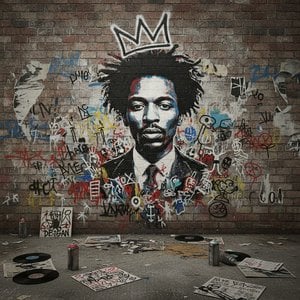
Explore the raw energy of Jean-Michel Basquiat and Neo-Expressionism. Discover how urban rebellion redefined modern art through a lens of luxury, identity, and profound emotional intensity for the discerning collector.
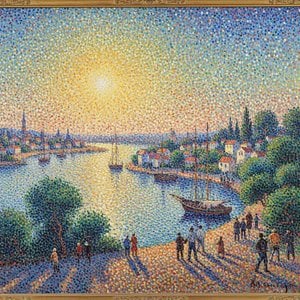
Embark on a sophisticated journey into the luminous world of Neo-Impressionism. Uncover the scientific brilliance of Pointillism, from Georges Seurat’s revolutionary color theory to the mesmerizing magic of the dot. An expert exploration for true art history enthusiasts.

Explore the ethereal beauty of Impressionist landscapes. Discover how masters like Monet captured fleeting light through color and texture, and learn to curate these timeless, luminous masterpieces for your home collection.

 실제 크기로 보기
 보내기
보내기 공유하기
공유하기
 상세 보기
상세 보기 가이드 보기

 이미지 다운로드
 유사 작품 더 보기
 X-레이
X-레이 슬라이드 쇼 보기
 통계 정보
통계 정보

 상세 보기
상세 보기






































 유리 옵션은 110cm 미만 크기에서만 선택 가능합니다.