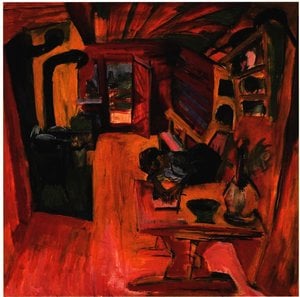
A Raw Pulse of Expression: Ernst Ludwig Kirchner’s ‘Dancer’ (1912)
Ernst Ludwig Kirchner's “Dancer,” executed in 1912, is not merely a depiction of a figure; it’s an embodiment of the anxieties and restless energy that defined the burgeoning Expressionist movement. Measuring a modest 21 x 16 cm, this intimate sketch reveals a profound engagement with the emotional core of human experience, a characteristic hallmark of Kirchner's oeuvre. The artwork immediately arrests the viewer with its bold lines, vibrant yet unsettling color palette, and a deliberate distortion that speaks volumes about the artist’s subjective perception of reality. It’s a window into a soul grappling with the uncertainties of a rapidly changing world – a world mirrored in the fragmented forms and intense hues of this remarkable piece.
Composition and Technique: A Study in Dynamic Tension
- Dynamic Pose: The dancer dominates the frame, positioned slightly off-center to create an immediate sense of movement. Kirchner’s masterful use of curving lines suggests a powerful, almost frantic, performance, capturing not just a pose but the very essence of embodied motion.
- Loose Brushwork: Executed with quick, confident strokes – likely watercolor or gouache on paper – the technique conveys an impression of spontaneity and immediacy. There’s no striving for polished realism; instead, Kirchner embraces a raw, almost frenetic approach that perfectly aligns with the Expressionist ethos.
- Minimal Blending: The deliberate lack of blending contributes to the artwork's energetic feel, reinforcing the sense of movement and emotional intensity. The visible paper grain adds another layer of texture, grounding the ethereal forms in a tangible reality.
Color and Symbolism: A Palette of Disquiet
Kirchner’s color choices are far from arbitrary. The dominant blues, yellows, and reds – often associated with passion, anxiety, and even danger – create a visually arresting effect. The washes of yellow-green form the base, providing a stark contrast to the bold outlines of the dancer's figure. The strategic use of red for her hair and a small detail on her arm injects an element of dramatic intensity, hinting at both allure and potential peril. These colors aren’t used to represent reality; they are employed as vehicles for expressing profound emotional states.
Historical Context and Artistic Influence
Created in 1912, “Dancer” sits squarely within the heart of German Expressionism's formative years. Kirchner, along with artists like Emil Nolde and Max Pechstein, was part of a group challenging the prevailing artistic conventions of the time. Influenced by figures such as Albrecht Dürer, but rejecting academic realism, they sought to convey subjective experience through distorted forms and emotionally charged color palettes. This work reflects the broader societal anxieties of the early 20th century – concerns about industrialization, urbanization, and the perceived loss of traditional values – themes that would become central to Expressionist art.
Emotional Impact and Artistic Legacy
"Dancer" resonates with a raw emotional power that continues to captivate viewers. The distorted forms, bold lines, and unsettling color palette evoke feelings of anxiety, tension, and dynamism—a testament to Kirchner’s ability to translate personal turmoil into universal artistic expression. This piece serves as a powerful reminder of the Expressionist movement's commitment to exploring the darker aspects of human experience, solidifying Kirchner’s place as one of the most significant figures in 20th-century art.



 미리보기
미리보기
 프린트 구매
 공유하기
공유하기 공유하기
공유하기
 상세 정보
상세 정보

 다운로드
다운로드
 유사 작품
유사 작품 X-레이
X-레이 슬라이드 쇼


 더 보기
더 보기






































 유리 옵션은 110cm 미만 크기에서만 선택 가능합니다.