


x

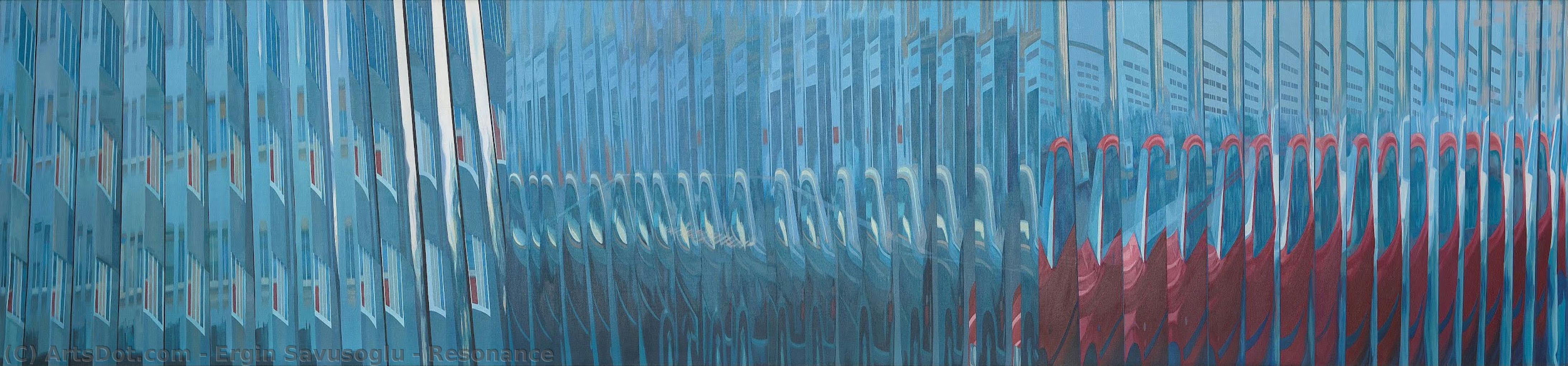
 Expressionism
 305.0 x 71.0 cm
 Elgiz Museum of Contemporary Art
작품의 원본 비율을 유지하는 미리 설정된 크기 중에서 선택하세요.

특정 프레임이나 공간에 맞춰 직접 치수를 입력하실 수 있습니다. 선택하신 사이즈가 원본 이미지의 비율과 일치하지 않을 경우, 작품을 크롭(자르기)하거나 이미지를 대칭 또는 단색 채우기로 확장하여 제작합니다. 제작 시작 전, 최종 확인을 위해 디지털 목업이 전송됩니다.
화면상의 미리보기는 실제 크롭이나 확장 상태를 반영하지 않으므로, 최종 구도는 오직 목업을 통해서만 정확하게 확인하실 수 있습니다.
맞춤 사이즈 제작도 가능하지만, 원본 비율을 유지하기 위해서는 사전 정의된 목록에서 치수를 선택하시는 것을 권장합니다.

Resonance
복제본 크기

Ergin Çavuşoğlu, a Turkish artist born in Targovishte, Bulgaria in 1968, embodies a fascinating intersection of cultural influences and geographical displacement that profoundly shapes his artistic vision. His early education at the National School of Fine Arts in Sofia laid a crucial foundation, instilling within him a classical understanding of form and technique. This initial training wasn’t merely about mastering skills; it was an immersion into a rich artistic heritage, a lineage he would later subtly deconstruct and reimagine through his multimedia explorations. Following his studies in Sofia, Çavuşoğlu pursued further education at Marmara University in Istanbul, broadening his perspective within the dynamic context of Turkish art and society. This period marked a shift towards conceptual thinking, prompting him to question established norms and explore new avenues of expression.
The artist’s intellectual journey continued with advanced studies at Goldsmiths College, London, and the University of Portsmouth, where he earned a Ph.D. These experiences were pivotal in solidifying his commitment to multimedia installations, animations, and drawings as primary modes of artistic communication. It was during this time that Çavuşoğlu began to articulate a unique aesthetic language—one characterized by layered narratives, subtle symbolism, and an acute sensitivity to the complexities of place, space, and cultural identity.
Çavuşoğlu’s breakthrough moment arrived in 2003 when he co-represented Turkey at the prestigious 50th Venice Biennale. This landmark participation catapulted him onto the international art scene, establishing him as a significant voice within contemporary art discourse. His work presented at the Biennale was not merely an exhibition; it was a statement—a nuanced exploration of Turkish identity in a globalized world, challenging conventional representations and inviting viewers to engage with complex socio-political realities.
The recognition didn’t stop there. In 2004, he was shortlisted for the Beck’s Futures Prize, further solidifying his reputation as an innovative artist pushing boundaries. His nomination for Artes Mundi 4 in 2010 underscored his growing international acclaim and demonstrated a consistent commitment to socially engaged art practices. These accolades weren't simply awards; they were validations of his artistic vision—a testament to the power of his work to provoke thought, inspire dialogue, and challenge perceptions.
At the heart of Çavuşoğlu’s practice lies a profound exploration of concepts surrounding place, space, liminality, mobility, and the very conditions of cultural production. He doesn't simply depict these themes; he *embodies* them through his diverse range of mediums. His video and sound installations are particularly compelling, often creating immersive environments that transport viewers to in-between spaces—airports, waterways, marketplaces, historical sites, national borders—locations where identities are fluid, boundaries are blurred, and narratives intersect.
His work frequently engages with the transient nature of urban life, examining how people navigate these spaces and how their experiences shape their understanding of the world. He masterfully weaves together classical, modern, and contemporary influences, creating a rich tapestry of references that resonate across time and cultures. The artist’s drawings and sculptures are not merely ancillary to his installations; they serve as extensions of his narratives—visual explorations of the same themes, offering alternative perspectives and deepening the viewer's engagement with his work.
Çavuşoğlu’s artistic lineage is complex and multifaceted. While rooted in classical training, he draws inspiration from a diverse range of sources, including literature, theatre, and the works of artists like Marcel Duchamp, Leo Tolstoy, Anton Chekhov, and Italo Calvino. These influences aren't simply stylistic; they inform his conceptual framework—his exploration of moral parables within contemporary art and the creative process itself.
He frequently incorporates fiction and non-fiction texts into his projects, using them as conceptual clarifications or as starting points for cinematographic adaptations. This interdisciplinary approach highlights his belief in art as a scholarly activity—a multi-layered experience that invites critical reflection on its systems and appreciation of its historical context. His work often alludes to geo-political realities, philosophical inquiries, and literary traditions, creating a rich tapestry of meaning that rewards careful observation and intellectual engagement.
Ergin Çavuşoğlu’s impact extends beyond his individual artworks; he has become an influential figure in contemporary art education as well. Currently serving as a Professor of Contemporary Art at Middlesex University in London, he continues to mentor emerging artists and shape the future of artistic discourse.
His exhibitions have graced numerous international museums and biennials, including the Solomon R. Guggenheim Museum in New York and the Istanbul Biennial, solidifying his position as a globally recognized artist. He currently resides and works in London, continuing to explore themes of displacement, identity, and cultural production through his compelling multimedia installations, animations, and drawings. His work serves as a powerful reminder of the complexities of our interconnected world—a testament to the enduring power of art to provoke thought, inspire dialogue, and challenge perceptions.

1968 - , Bulgaria

Explore the profound impact of illumination on contemporary abstract painting. Expert insights into perceptual psychology, key artists & collecting valuable art. WahooArt.

Explore the evolution of abstract painting with WahooArt. Discover key artists, historical context & investment insights. Find museum-quality reproductions and expert appraisal services.
마크 로스코 최고작 25선을 만나보세요. 추상 표현주의 거장의 색채로 표현된 심오한 감정과 예술의 세계를 탐험하고, WahooArt에서 명화 복제본과 특별한 인테리어 아이디어를 찾아보세요. 지금 바로 컬렉션을 확인하세요!

카지미르 말레비치의 최고작 25선을 만나보세요. 추상 미술의 혁신적인 세계, 슈프레마티즘의 정수를 담은 작품들의 이야기와 영감을 WahooArt에서 경험하세요. 고품질 아트 프린트와 인테리어 데코 아이디어를 지금 바로 확인하세요! WahooArt.com

호안 미로의 최고 걸작 25선을 만나보세요. 꿈과 상상의 세계를 담은 추상 미술 작품들의 탄생 비화와 예술적 의미를 탐구합니다. WahooArt.com에서 고품질 미로 그림을 감상하고, 공간에 특별한 색채를 더해보세요! 지금 바로 컬렉션을 확인하세요.


최신 미술 뉴스, 특별 혜택 및 인테리어 아이디어를 가장 먼저 만나보세요.
프로젝트에 대해 알려주시면 저희 미술 전문가들이 맞춤형 아트 제안 3가지를 전달해 드립니다.
당신만을 위한 맞춤형 옵션 3가지를 무료로 추천해 드립니다!
 작품 구매하기
 공유하기
공유하기 공유하기
공유하기
 상세 정보
상세 정보

 다운로드
다운로드
 유사 작품
유사 작품 X-레이
X-레이 슬라이드 쇼
 더 보기
더 보기






































 유리 옵션은 110cm 미만 크기에서만 선택 가능합니다.


