A Delicate Vision: The Life and Art of Emma Sandys
Emma Sandys, born in Norwich in 1843 and passing away there in November 1877, remains a captivating yet often overlooked figure within the Pre-Raphaelite circle. Her life, though relatively short, yielded a body of work characterized by an exquisite sensitivity and a distinctive approach to portraiture that set her apart from many of her contemporaries. She wasn’t a rebel challenging artistic conventions; rather, she refined them, imbuing Victorian portraiture with a quiet emotional depth and a romantic fascination with the past. Her story is one woven into the fabric of a creatively vibrant family – her father, Anthony Sands, provided early artistic guidance, but it was the influence of her brother, Frederick Sandys, and his association with Dante Gabriel Rossetti that truly shaped her aesthetic trajectory. The addition of a ‘y’ to their surname in 1853 seems almost symbolic, marking a conscious forging of a new identity within the burgeoning art world.
Early Influences and Artistic Development
Growing up surrounded by artistic endeavor undoubtedly fostered Emma Sandys's innate talent. Her father’s lessons provided a foundational skill set, but it was Frederick Sandys’s immersion in the Pre-Raphaelite Brotherhood that opened her eyes to a new world of aesthetic possibilities. The Brotherhood’s emphasis on detailed realism, vibrant color, and literary or historical subject matter resonated deeply with Emma. However, she didn't simply replicate their style; instead, she filtered it through her own unique sensibility. While Frederick often depicted women as enigmatic figures embodying complex psychological states, Emma focused primarily on portraits – specifically, those of children and young women. Her earliest dated painting appears in 1863, signaling the beginning of a dedicated artistic practice. This period saw her developing a technique that prioritized luminous skin tones, meticulously rendered fabrics, and backgrounds rich with floral symbolism. The influence of Rossetti is subtly present in her compositions – not in overt narrative themes, but in the overall mood of melancholy beauty and idealized forms.
A Focus on Portraiture: Children and Women in Period Dress
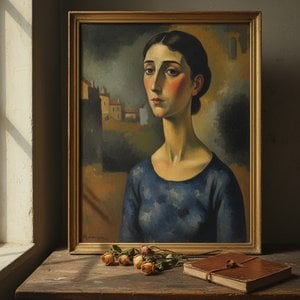
Emma Sandys carved a niche for herself by specializing in portraits that evoked a sense of nostalgia and romanticism. She rarely painted grand historical scenes or mythological subjects; instead, she turned her attention to the intimate world of childhood and the idealized beauty of young womanhood. Her sitters are almost invariably depicted in period or medieval clothing, often surrounded by lush arrangements of brightly colored flowers. This choice wasn’t merely decorative. The costumes served as a vehicle for exploring themes of innocence, grace, and fleeting youth. The flowers, too, were laden with meaning – each bloom carrying its own symbolic weight, adding layers of interpretation to the portraits. Roses signified love and beauty, lilies represented purity, and violets evoked modesty and remembrance. Her technique was masterful; she achieved a remarkable softness in her rendering of skin tones and fabrics, creating an almost ethereal quality in her work. She exhibited regularly between 1867 and 1874, showing her paintings both in London and Norwich, gaining recognition for her delicate style and evocative compositions.
Working Life and Limited Recognition
While Emma Sandys enjoyed a period of exhibition success, the details of her working life remain somewhat elusive. She primarily worked around Norwich, suggesting she relied on local sitters and commissions. It’s likely that she also spent time in her brother Frederick's London studio, benefiting from his experience and network within the art world. However, unlike many of her Pre-Raphaelite peers, Emma didn’t actively seek fame or public acclaim. She seems to have been content working on a smaller scale, creating intimate portraits for a select clientele. This relative seclusion may explain why her work has historically received less attention than that of her brother and other prominent members of the Brotherhood. Her untimely death in 1877 at the age of thirty-four further contributed to her obscurity.
Historical Significance and Legacy
Despite the limited documentation surrounding her life, Emma Sandys’s work holds a significant place within the context of Victorian art. She represents a fascinating example of a female artist navigating the complexities of the Pre-Raphaelite movement. She wasn't striving to shock or challenge; instead, she offered a refined and deeply personal interpretation of its aesthetic principles. Her portraits provide valuable insights into Victorian ideals of beauty, childhood, and femininity.
Her focus on period dress also reflects a broader cultural fascination with the past during this era.
Today, Emma Sandys is increasingly recognized as a talented and original artist whose work deserves greater attention. Her paintings offer a glimpse into a delicate vision – one that continues to captivate viewers with its quiet beauty and emotional resonance.
- Her works are now sought after by collectors interested in Pre-Raphaelite art.
- She provides an important perspective on the role of women artists within the Victorian era.
- The symbolic language used in her paintings offers a rich field for scholarly interpretation.


 미리보기
미리보기
 공유하기
공유하기 공유하기
공유하기
 상세 정보
상세 정보 가이드 보기

 다운로드
다운로드
 유사 작품 더 보기
 X-레이
X-레이 슬라이드 쇼 보기
 질의응답
질의응답
 통계 정보
통계 정보


 더 보기
더 보기
 프린트 판매로 전환





































 유리 옵션은 110cm 미만 크기에서만 선택 가능합니다.