
 Oil On CanvasWallArtPost-Impressionism
 1911
1911 35.0 x 45.0 cm
 McMichael Canadian Art Collection
빠른 제작과 다양한 마감 옵션을 제공하는 박물관 품질의 지클레이 또는 캔버스 프린트. ( 손으로 그린 그림 구매 디지털 이미지로 전환)





























작품의 원본 비율을 유지하는 미리 설정된 크기 중에서 선택하세요.

특정 프레임이나 공간에 맞춰 직접 치수를 입력하실 수 있습니다. 선택하신 사이즈가 원본 이미지의 비율과 일치하지 않을 경우, 작품을 크롭(자르기)하거나 이미지를 대칭 또는 단색 채우기로 확장하여 제작합니다. 제작 시작 전, 최종 확인을 위해 디지털 목업이 전송됩니다.
화면상의 미리보기는 실제 크롭이나 확장 상태를 반영하지 않으므로, 최종 구도는 오직 목업을 통해서만 정확하게 확인하실 수 있습니다.
맞춤 사이즈 제작도 가능하지만, 원본 비율을 유지하기 위해서는 사전 정의된 목록에서 치수를 선택하시는 것을 권장합니다.

Trees in France
복제본 크기
Emily Carr (1871-1945), a Canadian Modernist pioneer, stands apart from her contemporaries not merely for her prolific output but for the singular vision that fueled her artistic endeavors. Born December 13, 1871, in Victoria, British Columbia, she navigated a transformative period of Canadian history—a nation grappling with identity and forging connections to its Indigenous heritage—through the lens of an unwavering devotion to the landscape.
Carr’s formative years were steeped in the traditions of her English immigrant parents who sought opportunity in the burgeoning colony. This duality profoundly influenced her artistic sensibility, shaping her understanding of beauty as both rooted in history and responsive to the dynamism of the natural world. From a young age, encouraged by her father, Carr demonstrated exceptional talent for art, nurtured through formal instruction and an intrinsic fascination with the surrounding forests of Vancouver Island.
“Trees in France,” painted in 1911 during her Parisian studies under Harry Phelan Gibb—a British expatriate who championed a more expressive approach to painting—represents a pivotal moment in Carr’s artistic evolution. Gibb recognized Carr's innate ability and urged her to push boundaries, stating, “That’s why I like teaching you! You’ll risk ruining your best in order to find something better.” This encouragement exemplifies Gibb’s belief that true artistic growth demanded embracing experimentation and discarding preconceived notions.
The painting itself is a masterful distillation of Impressionistic principles blended with Carr's distinctive stylistic flourishes. Gibb’s influence instilled in her the conviction that “Your silent Indian will teach you more than all the art jargon,” highlighting his belief in the power of direct observation and emotional resonance.
Carr’s technique—characterized by loose brushstrokes, layering of paint, and a deliberate use of color—captures the essence of Brittany's landscape with remarkable immediacy. Thick impasto creates textural richness, emphasizing the contours of the trees and conveying their palpable presence. The muted background tones serve as foils to the vibrant hues of the foliage, enhancing depth and atmospheric perspective.
More than just a depiction of trees; “Trees in France” embodies Carr’s broader artistic philosophy—a celebration of nature's beauty and an exploration of its symbolic significance. The upward thrust of the branches symbolizes resilience and aspiration, mirroring Carr’s own unwavering determination to forge her path as an artist amidst societal expectations.
The painting’s enduring appeal lies in its ability to evoke a profound sense of tranquility and wonder—a testament to Carr's skill in translating emotion onto canvas. It remains a cornerstone of Canadian Modernism, securing its place within the canon of landscape art and inspiring generations of artists to embrace bold experimentation and unwavering devotion to their artistic vision.


1871 - 1945

Explore the vibrant evolution of Post-Impressionism. From Seurat's revolutionary Pointillism to the emotional depth of masters, discover how this movement redefined modern art history through color, structure, and unparalleled creative expression.

Master the nuances of Impressionism vs. Post-Impressionism with our expert guide. Explore the revolutionary shift from Monet’s fleeting light to Van Gogh’s emotional depth. Discover how these iconic movements continue to inspire fine art collectors and modern interiors today.
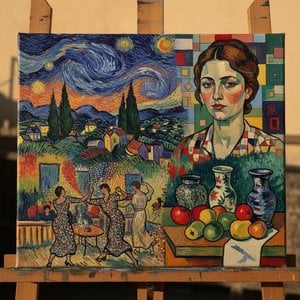
Unveil the profound revolution of Post-Impressionism. Explore how masters like Van Gogh and Cézanne utilized bold colors and emotional depth to transcend mere representation, laying the foundation for modern art. A sophisticated journey through history's most emotive brushstrokes.

Explore the transformative era of Post-Impressionism. Discover how masters like Cézanne and Matisse revolutionized color and form, moving beyond Impressionism to shape modern art history through structural innovation and expressive emotion.


 미리보기
미리보기
 공유하기
공유하기 공유하기
공유하기
 상세 정보
상세 정보 Guide
Guide

 다운로드
다운로드
 유사 작품
유사 작품 X-레이
X-레이 슬라이드 쇼
 통계 정보
통계 정보 더 보기
더 보기









 유리 옵션은 110cm 미만 크기에서만 선택 가능합니다.


