

빠른 제작과 다양한 마감 옵션을 선택할 수 있는 박물관 수준의 지클레이 및 캔버스 프린트. ( 수작업 채색 복제본 주문하기 디지털 이미지 판매 채널로 전환)





























작품의 원본 비율을 그대로 유지하는 프리셋 사이즈 중에서 선택해 보세요.

액자나 벽면 크기에 맞춰 필요한 가로와 세로 길이를 입력해 주세요. 프린트는 원본 이미지보다 크게 제작할 수 없으며 오직 자르는 것만 가능하므로, 비율이 다른 사이즈를 선택할 경우 이미지의 일부가 잘려 나갈 수 있습니다. 인쇄 작업에 들어가기 전, 최종 확인을 위해 디지털 목업을 보내드립니다. 이 페이지에 표시된 이미지는 실제 잘리는 영역을 나타내지 않으며, 오직 목업을 통해서만 정확한 확인이 가능합니다.
Cabinet
복제본 규격
"Cabinet" 작품은 리넨 캔버스 위에 손으로 직접 그린 유화 복제화로 만나보실 수 있습니다. 주문은 수작업 유화 복제화 페이지에서 가능하며, 다양한 사이즈를 선택하실 수 있습니다.
Émile-Jacques Ruhlmann의 "Cabinet"의 색채 분석은 Statement한 대비와 Unified Palette한 조화를 보여줍니다.
시각적 밝기 측면에서 볼 때, Émile-Jacques Ruhlmann의 "Cabinet"은(는) bright 수준입니다.

In the shimmering twilight of the Belle Époque and the roaring exuberance of the 1920s, few names evoked the essence of Parisian luxury quite like Émile-Jacques Ruhlmann. To step into a room designed by Ruhlmann was not merely to enter a space, but to be enveloped in a meticulously choreographed dream of modernity and prestige. Born in Paris in 1879, Ruhlmann was a child of craftsmanship, the son of a decorating contractor whose expertise in painting and wallpapering provided the foundational textures for the young artist's future masterpieces. His early years were spent absorbing the intricate details of interior construction, a period that instilled in him a profound respect for the structural integrity and the tactile soul of materials.
As he matured, Ruhlman’s vision expanded far beyond the mere application of ornament. Following his father's passing in 1907, he took command of the family business, eventually forging a transformative partnership with designer Pierre Laurent. This era marked his transition from a skilled tradesman to a visionary creator. He began to move away from the undulating, organic whimsy of Art Nouveau, gravitating instead toward a more disciplined, architectonic approach. His work started to breathe with a new kind of rhythm—one defined by geometric clarity and a sophisticated restraint that would soon become the hallmark of the Art Deco movement.
Ruhlmann’s genius lay in his ability to translate Neoclassical motifs into a contemporary language of sleek, modern proportions. He did not merely use wood; he curated textures that spoke of distant lands and immense wealth. His furniture became a canvas for the world's most precious substances. One might encounter a writing desk surfaced in ebony, accented with delicate inlays of ivory, or a chair draped in the smooth, tactile luxury of sharkskin. This fearless use of exotic materials—rosewood, lacquer, and precious metals—was not just an aesthetic choice but a profound statement of status and global connectivity.
During the transformative years of World War I, Ruhlmann found unexpected inspiration in the grandeur of Venetian design, which helped refine his sense of balance and light. He possessed an uncanny ability to harmonize bold, straight lines with subtle, flowing curves, creating pieces that felt both structurally grounded and ethereally light. His process was one of total immersion; he envisioned entire environments where the furniture, lighting, ceramics, and even the carpets were part of a singular, cohesive narrative. This holistic approach turned him into more than a furniture designer—he became an orchestrator of atmosphere.
The pinnacle of Ruhlmann’s international acclaim arrived in 1925 at the Exposition Internationale des Arts Décoratifs et Industriels Modernes in Paris. His pavilion was the undisputed star of the exhibition, a dazzling display of innovation that captured the imagination of the global elite. At this moment, he was the most sought-after designer of his generation, commanding a massive team of over five hundred skilled artisans to realize his ambitious visions. For the newly wealthy class of post-war Paris, owning a Ruhlmann piece was the ultimate symbol of discernment and triumph.
However, the very luxury that defined his success also rendered his work vulnerable to the shifting tides of history. The devastating economic depression following the 1929 stock market crash signaled the end of the era of unbridled opulence. As the world moved toward the more functional, austere aesthetics of mid-century modernism—championed by contemporaries like Le Corbusier—the lavish, material-heavy world of Ruhlmann began to fade. When he passed away in Paris in 1933, he left behind a legacy that remains an untouchable standard of elegance.
Today, the significance of Émile-Jacques Ruhlmann transcends the era of his creation. His work is studied not just as furniture, but as the definitive sculptural expression of a period when design sought to marry the ancient traditions of craftsmanship with the soaring ambitions of the modern age. His pieces remain timeless icons, reminding us of a time when every line, every inlay, and every surface was an invitation to experience the sublime.

1879 - 1933 , France

Discover the breathtaking allure of Art Deco. Explore the era's iconic geometry, legendary designers like Erté, and timeless glamour. Perfect for discerning collectors seeking to infuse their spaces with sophisticated modernist elegance and historical prestige.
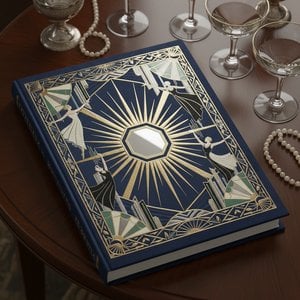
Discover the allure of Art Deco through a curated guide to its most iconic masterpieces. Explore the elegance of Erté and the innovation of Jean Dunand, perfect for collectors seeking timeless glamour and sophisticated design inspiration.
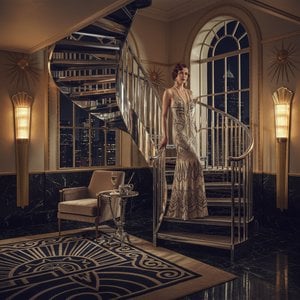
Discover the allure of Art Deco style with our expert guide to luxury interiors. Explore iconic influences from Erté to Jean Dunand and learn to curate a sophisticated space filled with timeless glamour and geometric elegance.

Discover the unparalleled elegance of Art Deco through the lens of Erté. Explore a masterclass in linear precision, theatrical costume design, and high-fashion illustration that continues to define modern luxury and sophisticated interior aesthetics.

 실제 크기로 보기
 보내기
보내기 공유하기
공유하기
 상세 보기
상세 보기 가이드 보기

 이미지 다운로드
 유사 작품 더 보기
 X-레이
X-레이 슬라이드 쇼 보기
 통계 정보
통계 정보

 상세 보기
상세 보기









 유리 옵션은 110cm 미만 크기에서만 선택 가능합니다.


![Buckle [center-right]\ncompact Cases [upper]\ncompact Cases [lower]\ncompact Cases [center-left] — Jules John Dunand, Art Deco](/media/artworks/images-thumb/82/23/8223c28adcb3bc55cd4d8a7b0b618026.jpg)

