빠른 제작과 다양한 마감 옵션을 선택할 수 있는 박물관 수준의 지클레이 및 캔버스 프린트. ( 수작업 채색 복제본 주문하기 디지털 이미지 판매 채널로 전환)
작품의 원본 비율을 그대로 유지하는 프리셋 사이즈 중에서 선택해 보세요.

특정 프레임이나 공간에 맞춰 직접 치수를 입력하실 수 있습니다. 선택하신 사이즈가 원본 이미지의 비율과 일치하지 않을 경우, 작품을 크롭(자르기)하거나 이미지를 대칭 또는 단색 채우기로 확장하여 제작합니다. 제작 시작 전, 최종 확인을 위해 디지털 목업이 전송됩니다.
화면상의 미리보기는 실제 크롭이나 확장 상태를 반영하지 않으므로, 최종 구도는 오직 목업을 통해서만 정확하게 확인하실 수 있습니다.
맞춤 사이즈 제작도 가능하지만, 원본 비율을 유지하기 위해서는 사전 정의된 목록에서 치수를 선택하시는 것을 권장합니다.

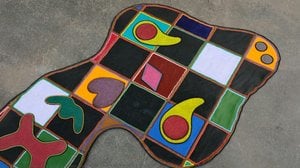
Mississippi Meanders
복제본 규격

Elyn Zimmerman, born in Philadelphia, Pennsylvania, on December 16, 1945, embarked on a journey that would establish her as a pivotal figure in the landscape of American sculpture. Her formative years unfolded against the backdrop of Los Angeles, a city undergoing a radical artistic transformation during the 1960s. This environment proved crucial to Zimmerman’s development, fostering an openness to experimentation and a fascination with perceptual phenomena. She pursued a B.A. in psychology at UCLA, a choice that would subtly yet profoundly inform her later work—a deep understanding of how viewers experience space and form. While immersed in the fine arts program, she began working alongside pioneering artists like Jim Turrell and Robert Irwin on their groundbreaking Art & Technology exhibition at LACMA in 1967.
Zimmerman’s academic pursuits continued with an MFA in painting and photography at UCLA, where she benefited from the mentorship of influential figures such as Richard Diebenkorn and Robert Heineken. This period was marked by a burgeoning interest in Light and Space Art—a movement characterized by its exploration of sensory experience through materials like glass, fluorescent light, and cast acrylic. The ethos of this movement resonated deeply with Zimmerman, shaping her commitment to creating art that engaged directly with the viewer’s perception.
Following graduation in 1972, Zimmerman began teaching at California State University, Humboldt, and later Mills College in Oakland. These positions provided a platform for experimentation, allowing her to refine principles that would become hallmarks of her artistic practice: an emphasis on form, space, and the integration of natural elements. The mid-1970s witnessed the creation of temporary installations—works designed specifically for museum and gallery contexts—at institutions like the Berkeley Art Museum, the Museum of Modern Art PS1, and the Chicago Museum of Contemporary Art. These early projects were crucial in establishing Zimmerman’s reputation and honing her skills.
A pivotal moment arrived in 1976 with a National Endowment for the Arts Fellowship that enabled Zimmerman to travel to India. This journey proved transformative, igniting a profound fascination with sacred and historic sites—particularly those at Ellora and Ajanta. Inspired by these archeological wonders, she resolved to create meaningful public spaces through a synthesis of sculpture, architecture, and landscape design. This marked a shift towards large-scale, site-specific installations that would define her career.
The 1980s saw Zimmerman’s artistic vision fully coalesce with the creation of permanent sculpture works ranging from intimate studio pieces to monumental public commissions. A defining characteristic of these projects is their masterful use of stone—particularly granite—coupled with the ethereal qualities of water and landscape elements. She developed a long-standing relationship with a quarry in Cold Spring, Minnesota, allowing her to work directly with the material and explore its inherent possibilities.
Her first major commission, *MARABAR* (1984) for the National Geographic headquarters in Washington, D.C., stands as a testament to this evolving aesthetic. Named after the fictional caves in E.M. Forster’s *A Passage to India*, the sculpture consists of a rectangular reflecting pool surrounded by granite boulders—three polished to mirror their surroundings and two left in their natural state. The work evokes a sense of timelessness, seamlessly blending the tangible with the illusionary.
Throughout her career, Zimmerman has completed over forty major site-specific installations worldwide, each imbued with her principle of creating “places, not things.” Her projects—which include memorials, sculpture gardens, and urban oases—are deeply experiential, connecting the present to the archaic past. Notable commissions include a fountain commemorating the 1993 World Trade Center bombing in New York City, and designs for the Birmingham Museum of Art in Alabama and AT&T headquarters in New Jersey.
Zimmerman’s contributions have been widely recognized within the art world. In 2016, she received the prestigious Isamu Noguchi Award—an honor shared with Tadao Ando—acknowledging her profound impact on contemporary sculpture and environmental art. Her work continues to inspire artists and designers alike, demonstrating the enduring power of site-specific interventions that engage with both the physical landscape and the human psyche.

1945 - , United States of America

 실제 크기로 보기
 보내기
보내기 공유하기
공유하기
 상세 보기
상세 보기 가이드 보기

 이미지 다운로드
 유사 작품 더 보기
 X-레이
X-레이 슬라이드 쇼 보기
 통계 정보
통계 정보

 상세 보기
상세 보기






































 유리 옵션은 110cm 미만 크기에서만 선택 가능합니다.