
 Acrylic On CanvasWallArtBaroque
 1568Renaissance
 24.0 x 18.0 cm
 Galleria Estense
빠른 제작과 다양한 마감 옵션을 제공하는 박물관 품질의 지클레이 또는 캔버스 프린트. ( 손으로 그린 그림 구매 디지털 이미지로 전환)





























작품의 원본 비율을 유지하는 미리 설정된 크기 중에서 선택하세요.

특정 프레임이나 공간에 맞춰 직접 치수를 입력하실 수 있습니다. 선택하신 사이즈가 원본 이미지의 비율과 일치하지 않을 경우, 작품을 크롭(자르기)하거나 이미지를 대칭 또는 단색 채우기로 확장하여 제작합니다. 제작 시작 전, 최종 확인을 위해 디지털 목업이 전송됩니다.
화면상의 미리보기는 실제 크롭이나 확장 상태를 반영하지 않으므로, 최종 구도는 오직 목업을 통해서만 정확하게 확인하실 수 있습니다.
맞춤 사이즈 제작도 가능하지만, 원본 비율을 유지하기 위해서는 사전 정의된 목록에서 치수를 선택하시는 것을 권장합니다.

Baptism of Christ
복제본 크기
The Baptism of Christ is a captivating religious painting created by the renowned artist El Greco (Doménikos Theotokopoulos) in 1568. This tempera on panel artwork measures 24 x 18 cm and is currently housed at the Galleria Estense in Modena, Italy.
This painting depicts a pivotal moment in Christian history: the baptism of Jesus Christ by John the Baptist in the Jordan River. The scene is filled with symbolic elements that add depth to the narrative. Jesus, the central figure, is surrounded by several angels, emphasizing his divine nature. A bird flying above the scene represents the Holy Spirit, while the people on either side of the image signify the witnesses to this sacred event.
El Greco’s unique style, blending Byzantine traditions with elements of Mannerism and the Venetian Renaissance, is evident in this painting. His use of elongated figures and vibrant colors creates a sense of drama and spirituality. The composition skillfully guides the viewer's eye towards Jesus at the center, flanked by angels on either side and illuminated by a radiant light source.
The symbolism embedded within the artwork speaks to core Christian beliefs. The angel’s outstretched hands represent divine grace and compassion, while the dove symbolizes the Holy Spirit—God’s presence—bestowing illumination upon Jesus during his baptism. Furthermore, the figures of John the Baptist and the onlookers underscore the significance of this sacrament as a testament to faith and witness.
El Greco's distinctive approach to painting distinguishes him from his contemporaries. He achieved an ethereal quality through meticulous layering of pigments—particularly ultramarine blue—creating a luminous effect that captures the spiritual essence of the scene. His elongated figures, characteristic of Mannerism, convey movement and emotion with remarkable precision.
This stylistic innovation profoundly impacted subsequent artists, foreshadowing developments in Expressionism and Cubism. El Greco’s willingness to challenge conventional artistic norms established him as a precursor to modern art movements, cementing his legacy as one of the most influential painters of the Baroque era.
Born in Crete, El Greco traveled extensively throughout Europe—primarily Venice and Rome—before settling in Toledo, Spain. His artistic journey reflects the cultural exchange between East and West during the Renaissance, absorbing influences from Byzantine iconography and Venetian color palettes.
Beyond the Baptism of Christ, El Greco produced numerous masterpieces including The Modena Triptych (front panels), Annunciation, and St. Peter in Penitence. Each work demonstrates his mastery of technique and unwavering devotion to religious themes.
El Greco’s artistic vision continues to inspire artists and scholars alike. His uncompromising individualism challenged prevailing aesthetic conventions, establishing him as a pivotal figure in the transition from Renaissance to Baroque art. The Baptism of Christ stands as a testament to his groundbreaking style—a luminous depiction of faith and divine grace that resonates across centuries.
For those interested in exploring more of El Greco’s oeuvre, visit /art/list/?Filter=8Y3C23-El-Greco-(Domenikos-Theotokopoulos)-Baptism-of-Christ and https://en.wikipedia.org/wiki/El_Greco.
For high-quality reproductions of El Greco’s paintings, visit https://WahooArt.com.


1541 - 1614 , 그리스
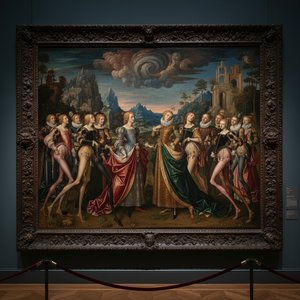
Explore the dramatic evolution of Northern Mannerism. Discover how masters like Bosch and Grünewald transitioned from Renaissance harmony to profound, elegant distortion through an expert analysis of symbolism, emotional intensity, and artistic innovation.

Unveil the captivating world of Mannerism. Our expert analysis explores the transition from Renaissance harmony to the profound, elegant distortions of masters like El Greco, offering deep insights into one of art history's most influential and enigmatic eras.


 미리보기
미리보기
 공유하기
공유하기 공유하기
공유하기
 상세 정보
상세 정보 가이드 보기

 다운로드
다운로드
 유사 작품
유사 작품 X-레이
X-레이 슬라이드 쇼
 통계 정보
통계 정보 더 보기
더 보기









 유리 옵션은 110cm 미만 크기에서만 선택 가능합니다.


