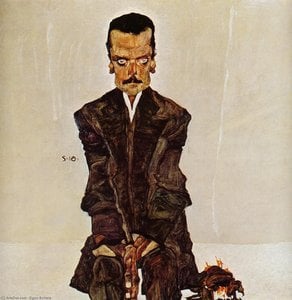
Acrylic On CanvasWallArtExpressionism
 1914
1914 110.0 x 140.0 cm
빠른 제작과 다양한 마감 옵션을 제공하는 박물관 품질의 지클레이 또는 캔버스 프린트. ( 손으로 그린 그림 구매 디지털 이미지로 전환)





























작품의 원본 비율을 유지하는 미리 설정된 크기 중에서 선택하세요.

특정 프레임이나 공간에 맞춰 직접 치수를 입력하실 수 있습니다. 선택하신 사이즈가 원본 이미지의 비율과 일치하지 않을 경우, 작품을 크롭(자르기)하거나 이미지를 대칭 또는 단색 채우기로 확장하여 제작합니다. 제작 시작 전, 최종 확인을 위해 디지털 목업이 전송됩니다.
화면상의 미리보기는 실제 크롭이나 확장 상태를 반영하지 않으므로, 최종 구도는 오직 목업을 통해서만 정확하게 확인하실 수 있습니다.
맞춤 사이즈 제작도 가능하지만, 원본 비율을 유지하기 위해서는 사전 정의된 목록에서 치수를 선택하시는 것을 권장합니다.

Windows (Facade of a House)
복제본 크기
Egon Schiele's "Windows (Facade of a House)," painted in 1914, isn’t merely a depiction of a building; it’s a profound meditation on isolation, the passage of time, and the unsettling beauty of decay. This intimate scene, rendered with his signature expressive lines and a muted palette, offers a poignant window into Schiele's uniquely melancholic worldview – a world deeply influenced by personal tragedy and a fascination with mortality. The painting captures a modest house, its white exterior punctuated by the vibrant red frames of numerous windows, each reflecting a potential narrative, a hidden life within.
Schiele's style is immediately recognizable. He eschewed the smooth, polished surfaces favored by Klimt, opting instead for a deliberately rough, almost frantic application of paint. Thick impasto builds up in areas, creating a tactile quality that draws the viewer in. The lines are not clean or precise; they writhe and twist, conveying an underlying tension and emotional intensity. Notice how the windows themselves aren’t rendered with photographic accuracy but rather as distorted shapes, imbued with a sense of unease. The color scheme is deliberately restrained – predominantly whites, grays, and muted reds—creating a somber atmosphere. The red frames, however, provide unexpected bursts of energy, hinting at warmth or perhaps even a desperate longing for connection.
Painted in 1914, just months before the outbreak of World War I, “Windows (Facade of a House)” reflects the anxieties and uncertainties of the era. Vienna was a city undergoing rapid social and political change, grappling with the decline of the Austro-Hungarian Empire. Schiele’s personal life mirrored this turbulence; his father's death from syphilis had left an indelible mark on him, fueling a preoccupation with illness, decay, and the fragility of human existence. The scattered books within the scene can be interpreted as symbols of knowledge, perhaps representing lost opportunities or the weight of history—a subtle commentary on the intellectual climate of the time.
Interestingly, research reveals that Schiele was working in Krumau at this time, a town he frequently revisited and depicted in several works. The “Old Houses in Krumau, 1914” painting (link: /en/art/egon-schiele-old-houses-in-krumau-1914-D3WU69-en/) provides valuable context, revealing a similar interest in the architecture and atmosphere of this small Bohemian town. The connection to Krumau suggests a deeper exploration of Schiele’s roots and his relationship with his family history – particularly his mother's origins in that region.
The numerous windows are, perhaps, the most compelling element of the painting. They represent not just physical openings but also portals to other lives, other stories. The books suggest a yearning for connection, for understanding, or even for escape. Schiele’s self-portraits, particularly those from this period (like “Self-Portrait with Physalis” – link: https://upload.wikimedia.org/wikipedia/commons/thumb/b/b8/Egon_Schiele_-_Self-Portrait_with_Physalis_-_Google_Art_Project.jpg/1200px-Egon_Schiele_-_Self-Portrait_with_Physalis_-_Google_Art_Project.jpg), reveal a similar exploration of the self and its vulnerabilities. “Windows (Facade of a House)” can be seen as an extension of this personal investigation, offering a glimpse into Schiele’s own emotional landscape—a place of quiet contemplation, tinged with sadness and a profound awareness of mortality.
WahooArt offers exquisite hand-painted reproductions of “Windows (Facade of a House),” allowing you to bring this evocative masterpiece into your home or office. Each reproduction is created by skilled artists using traditional techniques, faithfully capturing the nuances of Schiele’s style and ensuring that this poignant work continues to resonate with viewers for generations to come.


1890 - 1918 , 오스트리아 크로아티아

Embark on a sophisticated journey through the splendor of Austrian art. From Gustav Klimt’s golden masterpieces to the elegance of the Viennese Secession, discover the history and symbolism behind Europe's most iconic works for the discerning collector.

Discover the profound power of Expressionist art. From the raw intensity of Edvard Munch to the visceral textures of Neo-Expressionism, explore how subjective emotion and distorted reality define this movement. An expert guide for discerning collectors seeking depth and soul in fine art.

Explore the profound world of Figurative Expressionism. Discover how masters like Munch and Schiele use the human form to convey raw emotion, and learn how to curate these evocative, museum-quality masterpieces for your private collection.


 미리보기
미리보기
 공유하기
공유하기 공유하기
공유하기
 상세 정보
상세 정보 가이드 보기

 다운로드
다운로드
 유사 작품
유사 작품 X-레이
X-레이 슬라이드 쇼
 통계 정보
통계 정보 더 보기
더 보기









 유리 옵션은 110cm 미만 크기에서만 선택 가능합니다.