빠른 제작과 다양한 마감 옵션을 제공하는 박물관 수준의 지클레이 및 캔버스 프린트. ( 수작업 채색 복제본 주문하기 디지털 이미지로 전환)





























작품의 원본 비율을 그대로 유지하는 프리셋 사이즈 중에서 선택해 보세요.

액자나 벽면 크기에 맞춰 필요한 가로와 세로 길이를 입력해 주세요. 프린트는 원본 이미지보다 크게 제작할 수 없으며 오직 자르는 것만 가능하므로, 비율이 다른 사이즈를 선택할 경우 이미지의 일부가 잘려 나갈 수 있습니다. 인쇄 작업에 들어가기 전, 최종 확인을 위해 디지털 목업을 보내드립니다. 이 페이지에 표시된 이미지는 실제 잘리는 영역을 나타내지 않으며, 오직 목업을 통해서만 정확한 확인이 가능합니다.
untitled (2235)
복제본 크기
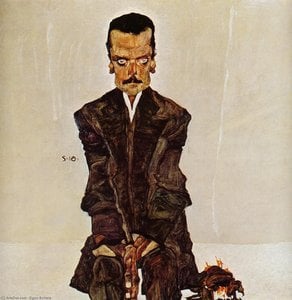
Egon Schiele's "Untitled (2235)," painted in 1918, stands as a haunting testament to the artist’s profound exploration of human vulnerability and the anxieties simmering beneath the surface of early 20th-century Europe. Created during a period marked by war and societal upheaval, this intensely personal work transcends mere representation, plunging the viewer into a realm of psychological turmoil and raw emotion. It's not simply a depiction of a nude figure; it’s an embodiment of existential questioning rendered in charcoal and graphite with unsettling precision.
The painting immediately commands attention through its stark simplicity and deliberate lack of conventional perspective. A reclining male form dominates the composition, his limbs elongated and twisted into a posture that suggests both surrender and resistance. The background is reduced to a minimal plane, amplifying the figure’s isolation and intensifying the focus on his internal state. This flattening effect, coupled with the almost claustrophobic arrangement, creates a sense of unease—a feeling of being trapped within the subject's experience.
Schiele’s masterful use of color is perhaps the most striking element of this work. The palette is relentlessly monochromatic, dominated by shades of gray, black, white, and muted browns. This deliberate restriction isn't a sign of artistic limitation; rather, it serves to heighten the emotional impact, stripping away any distractions and forcing the viewer to confront the raw essence of the subject’s distress. The lines are equally crucial – harsh, angular, and deliberately broken, they mirror the figure’s fragmented state of mind. Hatching and cross-hatching techniques are employed with meticulous detail, building up tonal variations that suggest volume and texture without resorting to traditional modeling.
The surface itself appears almost tactile, created through the deliberate application of charcoal or graphite. The visible strokes and energetic marks convey a sense of immediacy and spontaneity—as if Schiele were wrestling with his subject in real-time. This directness is characteristic of Expressionism, where the artist’s emotional state is prioritized over objective representation.
Beyond its formal qualities, “Untitled (2235)” resonates with potent symbolism. The nude figure itself represents vulnerability—a stripping away of defenses to reveal a core of exposed emotion. The contorted pose can be interpreted as a struggle against an unseen force, perhaps reflecting the anxieties surrounding war and societal change. Schiele’s recurring fascination with mortality is evident here, not in a morbid way, but as a fundamental aspect of human existence. The painting speaks to the fragility of life and the inevitability of death—themes that were particularly relevant during the turbulent years leading up to World War I.
Considering Schiele’s own life – his early loss of his father, his sister's illness, and his own struggles with mental health – it is clear that this work is deeply autobiographical. The painting can be viewed as a projection of his inner turmoil onto the canvas, offering a glimpse into the artist’s psyche during a period of profound personal crisis.
Egon Schiele was a pivotal figure in the development of Expressionism, and “Untitled (2235)” exemplifies his unique approach to art. His willingness to confront difficult subjects—sexuality, mortality, and psychological distress—challenged conventional artistic norms and paved the way for future generations of artists. Reproductions of this powerful work continue to captivate viewers with their raw emotional intensity and unsettling beauty. It remains a poignant reminder of the complexities of the human condition and the enduring power of art to explore the darkest corners of our inner lives.
에곤 실레의 "untitled (2235)"은(는) Statement(을)를 위해 추천되며, Living Room에 배치하기에 가장 이상적입니다. 용도와 공간 정보를 참고하여 작품의 최적의 위치를 찾아보세요.
에곤 실레의 "untitled (2235)"은(는) Expressionistic Modernism 사조와 근대 미술 시대의 만남을 보여줍니다.
에곤 실레의 "untitled (2235)"의 색채 분석은 Bold한 대비와 Softly Mixed Palette한 조화를 보여줍니다.


1890 - 1918 , 오스트리아 크로아티아

Embark on a sophisticated journey through the history of line drawing. From classical mastery to modern minimalism, explore how the power of the line shapes emotion and space in fine art. Discover expert insights for collectors and enthusiasts of graphic elegance.
 미리보기
미리보기
 공유하기
공유하기 공유하기
공유하기
 상세 정보
상세 정보 가이드 보기

 다운로드
다운로드
 유사 작품 더 보기
 X-레이
X-레이 슬라이드 쇼 보기
 질의응답
질의응답
 통계 정보
통계 정보
 더 보기
더 보기









 유리 옵션은 110cm 미만 크기에서만 선택 가능합니다.