실제 크기로 보기 AR로 미리보기 프린트 판매로 전환 디지털 이미지 판매 채널로 전환 보내기
상세 보기 가이드 보기 즐겨찾기에 추가 이미지 다운로드 유사 작품 더 보기 X-레이 슬라이드 쇼 보기 Q&A 통계 정보

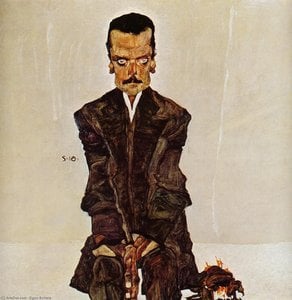
untitled (1861)

Egon Schiele’s ‘Untitled (1861)’ captures raw emotion and vulnerability through striking lines & intense colors. Explore the artist's Expressionist style depicting a nude figure, reflecting mortality & the human condition.

에곤 실레는 표현주의 화가로 독특한 기법과 심리적 깊이를 통해 인간 내면의 불안과 고통을 드러냈습니다. 클림트의 영향 아래 그의 작품은 예술계에 혁명적인 변화를 가져왔으며, 오늘날까지도 관객들에게 깊은 감동을 선사합니다.

핸드메이드 유화 복제화

작가가 직접 캔버스에 손으로 그린 유화 작품으로, 원하는 크기와 액자로 맞춤 제작해 드립니다. ( 프린트 판매로 전환 디지털 이미지 판매 채널로 전환)

Corner sample of the P118B picture frame: 성형 폴리스티렌, 5 cm wide and 3 cm thick
P118B ₩10
Corner sample of the P118H picture frame: 성형 폴리스티렌, 5 cm wide and 3 cm thick
P118H ₩10
Corner sample of the P118W picture frame: 성형 폴리스티렌, 5 cm wide and 3 cm thick
P118W ₩10
Corner sample of the P438Z picture frame: 성형 폴리스티렌, 5.5 cm wide and 3.5 cm thick
P438Z ₩10
Corner sample of the P508JH picture frame: 성형 폴리스티렌, 7 cm wide and 3.5 cm thick
P508JH ₩12
Corner sample of the P508YH picture frame: 성형 폴리스티렌, 7 cm wide and 3.5 cm thick
P508YH ₩12
Corner sample of the P805H picture frame: 성형 폴리스티렌, 5 cm wide and 3.5 cm thick
P805H ₩10
Corner sample of the P805Z picture frame: 성형 폴리스티렌, 5 cm wide and 3.5 cm thick
P805Z ₩10
Corner sample of the P919BZ picture frame: 성형 폴리스티렌, 7 cm wide and 3.5 cm thick
P919BZ ₩10
Corner sample of the P919G picture frame: 성형 폴리스티렌, 7 cm wide and 3.5 cm thick
P919G ₩10
Corner sample of the P919XJ picture frame: 성형 폴리스티렌, 7 cm wide and 3.5 cm thick
P919XJ ₩10
Corner sample of the P959ZH picture frame: 성형 폴리스티렌, 5 cm wide and 3 cm thick
P959ZH ₩10
Corner sample of the P968JZ picture frame: 성형 폴리스티렌, 6 cm wide and 4 cm thick
P968JZ ₩12
Corner sample of the W106C picture frame: 원목, 5 cm wide and 3 cm thick
W106C ₩8
Corner sample of the W218G picture frame: 원목, 5 cm wide and 3 cm thick
W218G ₩10
Corner sample of the W218JH picture frame: 원목, 5 cm wide and 3 cm thick
W218JH ₩8
Corner sample of the W218Y picture frame: 원목, 5 cm wide and 3 cm thick
W218Y ₩10
Corner sample of the W307PJ picture frame: 원목, 6 cm wide and 3 cm thick
W307PJ ₩10
Corner sample of the W316G picture frame: 원목, 6 cm wide and 3 cm thick
W316G ₩10
Corner sample of the W316PJ picture frame: 원목, 6 cm wide and 3 cm thick
W316PJ ₩8
Corner sample of the W316Y picture frame: 원목, 6 cm wide and 3 cm thick
W316Y ₩10
Corner sample of the W398PJ picture frame: 원목, 5 cm wide and 3 cm thick
W398PJ ₩8
Corner sample of the W4111J picture frame: 원목, 6.5 cm wide and 3.5 cm thick
W4111J ₩10
Corner sample of the W500HY picture frame: 원목, 7 cm wide and 5 cm thick
W500HY ₩15
Corner sample of the W500JH picture frame: 원목, 7 cm wide and 5 cm thick
W500JH ₩15
Corner sample of the W692G picture frame: 원목, 8 cm wide and 4 cm thick
W692G ₩12
Corner sample of the W849H picture frame: 원목, 5 cm wide and 3 cm thick
W849H ₩8
Corner sample of the W940BG picture frame: 원목, 7.5 cm wide and 4.5 cm thick
W940BG ₩15
Corner sample of the W953PJ picture frame: 원목, 6 cm wide and 3.5 cm thick
W953PJ ₩8

표준 규격
맞춤 제작
CM
INCH

작품의 원본 비율을 그대로 유지하는 프리셋 사이즈 중에서 선택해 보세요.

가로 너비
높이

액자나 벽면 크기에 맞춰 필요한 가로와 세로 길이를 입력해 주세요. 본 작품은 수작업으로 제작되므로, 요청하신 비율에 따라 작가가 그림의 가장자리를 조금 더 넓게 그리거나 일부를 조정하여 작업할 수 있습니다. 작업 시작 전, 최종 확인을 위해 디지털 목업 이미지를 보내드립니다. 이 페이지에 표시된 이미지는 실제 결과물과 다를 수 있으며, 오직 목업 이미지만이 정확한 결과물을 보여줍니다.

변경 가능한 예시: 얼굴을 고객님의 사진으로 교체, 반려동물 추가(예: 고양이를 강아지로 변경), 배경에 숨겨진 메시지 삽입, 배경 풍경 또는 요소 변경 등
주문 완료 후 WahooArt.com 팀에서 상세 안내를 위해 고객님께 이메일을 보내드리며, 미리보기 시안을 함께 제공해 드립니다.

전 세계 배송()은 표준 5주 대신 3~4주 내에 완료됩니다. (29 10월). 품질에는 어떠한 타협도 하지 않습니다.

전 세계 무료 특급 배송
고품질 린넨 캔버스
배송 전 과정 보험 적용
관세 환급 보장 서비스
원본 색상 일치 보장
제조 결함 발견 시 100일 이내 반품 가능
100% 환불 보장
다량 구매 할인 혜택

총 결제 금액

₩ 368179

untitled (1861)

재현 매체

복제본 규격

-

총 결제 금액

₩ 368179

주요 정보

  • Notable elements or techniques: Red, blue, white colors; Nakedness
  • Medium: Painting
  • Artistic style: Bold lines, psychological themes
  • Subject or theme: Naked man in bed
  • Title: untitled (1861)

아트 퀴즈

각 질문의 정답은 하나뿐입니다.

문항 1:
What artistic movement is most closely associated with Egon Schiele’s style as depicted in ‘untitled (1861)’?
문항 2:
The image prominently features a nude male figure. What is the primary effect this creates within the painting?
문항 3:
Considering Egon Schiele’s biography, which element most likely influenced the themes explored in ‘untitled (1861)’?
문항 4:
What color palette is most dominant in ‘untitled (1861)’?
문항 5:
Based on Schiele’s artistic style, what technique is most evident in the depiction of the figure's body?

Egon Schiele’s “Untitled (1861)” – A Descent into Raw Emotion

Egon Schiele's "Untitled (1861)" is not merely a depiction of a man in bed; it’s a visceral plunge into the heart of human vulnerability and mortality. Painted during a tumultuous period in his life—a time marked by illness, loss, and the looming shadow of World War I—the work embodies Schiele's signature Expressionist style with an intensity rarely matched. The painting immediately confronts the viewer with its stark simplicity: a nude male figure sprawled across a bed, bathed in the unsettling hues of red, blue, and white. The deliberate lack of background detail forces our gaze to remain fixed on the subject, amplifying his isolation and intensifying the emotional weight of the scene.

Schiele’s technique is characterized by loose, gestural brushstrokes that seem almost frantic, conveying a sense of urgency and unease. The application of paint is thick and impastoed in places, creating a tactile surface that draws us closer to the figure's physicality. Notice how he doesn’t shy away from depicting imperfections – the subtle spots on his skin, rendered with a delicate yet unsettling precision—these aren’t blemishes but rather integral parts of his being, reminders of life’s fragility and the passage of time. The color palette itself is deliberately jarring; the reds evoke passion, blood, and perhaps even violence, while the blues suggest melancholy and introspection. The stark white of the bed linen provides a cold counterpoint to these warmer tones, further emphasizing the figure's vulnerability.

A Portrait of Anxiety and Mortality

To understand “Untitled (1861),” it’s crucial to consider Schiele’s personal context. His father’s death from syphilis at the age of fourteen profoundly shaped his artistic vision, instilling within him a preoccupation with illness, decay, and the inevitability of mortality. This trauma is palpable in the painting's atmosphere—a sense of quiet desperation hangs heavy in the air. The pose itself – lying supine, seemingly defeated – speaks volumes about the figure’s psychological state. It’s not a heroic or triumphant posture; rather, it suggests a surrender to fate, a recognition of one’s own mortality.

Schiele's work frequently explored themes of sexuality and death in an intensely personal way. The nude form is not presented as idealized beauty but as a raw, vulnerable embodiment of human existence. The spots on the body are often interpreted as symbols of disease or aging, further reinforcing the painting’s meditation on mortality. It’s important to note that Schiele was deeply interested in exploring the darker aspects of the human psyche—an interest that set him apart from many of his contemporaries.

Symbolism and Emotional Resonance

Beyond its immediate visual impact, “Untitled (1861)” is rich in symbolic meaning. The bed itself can be seen as a metaphor for vulnerability and dependence, while the figure’s nakedness represents exposure and honesty. The lack of narrative—there are no clues to his story or his circumstances—forces us to confront our own interpretations and engage with the painting on an emotional level. It's a deeply introspective work that invites contemplation about life, death, and the human condition.

Schiele’s influence extends far beyond his immediate contemporaries. His bold use of line, expressive color palette, and unflinching portrayal of human emotion paved the way for later Expressionist artists such as Francis Bacon and Egon Schiele's work continues to resonate with viewers today, offering a powerful reminder of the complexities and contradictions inherent in the human experience. A reproduction of this arresting image can bring a striking element of emotional depth and intellectual stimulation to any interior space.

Bringing “Untitled (1861)” into Your Home

WahooArt offers meticulously crafted, hand-painted reproductions of Egon Schiele’s "Untitled (1861)" that capture the essence of this iconic work. Our artists replicate Schiele's distinctive brushwork and color palette with exceptional skill, ensuring that your reproduction faithfully reflects the painting’s original intensity. We offer a range of sizes to suit your needs and budget, from smaller prints perfect for individual display to large-scale canvases that will dominate any room.

More than just a decorative object, a WahooArt reproduction of “Untitled (1861)” is an investment in art history—a tangible connection to one of the most significant and emotionally charged artists of the 20th century. Explore our collection today and discover how you can bring this powerful work into your home.

질의응답

에곤 실레의 "untitled (1861)"의 엑스레이(X-ray) 이미지를 볼 수 있을까요?

에곤 실레의 "untitled (1861)"의 X-Ray 뷰는 작품의 X선 분석 페이지에서 확인하실 수 있습니다. 이 페이지에서는 11개의 광학 레이어를 통해 이미지를 인터랙티브하게 살펴볼 수 있습니다.

"untitled (1861)"의 Landscape 형식은 어디에 전시하는 것이 가장 좋을까요?

Landscape 형태의 "untitled (1861)" 복제 작품은 Living Room에 배치하시기에 좋습니다.

에곤 실레의 "untitled (1861)"을(를) 어떤 용도로 활용하기에 좋을까요?

에곤 실레의 "untitled (1861)"의 복제본은 Statement에 활용하시기에 좋습니다. 이는 작품의 주제와 분위기, 그리고 색감을 고려한 제안입니다.


작가 소개

Egon Schiele: Austrian Expressionist Painter

Egon Schiele’s life was a poignant chronicle of artistic passion intertwined with personal tragedy, etching itself into the annals of Viennese Modernism as one of its most unsettling and influential voices. Born in Tulln an der Donau, Austria-Hungary on June 12, 1890—a region steeped in baroque grandeur yet shadowed by encroaching industrialization—Schiele’s early years were marked by profound illness and loss, shaping his artistic sensibility from the outset. His father, Adolf Schiele, was a stationmaster whose own struggles with syphilis cast a pall over the family's wellbeing, leaving Egon orphaned at just fourteen – an experience that would fuel his lifelong preoccupation with mortality and decay. Raised initially by his mother and subsequently under the guardianship of his uncle Leopold Czihaczek—a man known for his rigid moral standards—Schiele’s childhood lacked conventional stability but nurtured within him a spirit of defiant independence, propelling him toward artistic exploration despite societal pressures.
  • Early Artistic Inclination: From a young age, Schiele demonstrated an extraordinary aptitude for drawing and painting, though these pursuits were met with disapproval from his father who viewed them as distractions from more pragmatic endeavors.
  • Formal Training & Dissatisfaction: He enrolled at the Kunstgewerbeschule in Vienna, seeking formal artistic training—however, he quickly became disillusioned with its conservative approach and abandoned it altogether, prioritizing self-discovery over academic conventions.
  • The Klimt Influence: Recognizing Gustav Klimt’s stylistic brilliance and embracing his mentorship, Schiele absorbed Klimt's influence during these formative years, adopting a decorative style infused with symbolism and eroticism—a divergence that would ultimately propel him toward forging his own distinctive artistic path.

Vienna Secession & Artistic Breakthrough

Schiele’s decision to leave the Akademie der bildenden Künste solidified his commitment to artistic autonomy, aligning him with a cohort of avant-garde artists who challenged Viennese bourgeois sensibilities and championed radical innovation. He cofounded the Neues Wiener Kunstgruppe (New Viennese Art Group) in 1909—a collective dedicated to exploring psychological themes and rejecting traditional aesthetic norms—marking a pivotal moment in his artistic evolution. His early canvases—often unsettling portraits and self-portraits—were imbued with an arresting honesty and emotional intensity, featuring distorted figures and conveying palpable vulnerability—reflecting the profound impact of personal trauma on his creative process. These paintings weren’t merely representations of physical form but explorations of the inner landscape—the anxieties, desires, and fears that haunted the human psyche—demonstrating Schiele's unwavering conviction in confronting uncomfortable truths through art.
  • Symbolism & Expressionism: Schiele embraced Symbolist principles alongside Expressionist techniques—resulting in a distinctive visual language characterized by elongated figures, contorted poses, and expressive lines that conveyed psychological tension.
  • The Klimt Connection: His admiration for Klimt’s decorative style served as a catalyst for stylistic experimentation—further enriching his artistic repertoire with influences from Art Nouveau and bolstering his conviction in pursuing unconventional aesthetic visions.

Exploring Sexuality & Mortality

Schiele's oeuvre is profoundly shaped by his preoccupation with themes of sexuality, death, anxiety, and isolation—subjects he tackled with uncompromising courage and psychological acuity. His self-portraits stand as poignant meditations on identity and vulnerability—revealing a remarkable level of introspection and confronting existential questions head-on. Beyond self-portraiture, Schiele created numerous portraits capturing the likenesses of others with unsettling realism—penetrating beneath superficial appearances to expose inner turmoil and emotional complexities. Recurring motifs like *The Physalis plant*—symbolizing death and transience with its delicate, papery husk—underscored his artistic preoccupation with mortality—a theme that permeated his canvases and resonated deeply within his creative vision.
  • Psychological Depth: Schiele’s art distinguishes itself through its profound psychological depth—capturing the nuances of human emotion and confronting existential anxieties with unflinching honesty.
  • Formal Innovation: He achieved stylistic breakthroughs by experimenting with elongated figures, contorted poses, and expressive lines—creating visual compositions that conveyed emotional intensity and challenged conventional artistic conventions.

Legacy & Recognition

Despite facing censorship and legal challenges—including a brief imprisonment for allegedly corrupting minors with his art—Schiele garnered recognition within Vienna’s avant-garde circles—establishing himself as one of the most provocative artists of his era. His uncompromising artistic vision resonated powerfully with audiences—inspiring subsequent generations of artists who embraced psychological exploration and defied societal norms. Schiele's paintings—now housed in prominent museum collections worldwide—continue to captivate viewers today—affirming his enduring legacy as a pivotal figure in early 20th-century art—a testament to the transformative power of confronting existential dilemmas with courage, conviction, and unwavering artistic integrity. His contribution to Viennese Modernism remains unparalleled—solidifying his place among the most influential artists of his time.
에곤 실레

에곤 실레

1890 - 1918 , 오스트리아 크로아티아

작가 정보 요약

  • Artistic Movement Or Style: 표현주의
  • Artists Who Influenced This Artist: ['구스타프 클림트']
  • Date Of Birth: 1890년 6월 12일
  • Date Of Death: 1918년 10월 31일 빈스턴 오스트리아헝가리 공국
  • Full Name: Egon Leo Adolf Ludwig Schiele
  • Nationality: 오스트리아
  • Notable Artworks:
    • 자기 초상화와 피질리스 식물
    • 껴안는 커플
    • 크루마우 근처 필드 풍경
  • Place Of Birth: 티른 안 드 돈아우 베오그라드 크로아티아
테마, 스타일, 특징별로 큐레이션된 작품들을 만나보세요.