작가가 직접 캔버스에 손으로 그린 유화 작품으로, 원하는 크기와 액자로 맞춤 제작해 드립니다. ( 프린트 판매로 전환 디지털 이미지 판매 채널로 전환)





























작품의 원본 비율을 그대로 유지하는 프리셋 사이즈 중에서 선택해 보세요.

액자나 벽면 크기에 맞춰 필요한 가로와 세로 길이를 입력해 주세요. 본 작품은 수작업으로 제작되므로, 요청하신 비율에 따라 작가가 그림의 가장자리를 조금 더 넓게 그리거나 일부를 조정하여 작업할 수 있습니다. 작업 시작 전, 최종 확인을 위해 디지털 목업 이미지를 보내드립니다. 이 페이지에 표시된 이미지는 실제 결과물과 다를 수 있으며, 오직 목업 이미지만이 정확한 결과물을 보여줍니다.
untitled (1661)
복제본 규격
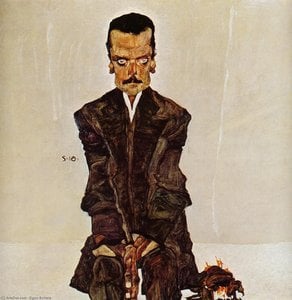
In the quiet, monochromatic depths of Egon Schiele’s ‘untitled (1661)’, one encounters more than just a portrait; one enters a psychological landscape. Created in 1911, this charcoal masterpiece serves as a profound window into the soul of an era defined by both unprecedented artistic liberation and deep-seated existential anxiety. The subject, a young man captured in a moment of stillness, wears the formal attire of his station—a waistcoat, jacket, and hat—yet his clothing cannot mask the raw, unshielded vulnerability of his expression. As he gazes directly at the viewer, there is an unwavering intensity that bridges the gap between the early twentieth century and the modern day, making this piece a captivating focal point for any collection that values emotional depth and historical resonance.
Schiele’s mastery of the dry charcoal medium allows for a breathtaking dance of light and shadow. Through the meticulous application of hatching and cross-hatching, the artist sculpts the contours of the man's face with a tactile precision that feels almost sculptural. The texture of the paper itself becomes a participant in the drama, its rough grain catching the charcoal to create a sense of atmospheric weight. This technique does not merely represent a person; it builds a volume of presence. The dramatic interplay of light, particularly where it illuminates the eyes, draws the observer into a silent dialogue with the subject, highlighting the artist's ability to use simple materials to achieve complex, multi-layered tonal variations.
Beyond the technical brilliance lies a rich tapestry of symbolism that speaks to the human condition. The formal attire suggests a adherence to social convention and status, yet Schiele’s characteristic expressive line subtly undermines this rigidity. There is a tension between the structured clothing and the untamed emotion reflected in the subject's eyes—a hallmark of the Expressionist movement. This piece embodies the era's fascination with the subconscious and the internal struggle between public persona and private truth. For the discerning collector or interior designer, this artwork offers a sophisticated layer of meaning, providing a conversation piece that transcends mere decoration to become an exploration of identity.
Integrating such a powerful work into a curated space requires an appreciation for its ability to command attention through subtlety rather than color. The monochromatic palette makes it an incredibly versatile choice for high-end interiors, pairing exquisitely with both minimalist modern settings and more traditional, opulent decors. It brings a sense of intellectual gravity and "quiet luxury" to a room, acting as an anchor of contemplation. To possess a reproduction of this caliber is to invite the haunting beauty of Schiele’s vision into one's daily life, ensuring that the profound introspection of 1911 continues to resonate in the contemporary world.
에곤 실레은(는) Expressionism 운동의 흐름 속에서 "untitled (1661)"을(를) 제작했습니다.
에곤 실레의 "untitled (1661)"에서는 Expressionism 사조와 근대 미술 시대가 만납니다.
"untitled (1661)"의 명암 대비는 Statement로 기록되었습니다. 대비는 밝은 부분과 어두운 부분의 차이가 얼마나 강한지를 나타냅니다.


1890 - 1918 , 오스트리아 크로아티아

Elevate your artistry with this definitive expert guide to mastering charcoal. Designed for art students, learn professional techniques for capturing profound depth, intricate textures, and dramatic shadows through advanced blending and chiaroscuro methods.

Explore the profound artistry of graphite drawing. Discover professional techniques for mastering depth, texture, and detail through a lens of art history, from classical sketches to modern masterpieces. Elevate your understanding of the pencil medium with our expert guide.

Explore the profound psychological depth of Expressionist portraiture. From Munch to Schiele, discover how distorted forms and visceral brushstrokes unmask raw human emotion in this definitive guide for art enthusiasts and collectors.

Discover the sophisticated mastery of graphite drawing. Explore expert techniques for achieving profound depth, intricate texture, and hyper-realistic detail through the alchemy of carbon, curated for the discerning art enthusiast and professional collector.

Elevate your artistic practice with this expert guide to mastering the line. Discover advanced techniques in graphite, charcoal, and contour drawing designed for art students seeking technical precision and expressive depth in their fine art studies.

 실제 크기로 보기
 보내기
보내기 공유하기
공유하기
 상세 보기
상세 보기 가이드 보기

 이미지 다운로드
 유사 작품 더 보기
 X-레이
X-레이 슬라이드 쇼 보기
 Q&A
Q&A 통계 정보
통계 정보

 상세 보기
상세 보기









 유리 옵션은 110cm 미만 크기에서만 선택 가능합니다.