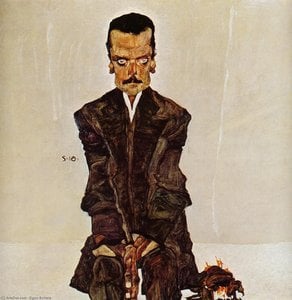
빠른 제작과 다양한 마감 옵션을 선택할 수 있는 박물관 수준의 지클레이 및 캔버스 프린트. ( 수작업 채색 복제본 주문하기 디지털 이미지 판매 채널로 전환)





























작품의 원본 비율을 그대로 유지하는 프리셋 사이즈 중에서 선택해 보세요.

액자나 벽면 크기에 맞춰 필요한 가로와 세로 길이를 입력해 주세요. 프린트는 원본 이미지보다 크게 제작할 수 없으며 오직 자르는 것만 가능하므로, 비율이 다른 사이즈를 선택할 경우 이미지의 일부가 잘려 나갈 수 있습니다. 인쇄 작업에 들어가기 전, 최종 확인을 위해 디지털 목업을 보내드립니다. 이 페이지에 표시된 이미지는 실제 잘리는 영역을 나타내지 않으며, 오직 목업을 통해서만 정확한 확인이 가능합니다.
The Kiss
복제본 규격
Egon Schiele's "The Kiss," a deceptively simple depiction of two figures entwined in an intimate embrace, is far more than just a romantic tableau. It’s a profoundly unsettling and intensely personal exploration of love, desire, vulnerability, and the ever-present shadow of mortality – hallmarks of Schiele’s distinctive Expressionist style. Unlike the idealized depictions of courtship found in Klimt's opulent “The Kiss,” Schiele offers a brutally honest portrayal, stripped bare of artifice and saturated with an almost palpable sense of unease. The drawing, rendered in charcoal on paper (though often reproduced in various media), captures a fleeting moment, a raw exchange that feels both urgent and deeply vulnerable.
The composition itself is deliberately unbalanced. The woman, positioned slightly off-center and leaning into the man, dominates the frame with her closed eyes and relaxed posture – an invitation to intimacy, yet simultaneously suggesting a surrender to something potentially overwhelming. Her body curves gently around him, while his stance is more rigid, almost protective, hinting at a struggle beneath the surface of their connection. The three figures in the background—a solitary figure on the right and two indistinct forms above—add layers of ambiguity, creating a sense of isolation and suggesting that this intensely personal moment exists within a larger, perhaps unsettling, context. The lack of clear spatial definition further contributes to the feeling of claustrophobia and heightened emotion.
Born in Vienna in 1890, Egon Schiele's life was tragically short, cut short by illness and war at just 28. This brevity profoundly shaped his artistic vision. He rejected the decorative elegance of the Viennese Secession movement, championed by Klimt, instead forging a path toward raw emotional honesty. Schiele’s technique is characterized by elongated figures, distorted perspectives, and a deliberate use of jagged lines – elements that convey not just physical form but also psychological turmoil. The drawing's surface is alive with restless energy; the charcoal strokes are thick and uneven, creating a sense of immediacy and urgency. Notice how Schiele uses hatching to build up volume and texture, particularly in the man’s body, emphasizing its physicality while simultaneously hinting at vulnerability.
Unlike Klimt's smooth, polished surfaces, Schiele embraces imperfection, mirroring the messy realities of human experience. This deliberate roughness is crucial to understanding his work; it reflects a deep engagement with themes of death, disease, and the fragility of life – subjects that haunted him throughout his career. The drawing’s stark contrasts between light and shadow further amplify this sense of drama and psychological intensity.
Schiele’s preoccupation with death is perhaps most evident in the context of his own life. His father succumbed to syphilis when Egon was just fourteen, a devastating event that profoundly impacted the young artist. This trauma permeated his work, manifesting as recurring motifs of illness, decay, and the grotesque. In “The Kiss,” this shadow of mortality isn’t overtly stated but subtly implied through the figures' posture, their proximity, and the overall atmosphere of vulnerability. The closed eyes of the woman suggest a surrender to oblivion, while the man’s protective stance can be interpreted as an attempt to shield her from the inevitable.
Furthermore, Schiele’s fascination with the human body – particularly its imperfections and vulnerabilities – is central to his artistic vision. He frequently depicted nude figures in unflinching detail, challenging conventional notions of beauty and exposing the raw physicality of existence. The drawing's focus on the intimate connection between two bodies speaks to a desire for closeness and connection amidst the anxieties of life and death. It’s a poignant reminder that even within moments of intense passion, the specter of mortality always lingers in the background.
WahooArt offers meticulously crafted hand-painted reproductions of Egon Schiele's “The Kiss,” capturing the artist’s unique style and emotional depth. Our skilled artists painstakingly recreate Schiele’s distinctive charcoal strokes, textures, and dramatic lighting, ensuring that your reproduction faithfully reflects the original drawing’s power and intensity. Whether you are a seasoned art collector or simply seeking to add a touch of raw emotion to your interior space, our reproductions provide an authentic and captivating representation of this iconic work. Explore our selection today and experience the enduring legacy of Egon Schiele.

1890 - 1918 , 오스트리아 크로아티아

Explore the profound world of Figurative Expressionism. Discover how masters like Munch and Schiele use the human form to convey raw emotion, and learn how to curate these evocative, museum-quality masterpieces for your private collection.

 실제 크기로 보기
 보내기
보내기 공유하기
공유하기
 상세 보기
상세 보기 가이드 보기

 이미지 다운로드
 유사 작품 더 보기
 X-레이
X-레이 슬라이드 쇼 보기
 통계 정보
통계 정보
 상세 보기
상세 보기









 유리 옵션은 110cm 미만 크기에서만 선택 가능합니다.