빠른 제작과 다양한 마감 옵션을 선택할 수 있는 박물관 수준의 지클레이 및 캔버스 프린트. ( 수작업 채색 복제본 주문하기 디지털 이미지 판매 채널로 전환)





























작품의 원본 비율을 그대로 유지하는 프리셋 사이즈 중에서 선택해 보세요.

특정 프레임이나 공간에 맞춰 직접 치수를 입력하실 수 있습니다. 선택하신 사이즈가 원본 이미지의 비율과 일치하지 않을 경우, 작품을 크롭(자르기)하거나 이미지를 대칭 또는 단색 채우기로 확장하여 제작합니다. 제작 시작 전, 최종 확인을 위해 디지털 목업이 전송됩니다.
화면상의 미리보기는 실제 크롭이나 확장 상태를 반영하지 않으므로, 최종 구도는 오직 목업을 통해서만 정확하게 확인하실 수 있습니다.
맞춤 사이즈 제작도 가능하지만, 원본 비율을 유지하기 위해서는 사전 정의된 목록에서 치수를 선택하시는 것을 권장합니다.

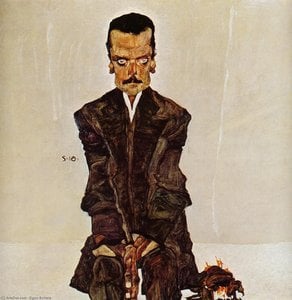
Seated Woman, Back View
복제본 규격
Egon Schiele's “Seated Woman, Back View,” painted in 1917, is not merely a portrait; it’s a distilled essence of anxiety, vulnerability, and the unsettling beauty found within human form. Created during a turbulent period in Schiele’s life – a time marked by illness, loss, and an increasingly fraught relationship with his wife, Edith Harms – this watercolor on paper offers a poignant glimpse into the artist's intensely personal world. The work immediately arrests the eye with its muted palette of blues and yellows, colors that simultaneously evoke both melancholy and a subtle, almost feverish energy. Schiele’s signature, delicately placed in the lower right corner, serves as a quiet marker of ownership over this deeply felt image, a testament to his singular vision.
What immediately draws attention is the woman's posture – seated, yet profoundly withdrawn. Her back is turned to the viewer, creating an immediate sense of intimacy and exclusion. This deliberate choice forces us to confront her presence not through direct gaze but through suggestion, a technique Schiele frequently employed to amplify emotional impact. The figure’s limbs are drawn upwards, almost as if seeking support or attempting to shield herself from something unseen. The striped shirt and dress, rendered in a restrained palette of blues and yellows, hint at a conventional appearance – a respectable lady – yet the positioning of her lower body, clad in a stark white lace slip and dark stockings, introduces an element of unsettling contrast. This juxtaposition speaks volumes about Schiele’s complex and often contradictory perceptions of femininity, hinting at both admiration and a certain degree of unease.
Schiele was a pivotal figure in the development of Expressionism, an artistic movement characterized by its subjective emotional expression rather than objective representation. In “Seated Woman, Back View,” this is powerfully evident. The loose brushstrokes, the distorted proportions, and the intense color choices all contribute to a sense of psychological turmoil. The painting isn’t concerned with capturing a realistic likeness; instead, it aims to convey an internal state – a feeling of isolation, perhaps even despair. Schiele's use of watercolor lends itself particularly well to this expressive intent, allowing for delicate gradations of tone and the creation of atmospheric effects that heighten the sense of mood.
Considering Schiele’s personal life at the time of painting – his father's death from syphilis, the loss of his sister Elvira, and the growing strain within his marriage – it’s not surprising that “Seated Woman, Back View” is imbued with a sense of profound sadness. The woman’s averted gaze can be interpreted as a shield against an unbearable reality. The contrast between her upper body, suggesting respectability, and her lower body, hinting at vulnerability and perhaps even shame, mirrors the complexities of Schiele's own emotional landscape. Some art historians have suggested that the figure represents Edith Harms, reflecting Schiele’s ambivalent feelings towards his wife – a woman he both loved deeply and struggled to fully understand. The painting becomes a visual embodiment of this internal conflict, a poignant meditation on love, loss, and the fragility of human existence.
WahooArt offers meticulously crafted hand-painted reproductions of Egon Schiele’s “Seated Woman, Back View,” allowing you to bring this powerfully evocative artwork into your home or office. Each reproduction is created by skilled artists using traditional techniques, ensuring a faithful and stunning representation of Schiele's original vision. Explore our collection today and experience the raw emotion and enduring beauty of this masterpiece.


1890 - 1918 , 오스트리아 크로아티아

An expert guide for art collectors exploring the chemistry and artistry of oil, acrylic, tempera, and watercolor. Discover how medium specificity and material integrity define the longevity and value of fine art masterpieces.

Discover the ethereal beauty of watercolor through an art-historical lens. Master the delicate balance of light, fluidity, and pigment to capture the luminous essence of nature, inspired by the legendary techniques of the Old Masters and Impressionist greats.

Discover the ethereal beauty of premium watercolor reproductions and bespoke commissions at WahooArt. From museum-quality landscapes to custom AI-enhanced portraits, our master artists deliver unparalleled craftsmanship and white-glove service for discerning collectors worldwide.

 실제 크기로 보기
 보내기
보내기 공유하기
공유하기
 상세 보기
상세 보기 가이드 보기

 이미지 다운로드
 유사 작품 더 보기
 X-레이
X-레이 슬라이드 쇼 보기
 통계 정보
통계 정보
 상세 보기
상세 보기









 유리 옵션은 110cm 미만 크기에서만 선택 가능합니다.