작품의 원본 비율을 유지하는 미리 설정된 크기 중에서 선택하세요.

특정 프레임이나 공간에 맞도록 직접 크기를 입력할 수 있습니다. 선택하신 크기가 원본 이미지의 비율과 일치하지 않는 경우, 작품을 자르거나 추가적인 손으로 그린 요소를 사용하여 그림을 확장합니다. 제작 시작 전 승인을 위해 디지털 목업을 보내드립니다.
화면 미리 보기는 실제 자르기 또는 확장을 반영하지 않습니다. 최종 구성은 목업을 통해서만 정확하게 확인하실 수 있습니다.
맞춤 크기 제작도 가능하지만, 원본 비율을 유지하기 위해 사전 정의된 목록에서 크기를 선택하시는 것을 권장합니다.

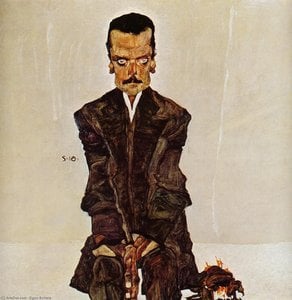
Seated Woman
복제본 크기
Egon Schiele's "Seated Woman," painted in 1913 amidst the tumultuous backdrop of early 20th-century Vienna, is far more than a simple portrait; it’s a haunting meditation on mortality, vulnerability, and the raw intensity of human emotion. Born in Tulln an der Donau in 1890, Schiele's life was tragically cut short at just 28, leaving behind a body of work characterized by its unsettling honesty and profound psychological depth. This particular painting, executed in watercolor on paper, exemplifies these qualities perfectly, offering a glimpse into the artist’s intensely personal vision.
The subject herself remains partially obscured, her face veiled in shadow, drawing our attention immediately to her posture and the delicate tension within her form. She is seated on what appears to be a simple chair, her head resting heavily upon another unseen figure's lap – an arrangement that speaks volumes about power dynamics, intimacy, and perhaps even a sense of surrender. The pose itself is deliberately awkward, almost painfully contorted; her back arches dramatically, suggesting both vulnerability and a fierce determination to endure. This isn’t the idealized beauty celebrated in much of Viennese art at the time; instead, Schiele presents a woman stripped bare, not just physically but emotionally.
Schiele's masterful use of watercolor is crucial to the painting’s impact. The medium lends itself beautifully to capturing fleeting moments and conveying a sense of immediacy. Notice how the colors bleed into one another, creating soft edges and an almost ethereal quality. However, this softness is juxtaposed with sharply defined lines – particularly evident in the woman's limbs and the chair’s frame – which inject a feeling of unease and instability. These angular lines contribute to the overall sense of tension within the composition.
The artist employs a remarkably restrained palette: primarily muted browns, creams, and greens, punctuated by flashes of red in the chair upholstery and the woman's hair. This limited color scheme amplifies the painting’s emotional resonance, creating a mood that is both melancholic and unsettling. The absence of bright colors reinforces the sense of isolation and vulnerability at the heart of the work.
Painted in 1913, “Seated Woman” reflects the anxieties and uncertainties of its time. Vienna was a city grappling with social upheaval, artistic experimentation, and a growing awareness of mortality – themes that would become increasingly prominent in Schiele’s oeuvre. The presence of the unseen figure supporting her head is particularly significant; it could be interpreted as representing death itself, or perhaps a symbol of dependence and vulnerability. Schiele's own life was marked by loss and illness, including the early deaths of his father and sister, experiences that undoubtedly informed his artistic vision.
Interestingly, Schiele’s work often explored themes of eroticism alongside mortality, as evidenced in other paintings from this period. This juxtaposition – a celebration of beauty intertwined with an awareness of decay – is characteristic of the Expressionist movement's willingness to confront uncomfortable truths about the human condition. The painting can be seen as a poignant exploration of the delicate balance between life and death, pleasure and pain.
"Seated Woman" remains a powerfully evocative work of art, offering a rare glimpse into the inner world of one of Expressionism’s most tormented yet brilliant artists. Its unsettling beauty, combined with its profound psychological depth, continues to resonate with viewers today. Whether viewed as a meditation on mortality or a celebration of human vulnerability, this painting stands as a testament to Schiele's unique artistic vision and his ability to capture the complexities of the human experience.


1890 - 1918 , 오스트리아 크로아티아

Discover the ethereal beauty of watercolor through an art-historical lens. Master the delicate balance of light, fluidity, and pigment to capture the luminous essence of nature, inspired by the legendary techniques of the Old Masters and Impressionist greats.

Discover the ethereal beauty of premium watercolor reproductions and bespoke commissions at WahooArt. From museum-quality landscapes to custom AI-enhanced portraits, our master artists deliver unparalleled craftsmanship and white-glove service for discerning collectors worldwide.


 미리보기
미리보기
 프린트 구매
 공유하기
공유하기 공유하기
공유하기
 상세 정보
상세 정보

 다운로드
다운로드
 유사 작품
유사 작품 X-레이
X-레이 슬라이드 쇼

 더 보기
더 보기









 유리 옵션은 110cm 미만 크기에서만 선택 가능합니다.