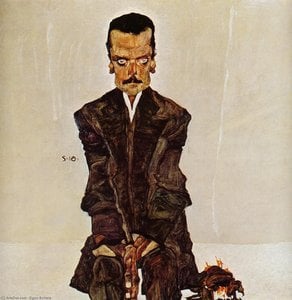
Dead Mother
Egon Schiele, an Austrian Expressionist painter, stands as one of the most unsettling figures in early 20th century art. His oeuvre is marked by visceral emotion and psychological depth—a stark contrast to the polished surfaces of Impressionism and Post-Impressionism that dominated the era. Among his most iconic works is
Dead Mother (1910), an oil on panel painting that continues to fascinate and disturb viewers today. This piece encapsulates Schiele’s singular artistic vision—a fusion of Expressionist principles with a profound preoccupation with the human condition.
The Painting: A Symbolic Representation
“Cite>Dead Mother” immediately confronts the viewer with its stark visual language. The composition depicts two figures intertwined, their faces pressed together in an embrace that borders on intimacy and despair. This intimate gesture is juxtaposed against the gruesome reality of blood emanating from both mouths—a deliberate shock to the senses designed to provoke contemplation about mortality and vulnerability. The dark sky serves as a backdrop, amplifying the painting’s oppressive atmosphere and mirroring the emotional turmoil depicted within. Schiele's masterful use of perspective emphasizes the figures' precarious position; they appear to be clinging desperately to each other, suggesting an overwhelming force—perhaps death itself—threatening to separate them. This dynamic arrangement underscores the painting’s thematic core: the struggle for connection amidst inevitable decay. The blood motif is not merely a gruesome detail but a potent symbol representing life force and vitality—a poignant reminder of what is being lost in this embrace.
Artistic Style and Influence
Schiele's artistic style owes considerable debt to Gustav Klimt, whose decorative motifs and shimmering surfaces influenced Schiele’s early explorations of color and texture. However, Schiele swiftly forged his own distinctive path, rejecting Klimt’s opulent aesthetic for a more austere and emotionally charged approach. He was also profoundly impacted by the works of Vincent van Gogh and Edvard Munch—artists who similarly prioritized expressive distortion over realistic representation. Like these masters, Schiele employed bold lines and flattened planes to convey psychological intensity, prioritizing emotional impact over visual accuracy. The painting’s unsettling beauty resides precisely in its refusal to offer easy answers or comforting illusions—a characteristic hallmark of Expressionism as a whole.
Historical Context
The early 20th century witnessed an explosion of artistic experimentation, fueled by anxieties surrounding rapid industrialization and societal upheaval. Artists like Schiele sought to grapple with these turbulent times through art that confronted uncomfortable truths about human existence. Schiele’s work emerged during the height of Expressionism—a movement characterized by a fervent belief in the power of art to express inner feelings and psychological states. The painting reflects this broader artistic impulse, capturing the pervasive sense of dread and vulnerability that permeated European culture at the time. To appreciate Schiele's contribution to modern art history, consider visiting the Österreichische Galerie Belvedere in Vienna—a museum housing a comprehensive collection of Austrian art spanning centuries.
Conclusion
“Cite>Dead Mother” by Egon Schiele remains a haunting testament to Expressionist artistry—a masterpiece that compels viewers to confront profound questions about life, death, and human relationships. For those seeking inspiration or contemplating acquiring a high-quality reproduction,
Egon Schiele: Dead Mother offers an unparalleled opportunity to engage with one of the most emotionally resonant images of the 20th century. To delve deeper into the history of painting and its evolution over time, explore
The History of Painting. And for insights into how artists utilize light to convey mood and emotion, peruse
Light in Painting. At WahooArt.com, we pride ourselves on crafting meticulously reproduced versions of celebrated artworks like Schiele’s—bringing the power of art into your home.