빠른 제작과 다양한 마감 옵션을 선택할 수 있는 박물관 수준의 지클레이 및 캔버스 프린트. ( 수작업 채색 복제본 주문하기 디지털 이미지 판매 채널로 전환)





























작품의 원본 비율을 그대로 유지하는 프리셋 사이즈 중에서 선택해 보세요.

액자나 벽면 크기에 맞춰 필요한 가로와 세로 길이를 입력해 주세요. 프린트는 원본 이미지보다 크게 제작할 수 없으며 오직 자르는 것만 가능하므로, 비율이 다른 사이즈를 선택할 경우 이미지의 일부가 잘려 나갈 수 있습니다. 인쇄 작업에 들어가기 전, 최종 확인을 위해 디지털 목업을 보내드립니다. 이 페이지에 표시된 이미지는 실제 잘리는 영역을 나타내지 않으며, 오직 목업을 통해서만 정확한 확인이 가능합니다.
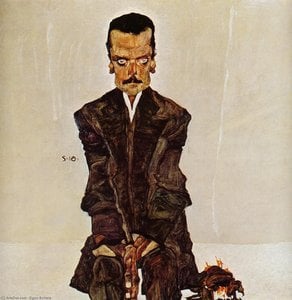
Boy (Ragazzo)
복제본 규격
Egon Schiele's “Boy (Ragazzo),” painted in 1910, isn’t merely a depiction of youth; it’s a raw, intensely personal exploration of vulnerability and the precarious nature of existence. The drawing, rendered with Schiele’s signature agitated lines and unsettlingly direct gaze, captures a young boy seated on a simple wooden chair – an arrangement that immediately evokes a sense of quiet contemplation, yet simultaneously hints at underlying unease. The subject, though youthful in appearance, possesses a profound stillness, almost as if he's holding his breath, bracing himself against an unseen force. This isn’t the idealized portraiture of the era; instead, Schiele presents us with an honest, unvarnished glimpse into the psyche of a young man grappling with something deeply felt.

Schiele’s technique is immediately arresting. He employs a rapid, almost frantic application of charcoal – or perhaps crayon, given its texture – to build up the form. The lines aren't smooth or polished; they are jagged, broken, and imbued with an urgent energy. Notice how he uses hatching and cross-hatching to create depth and volume, particularly in the boy’s jacket, which adds a layer of complexity to the composition. The shadows are not gentle gradations but rather sharp, defined areas that heighten the sense of drama and isolation. The boy's face is rendered with an almost skeletal quality, emphasizing his youth and vulnerability. This deliberate roughness reflects Schiele’s Expressionist approach – he wasn’t interested in replicating reality; he sought to convey feeling, emotion, and psychological truth.
To understand “Boy (Ragazzo),” it's crucial to consider the context of Egon Schiele’s life. Born in Vienna in 1890, his early years were marked by illness, loss, and a profound sense of instability. The death of his father from syphilis at the age of fourteen deeply impacted him, fueling an obsession with mortality and the fragility of human existence – themes that permeate much of his work. The boy depicted here isn’t simply a portrait; it's a projection of Schiele’s own anxieties and fears, a visual manifestation of the emotional turmoil he experienced throughout his life. The drawing can be interpreted as a meditation on childhood innocence lost, or perhaps a premonition of the hardships to come.
The simple wooden chair itself is significant. It’s an ordinary object, yet it provides a grounding element within the otherwise unsettling composition. It suggests a moment of respite, a brief pause in the boy's internal struggles. The boy’s posture – slightly hunched, with his hands clasped loosely – conveys a sense of introspection and perhaps even apprehension. His gaze is averted, suggesting a reluctance to confront whatever burdens he carries. Schiele masterfully uses these subtle details to create an image that resonates deeply with the viewer, evoking feelings of empathy, sadness, and a poignant awareness of human vulnerability. The drawing’s power lies not in its literal representation but in its ability to tap into universal emotions – loneliness, fear, and the yearning for connection.
For a high-quality reproduction of “Boy (Ragazzo),” visit WahooArt.com to experience this emotionally charged masterpiece in stunning detail.
"Boy (Ragazzo)"은(는) 1910년에 Acrylic On Canvas 기법으로 제작되었습니다. 재료와 제작 연도는 원작이 어떤 방식으로 언제 만들어졌는지를 설명합니다.
"Boy (Ragazzo)"의 형식은 Portrait입니다. 이는 작품 복제본을 배치할 공간을 계획할 때 유용합니다.
에곤 실레의 "Boy (Ragazzo)"의 색채는 Unified Palette 조화를 보여줍니다. 조화란 색상들이 서로 어떻게 어우러지는지를 의미합니다.


1890 - 1918 , 오스트리아 크로아티아

Elevate your artistic practice with this expert guide to mastering the line. Discover advanced techniques in graphite, charcoal, and contour drawing designed for art students seeking technical precision and expressive depth in their fine art studies.

Discover the sophisticated mastery of graphite drawing. Explore expert techniques for achieving profound depth, intricate texture, and hyper-realistic detail through the alchemy of carbon, curated for the discerning art enthusiast and professional collector.

Explore the profound world of Figurative Expressionism. Discover how masters like Munch and Schiele use the human form to convey raw emotion, and learn how to curate these evocative, museum-quality masterpieces for your private collection.

Explore the profound artistry of graphite drawing. Discover professional techniques for mastering depth, texture, and detail through a lens of art history, from classical sketches to modern masterpieces. Elevate your understanding of the pencil medium with our expert guide.

 실제 크기로 보기
 보내기
보내기 공유하기
공유하기
 상세 보기
상세 보기 가이드 보기

 이미지 다운로드
 유사 작품 더 보기
 X-레이
X-레이 슬라이드 쇼 보기
 통계 정보
통계 정보

 상세 보기
상세 보기









 유리 옵션은 110cm 미만 크기에서만 선택 가능합니다.