캔버스에 아크릴 물감월아트Expressionism
 1910근현대
 99.0 x 99.0 cm
온라인 미리보기보다 훨씬 뛰어난 품질의 고해상도 디지털 이미지를 구매해 보세요.
각 파일은 사내 전문가가 고급 도구와 숙련된 수동 리터칭 기술을 사용하여 세심하게 준비합니다. 우리는 모든 이미지가 탁월한 선명도, 정확한 색상 재현력, 그리고 미세한 디테일까지 완벽하게 갖추도록 보장합니다.
최종 파일은 전문적인 편집 및 인쇄 환경에서 즉시 사용할 수 있도록 최적화되어 72시간 이내에 이메일로 발송됩니다. 이는 세계적인 디자인 스튜디오, 출판사 및 갤러리가 신뢰하는 것과 동일한 품질입니다.
개인 소장 및 전시, 인쇄, 창작 프로젝트를 위한 고해상도 파일을 다운로드하세요. ( Switch to Print 손으로 그린 그림 구매)
WahooArt.com를 선택하시면 단순히 이미지를 받는 것을 넘어, 정밀한 보정 과정을 거친 전문적인 디지털 예술 작품을 만나보실 수 있습니다. 모든 작품에는 만족 보장 서비스가 함께 제공되며, 주문 시 다음과 같은 사항들이 자동으로 포함됩니다:

주문 후 72시간 이내에 고해상도 디지털 이미지 파일이 이메일로 발송되며, 즉시 사용하실 수 있습니다.

귀하의 작품은 고급 AI 도구와 수동 편집 과정을 거쳐 전문적으로 최적화되며, 이를 통해 디테일과 선명도, 색상의 정확도를 극대화합니다.

파일을 실수로 삭제하거나 분실하셨나요? 걱정 마세요. 언제든 무료로 다시 보내드립니다.

관세나 부가세, 배송비 부담 없이 작품을 즉시 감상하세요 - 디지털 다운로드는 언제나 면세 혜택이 적용됩니다.

전문적인 도구와 색상 관리 시스템을 통해 디지털 이미지가 원본의 색상을 최대한 정확하게 구현하도록 보장합니다.

구매하신 디지털 이미지에 만족하지 못하실 경우, 100일 이내에 별도의 조건 없이 수정 또는 100% 환불을 진행해 드립니다.

만족스럽지 않으신가요? 디지털 파일을 받으신 후 100일 이내에 어떠한 조건 없이 전액 환불해 드립니다.

이미지 3매 구매 시 10% 할인 - 5매 구매 시 15% 할인 - 10매 이상 구매 시 20% 할인. 크리에이티브 프로젝트, 갤러리, 에이전시에 매우 유용합니다.
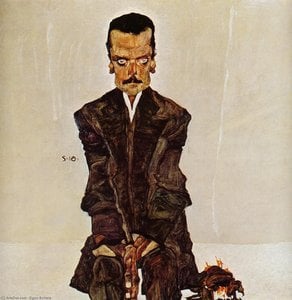
Egon Schiele's 1910 portrait of Arthur Roessler is not merely a depiction of a man; it is a visceral exploration of psychological tension, rendered with the raw intensity that defines the Expressionist movement. The painting captures Roessler, an Austrian art critic and early champion of Schiele’s work, in a state of palpable unease. He leans against a wall, his body angled away from the viewer, creating a sense of withdrawal and guardedness. The suit and tie suggest societal expectation, perhaps even formality, yet they are utterly at odds with the internal turmoil radiating from Roessler's face and posture. Schiele doesn’t present us with a celebratory portrait of a patron; instead, he offers an unflinching glimpse into a private moment of vulnerability, a man seemingly burdened by unseen anxieties.
Schiele’s technique in ‘Arthur Roessler’ is central to its emotional power. He eschews the smooth, idealized surfaces favored by earlier portraitists, opting instead for visible brushstrokes that seem to claw at the canvas. The color palette is dominated by muted browns and ochres, creating a somber atmosphere that amplifies the sitter's melancholy. This deliberate restriction of color isn’t accidental; it serves to focus attention on Roessler’s face – specifically his eyes and mustache – which become anchors for the viewer’s gaze. The angularity of the figure, particularly in the hands and limbs, is characteristic of Schiele’s style, a departure from traditional anatomical representation that prioritizes emotional expression over realistic form. The large scale of the painting—99 x 99 cm—further intensifies this effect, enveloping the viewer in Roessler's disquiet.
The creation of ‘Arthur Roessler’ occurred at a pivotal moment in Schiele’s career. Having recently broken away from the more conservative teachings of the Academy of Fine Arts Vienna, he was forging his own path, one that embraced subjectivity and psychological depth. Arthur Roessler played a crucial role in this development. He recognized Schiele's talent early on, providing not only financial support but also intellectual encouragement. Roessler’s belief in Schiele allowed him to exhibit his work and gain recognition within the Viennese art scene. However, it is important to note that Schiele wasn’t simply creating a thank-you portrait; he was engaging with Roessler as a complex individual, exploring the hidden layers beneath the surface of social decorum. The painting reflects a period where Schiele was experimenting with portraiture, seeking to capture not just likeness but also the inner life of his subjects.
While seemingly straightforward in its depiction, ‘Arthur Roessler’ is rich in symbolic potential. The very act of portraying a man in such a vulnerable state challenges conventional notions of portraiture, which traditionally aimed to project power and status. The hands, prominently displayed, are often interpreted as representing the creative force or intellectual labor – yet here they appear tense and constricted, suggesting a sense of frustration or limitation. Roessler’s gaze, averted from the viewer, hints at an internal struggle, a reluctance to fully reveal himself. Schiele's work frequently grapples with themes of mortality, sexuality, and alienation; while not explicitly present in this portrait, these undercurrents contribute to its overall sense of unease. The painting invites us to contemplate the complexities of human emotion and the masks we wear to navigate social interactions.
Ultimately, ‘Arthur Roessler’ is a testament to Schiele's ability to transform a simple portrait into a profound psychological study. It remains a compelling work for its honesty, its technical brilliance, and its enduring relevance in an age still grappling with questions of identity and emotional authenticity.


1890 - 1918 , 오스트리아 크로아티아


 미리보기
미리보기
 공유하기
공유하기 공유하기
공유하기
 상세 정보
상세 정보

 다운로드
다운로드
 유사 작품
유사 작품 X-레이
X-레이 슬라이드 쇼
 Stats
Stats 더 보기
더 보기