


x





























작품의 원본 비율을 유지하는 미리 설정된 크기 중에서 선택하세요.

특정 프레임이나 공간에 맞춰 직접 치수를 입력하실 수 있습니다. 선택하신 사이즈가 원본 이미지의 비율과 일치하지 않을 경우, 작품을 크롭(자르기)하거나 이미지를 대칭 또는 단색 채우기로 확장하여 제작합니다. 제작 시작 전, 최종 확인을 위해 디지털 목업이 전송됩니다.
화면상의 미리보기는 실제 크롭이나 확장 상태를 반영하지 않으므로, 최종 구도는 오직 목업을 통해서만 정확하게 확인하실 수 있습니다.
맞춤 사이즈 제작도 가능하지만, 원본 비율을 유지하기 위해서는 사전 정의된 목록에서 치수를 선택하시는 것을 권장합니다.

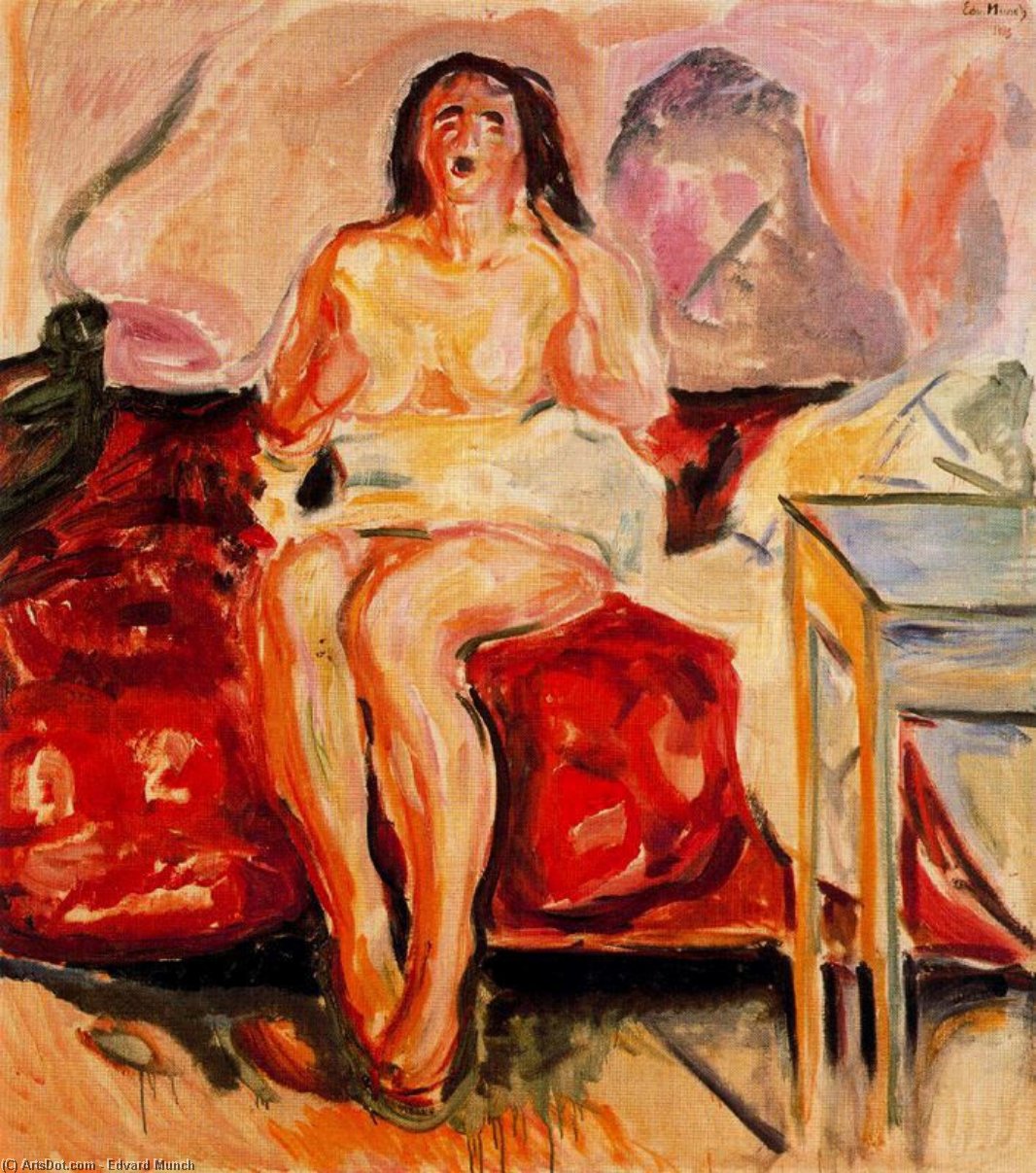
untitled (484)
복제본 크기
Edvard Munch's “Untitled (484)” is not merely a depiction of a woman seated on a couch; it’s an intensely felt exploration of human vulnerability and the unsettling undercurrents of modern existence. Painted during a period marked by profound personal loss and a burgeoning awareness of psychological distress, this work embodies the core tenets of Expressionism – prioritizing emotional truth over objective representation. The painting, though lacking a formal title, immediately evokes a sense of contained turmoil, inviting viewers to contemplate the silent drama unfolding within its frame.
The composition itself is deceptively simple. A woman sits bathed in an indeterminate light, her mouth agape as if caught mid-sound or utterance. Her posture suggests both vulnerability and a degree of impassivity, creating a compelling tension. The red couch, a bold splash of color against the muted background, anchors the scene while simultaneously hinting at passion, anger, or perhaps even danger. The carefully placed books – one centered on the table, the other slightly off-kilter – speak to an intellectual life, yet their presence feels strangely disconnected from the woman’s immediate emotional state. A single bird perched in the upper left corner introduces a fleeting element of nature, a fragile counterpoint to the prevailing sense of unease.
To understand “Untitled (484),” it’s crucial to delve into the artist’s biography. Edvard Munch’s life was relentlessly shaped by tragedy – the early deaths of his mother and sister from tuberculosis, coupled with his own struggles with mental illness and a profound sense of loneliness. These experiences weren't simply biographical details; they became the very foundation of his artistic vision, fueling an obsessive exploration of themes like mortality, anxiety, and the fragility of human connection. The open mouth of the woman in this painting can be interpreted as a manifestation of suppressed emotion, a desperate attempt to articulate something unspoken – perhaps grief, fear, or a profound sense of isolation.
Munch’s use of color is particularly significant. The predominantly muted palette—earth tones and subtle shades of gray—creates an atmosphere of somber introspection. The vibrant red of the couch acts as a jarring counterpoint, drawing attention to the woman's emotional state and suggesting a potential eruption of feeling. The lighting, too, is deliberately ambiguous, casting long shadows that heighten the sense of mystery and uncertainty. This deliberate manipulation of color and light aligns perfectly with Munch’s Expressionist approach – prioritizing subjective experience over realistic representation.
“Untitled (484)” was created in a period when Munch was increasingly experimenting with techniques that would define his signature style. While the painting's precise date remains unknown, it exemplifies his mastery of tempera and crayon on cardboard – a medium he favored for its ability to capture both texture and emotional intensity. The loose brushstrokes and distorted forms contribute to the work’s unsettling atmosphere, conveying a sense of immediacy and raw feeling. It’s important to note that Munch was deeply influenced by Symbolism, which emphasized suggestion and allegory over literal depiction – a principle clearly evident in this painting's evocative use of symbolism.
Furthermore, “Untitled (484)” resonates with the broader artistic currents of the late 19th century. It anticipates the rise of Expressionism, a movement that sought to capture the subjective experience of emotion and psychological turmoil. The work’s exploration of anxiety, isolation, and mortality foreshadowed many of the themes that would become central to 20th-century art. As a key piece in Munch's oeuvre, it stands as a poignant testament to his ability to translate personal anguish into universal symbols of human suffering.
WahooArt offers meticulously crafted hand-painted reproductions of “Untitled (484),” allowing you to experience the profound emotional power of this iconic work in your own space. Each reproduction is created by skilled artists who painstakingly recreate Munch’s distinctive style and color palette, ensuring an authentic representation of the original painting. Whether displayed as a statement piece in a contemporary interior or as a contemplative addition to a classic setting, this artwork invites viewers to engage with the complexities of human emotion and the enduring legacy of Edvard Munch.


1863년 노르웨이 아델스브루크에서 태어난 어드반트 문크는 현대 미술, 특히 표현주의에 지대한 영향을 미친 화가입니다. 그의 삶은 어린 시절의 비극적인 경험과 끊임없는 정신적 고통으로 얼룩져 있었고, 이러한 개인적인 투쟁들은 그의 작품 전체를 관통하는 불안, 죽음, 고독이라는 주제로 이어졌습니다. 문크는 단순한 현실 묘사를 넘어 인간 내면의 심오하고 복잡한 감정을 표현하고자 했습니다. 그는 자신의 그림들을 통해 정신적 고통을 시각화하고, 이를 통해 관객들에게 깊은 공감과 울림을 선사했습니다.
문크의 어린 시절은 질병과 상실로 가득했습니다. 어머니와 여동생이 모두 결핵으로 세상을 떠난 경험은 그의 삶에 깊은 상처를 남겼고, 이는 그의 작품에서 반복적으로 나타나는 죽음과 슬픔이라는 주제의 근원이 되었습니다. 아버지의 엄격한 종교적 신념과 정신 질환 또한 문크에게 불안과 공포심을 심어주었으며, 이러한 어두운 경험들은 그의 예술 세계를 형성하는 데 결정적인 영향을 미쳤습니다. 크리스티아니아(오슬로) 왕립 미술학교에서 정식 교육을 받았지만, 그는 전통적인 회화 기법에 얽매이지 않고 자신만의 독특한 표현 방식을 추구했습니다. 특히 실존주의 철학자 한스 예거와의 만남은 문크에게 기존의 예술적 관습을 벗어나 자신의 내면세계를 솔직하게 드러내는 ‘영혼의 그림’을 그리도록 격려하는 계기가 되었습니다.
1890년대 파리로 건너간 문크는 폴 고갱, 빈센트 반 고흐, 앙리 드 툴루즈 로트렉 등 당시 유럽 미술계를 주도하던 인상주의 화가들의 작품을 접하며 큰 영향을 받았습니다. 그들의 대담한 색채 사용과 강렬한 표현력은 문크의 예술적 실험에 새로운 활력을 불어넣었습니다. 그러나 문크는 단순히 다른 화가들의 스타일을 모방하는 데 그치지 않고, 자신만의 독특한 시각과 감성을 담아내며 점차 표현주의의 선구자적인 면모를 드러냈습니다. 특히 그의 작품에서 나타나는 왜곡된 형태와 불안정한 색채는 관객들에게 강렬한 인상을 남기며, 인간 내면의 고통과 절망을 효과적으로 전달합니다.
‘절규’(The Scream)는 문크를 세계적인 명성을 얻게 해준 작품이자, 현대 미술의 상징과도 같은 존재입니다. 붉은 노을 아래 서 있는 인간 형상이 절망적으로 울부짖는 모습은 불안과 공포에 휩싸인 현대인의 심리를 극명하게 드러냅니다. 문크 자신은 이 그림이 자연의 거대한 비명을 듣고 느낀 감정을 표현한 것이라고 말했습니다. ‘절규’는 단순한 풍경화가 아닌, 인간 존재의 근원적인 불안과 고독을 담아낸 상징적인 작품으로 평가받고 있습니다. 또한 마돈나, 병든 아이, 멜랑콜리아 1 & 2 등 문크의 다른 작품들 역시 죽음, 슬픔, 사랑과 같은 보편적인 인간 경험을 다루며 깊은 감동과 울림을 선사합니다.
어드반트 문크는 표현주의 운동의 발전에 지대한 영향을 미쳤으며, 그의 작품은 이후 독일 표현주의 화가들에게 영감을 주었습니다. 그는 전통적인 회화 기법에서 벗어나 주관적인 감정과 내면세계를 자유롭게 표현하는 새로운 예술적 가능성을 제시했습니다. 문크의 작품은 현대 미술에 있어서 인간 심리의 복잡성과 불안을 탐구하는 중요한 전환점을 마련했으며, 그의 유산은 오늘날까지도 많은 예술가들에게 영감을 주고 있습니다. 그는 단순히 그림을 그리는 화가가 아니라, 인간 존재의 어두운 면을 직시하고 이를 예술로 승화시킨 위대한 사상가이자 선구자였습니다.

1863 - 1944 , 스웨덴

Explore the profound world of Edvard Munch, pioneer of Expressionism. Discover the origins of 'The Scream' & his haunting depictions of anxiety, mortality, and love. Expert analysis & high-quality reproductions at WahooArt.
뭉크, 키르히너 등 거장들의 작품으로 표현주의 미술의 정수를 만나보세요. 강렬한 색채와 감정적 깊이가 깃든 명작 10선을 통해 예술의 세계를 탐험하고, WahooArt에서 고품질 아트 프린트를 소장하세요. 지금 바로 온라인 컬렉션을 확인하세요!

존 싱어 사전트의 대표작 25선을 만나보세요. 인상주의 초상화부터 빛과 색채가 아름다운 유화까지, 그의 예술 세계를 탐험하고 WahooArt에서 고품질 아트 프린트로 거실 장식을 완성하세요. 지금 온라인 컬렉션을 확인하세요!

Explore 10 legendary 'Acrylic On Canvas' masterpieces by artists like Rothko, Warhol & Frankenthaler. Discover the stories behind these iconic paintings and their impact on modern art. Find museum-quality reproductions at – elevate your home with timeless beauty.

Explore the captivating portraits of Charles Bird King, renowned for his depictions of Native American leaders. Discover the historical context, artistic techniques, and collecting value of these significant 19th-century artworks.


최신 미술 뉴스, 특별 혜택 및 인테리어 아이디어를 가장 먼저 만나보세요.
프로젝트에 대해 알려주시면 저희 미술 전문가들이 맞춤형 아트 제안 3가지를 전달해 드립니다.
당신만을 위한 맞춤형 옵션 3가지를 무료로 추천해 드립니다!

 작품 구매하기
 공유하기
공유하기 공유하기
공유하기
 상세 정보
상세 정보

 다운로드
다운로드
 유사 작품
유사 작품 X-레이
X-레이 슬라이드 쇼

 더 보기
더 보기









 유리 옵션은 110cm 미만 크기에서만 선택 가능합니다.


