x































작품의 원본 비율을 유지하는 미리 설정된 크기 중에서 선택하세요.

특정 프레임이나 공간에 맞도록 직접 크기를 입력할 수 있습니다. 선택하신 크기가 원본 이미지의 비율과 일치하지 않는 경우, 작품을 자르거나 추가적인 손으로 그린 요소를 사용하여 그림을 확장합니다. 제작 시작 전 승인을 위해 디지털 목업을 보내드립니다.
화면 미리 보기는 실제 자르기 또는 확장을 반영하지 않습니다. 최종 구성은 목업을 통해서만 정확하게 확인하실 수 있습니다.
맞춤 크기 제작도 가능하지만, 원본 비율을 유지하기 위해 사전 정의된 목록에서 크기를 선택하시는 것을 권장합니다.

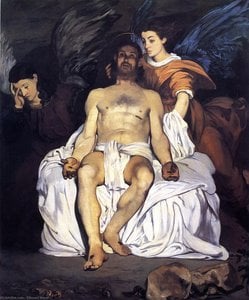
Christ aux anges
복제본 크기
Édouard Manet's “Christ aux Anges” (Christ with Angels), painted in 1864, isn’t merely a depiction of biblical sorrow; it’s a profound meditation on suffering, faith, and the unsettling beauty found within moments of intense emotional vulnerability. This work, deeply rooted in the aftermath of Christ's crucifixion, transcends simple narrative to become a poignant exploration of human experience under divine scrutiny. Manet, already challenging the conventions of academic painting with his burgeoning realism, here employs a restrained palette and masterful use of line to convey an atmosphere of quiet desperation and profound contemplation.
The composition immediately draws the eye to Christ’s central figure, seated on the ground, bound by unseen restraints. His posture—a subtle curve of the spine, a downward gaze— speaks volumes about his ordeal. Flanking him are two angels, not as triumphant messengers but as witnesses to his agony, their faces etched with solemnity and perhaps even a touch of sorrow. The pyramidal structure, a hallmark of Renaissance art, is subtly subverted here; it’s less a symbol of stability and more an anchor for the weight of Christ's suffering. The figures are tightly framed, creating an intimate space around them—a stage set for this private drama.
Manet’s technique is characterized by a deliberate simplicity that belies the emotional depth he achieves. He eschews elaborate detail in favor of carefully rendered lines, utilizing hatching and cross-hatching to build up tonal values and create texture. The graphite or charcoal—the medium of choice for this piece—allows for a remarkable degree of control, enabling Manet to capture the subtle nuances of light and shadow with astonishing precision. Notice how the darker areas aren’t simply black; they are built from layers of closely spaced lines, suggesting depth and volume. The lighter areas, conversely, are defined by sparser strokes, creating an illusion of airiness and highlighting Christ's form.
The flattened perspective—a departure from the traditional Renaissance emphasis on spatial realism—further contributes to the painting’s emotional intensity. It forces the viewer to confront the figures directly, intensifying the sense of immediacy and vulnerability. The background is deliberately minimal, serving only to amplify the drama unfolding in the foreground. This deliberate reduction focuses all attention on the central narrative – Christ's suffering and the angels’ silent vigil.
“Christ aux Anges” resonates with layers of symbolic meaning. The binding represents not just physical restraint but also spiritual confinement—the weight of sin and sacrifice. The angels, often interpreted as messengers of God, here seem to be grappling with the enormity of Christ’s suffering, their faces reflecting a mixture of compassion and perhaps even bewilderment. The scene draws heavily on iconography associated with the Passion of Christ, particularly depictions of Christ after his crucifixion—a moment of profound vulnerability and acceptance. The overall mood is one of quiet contemplation, inviting viewers to reflect on themes of faith, redemption, and the nature of suffering.
Manet's work was revolutionary for its time, challenging the established norms of academic painting. “Christ aux Anges” exemplifies his willingness to explore contemporary subjects with a frankness that shocked many critics. His use of line and shadow, combined with his focus on human emotion, paved the way for Impressionism and subsequent movements in modern art. Reproductions of this powerful image continue to resonate today, offering a timeless meditation on faith, sorrow, and the enduring mysteries of the human condition. The painting’s stark beauty and emotional honesty remain profoundly moving, solidifying Manet's place as a pivotal figure in the history of Western art.


1832 - 1883 , 프랑스

Elevate your artistry with this definitive expert guide to mastering charcoal. Designed for art students, learn professional techniques for capturing profound depth, intricate textures, and dramatic shadows through advanced blending and chiaroscuro methods.

Elevate your artistic practice with this expert guide to mastering the line. Discover advanced techniques in graphite, charcoal, and contour drawing designed for art students seeking technical precision and expressive depth in their fine art studies.

Explore the profound artistry of graphite drawing. Discover professional techniques for mastering depth, texture, and detail through a lens of art history, from classical sketches to modern masterpieces. Elevate your understanding of the pencil medium with our expert guide.

Discover the sophisticated mastery of graphite drawing. Explore expert techniques for achieving profound depth, intricate texture, and hyper-realistic detail through the alchemy of carbon, curated for the discerning art enthusiast and professional collector.

Explore the profound beauty of religious processions in art history. From Baroque drama to spiritual transcendence, discover how masters captured faith. WahooArt.com offers exquisite, hand-painted oil reproductions for discerning collectors seeking timeless grandeur.


최신 미술 뉴스, 특별 혜택 및 인테리어 아이디어를 가장 먼저 만나보세요.
프로젝트에 대해 알려주시면 저희 미술 전문가들이 맞춤형 아트 제안 3가지를 전달해 드립니다.
당신만을 위한 맞춤형 옵션 3가지를 무료로 추천해 드립니다!


 미리보기
미리보기
 프린트 구매
 공유하기
공유하기 공유하기
공유하기
 상세 정보
상세 정보

 다운로드
다운로드
 유사 작품
유사 작품 X-레이
X-레이 슬라이드 쇼

 더 보기
더 보기









 유리 옵션은 110cm 미만 크기에서만 선택 가능합니다.