

작가가 직접 캔버스에 손으로 그린 유화 작품으로, 원하는 크기와 액자로 맞춤 제작해 드립니다. ( 프린트 판매로 전환 디지털 이미지 판매 채널로 전환)





























작품의 원본 비율을 그대로 유지하는 프리셋 사이즈 중에서 선택해 보세요.

액자나 벽면 크기에 맞춰 필요한 가로와 세로 길이를 입력해 주세요. 본 작품은 수작업으로 제작되므로, 요청하신 비율에 따라 작가가 그림의 가장자리를 조금 더 넓게 그리거나 일부를 조정하여 작업할 수 있습니다. 작업 시작 전, 최종 확인을 위해 디지털 목업 이미지를 보내드립니다. 이 페이지에 표시된 이미지는 실제 결과물과 다를 수 있으며, 오직 목업 이미지만이 정확한 결과물을 보여줍니다.
Study
복제본 규격
Donato Bramante’s “Umbrella Vault,” executed in 1493 for the Basilica di San Pietro in Montorio, Rome, stands as a pivotal moment in architectural history—a testament to Bramante's masterful assimilation of influences from both Byzantine tradition and burgeoning Renaissance ideals. Situated atop the basilica’s central nave, this monumental fresco represents more than just decorative embellishment; it embodies a profound conceptual shift toward spatial representation that would profoundly impact subsequent artistic endeavors.
The vault itself is conceived as an inverted dome, mirroring the structure of Hagia Sophia in Constantinople—a daring departure from prevailing Roman architectural conventions. Bramante’s intention wasn't merely to replicate Byzantine aesthetics; rather, he sought to elevate them to a new level of sophistication by applying Renaissance geometric principles. The vault’s curvature is meticulously calculated using mathematical formulas derived from Euclid and Apollonius, reflecting the humanist fascination with rational order and demonstrating Bramante’s commitment to reviving classical ideals.
San Pietro in Montorio was originally conceived as a mausoleum for Pope Julius II, commemorating his deceased son Cesare Borgia. However, Bramante swiftly transformed it into a cathedral—a bold decision that underscored the humanist conviction that art could serve both aesthetic pleasure and moral instruction. This architectural undertaking exemplifies the Renaissance’s ambition to reconcile Christian piety with classical erudition.
The basilica's location on Janiculan Hill—one of Rome’s seven hills—holds symbolic importance, reflecting the biblical narrative of Jesus’ ascension into heaven. Bramante deliberately positioned the vault above the nave to emphasize this spiritual dimension, creating a visual metaphor for divine transcendence.
Bramante's fresco technique involved layering pigments onto wet plaster—a method perfected by Giotto and Brunelleschi—to achieve remarkable luminosity and depth. The artist skillfully utilized sfumato—a subtle blending of colors—to soften contours and create an illusion of atmospheric perspective, enhancing the vault’s visual impact.
Furthermore, Bramante's masterful use of foreshortening—the depiction of objects receding into space—demonstrates his mastery of Renaissance perspectival principles. This technique contributes to the vault’s sense of realism and reinforces its monumental scale, immersing viewers in a captivating illusion of depth.
"Umbrella Vault" transcends mere architectural representation; it aspires to evoke contemplation and inspire awe. The vault's harmonious proportions—derived from classical geometry—communicate an idealized vision of beauty and order, reflecting the Renaissance humanist belief in human reason’s capacity to grasp divine truth.
The fresco’s subdued color palette fosters a tranquil mood, inviting viewers to immerse themselves in the basilica’s spiritual atmosphere. Ultimately, Bramante's masterpiece embodies the Renaissance spirit—a celebration of artistic innovation coupled with reverence for religious tradition—leaving an indelible mark on architectural history and continuing to captivate audiences centuries later.


Explore the profound beauty of the sketch. Discover how masters use charcoal and graphite to capture raw emotion, anatomical precision, and fluid movement, bridging the gap between ephemeral marks and eternal oil masterpieces.
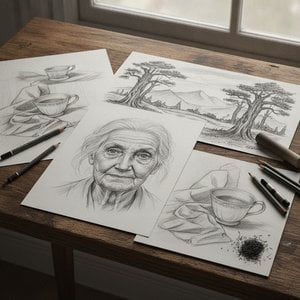
Explore the profound elegance of pencil and charcoal sketching. Discover how masters use line, shadow, and chiaroscuro to capture light and texture, bridging the gap between preparatory studies and timeless fine art masterpieces.

Elevate your artistic practice with this expert guide to mastering the line. Discover advanced techniques in graphite, charcoal, and contour drawing designed for art students seeking technical precision and expressive depth in their fine art studies.

Explore the profound artistry of graphite drawing. Discover professional techniques for mastering depth, texture, and detail through a lens of art history, from classical sketches to modern masterpieces. Elevate your understanding of the pencil medium with our expert guide.

 실제 크기로 보기
 보내기
보내기 공유하기
공유하기
 상세 보기
상세 보기 가이드 보기

 이미지 다운로드
 유사 작품 더 보기
 X-레이
X-레이 슬라이드 쇼 보기
 통계 정보
통계 정보


 상세 보기
상세 보기









 유리 옵션은 110cm 미만 크기에서만 선택 가능합니다.


