

이 페이지에 표시된 작품은 저작권법의 보호를 받으며, 이에 따라 동일한 복제품을 제작하거나 판매하는 것은 법으로 금지되어 있습니다. 이러한 권리 보호는 다음과 같은 국제 협약에 따라 시행됩니다. 베른 협약 또한 다음에서 명시하는 법률을 포함한 국내법에 의해 보호됩니다. 미국 저작권법 제17조.
저희는 존중을 담은 합법적인 대안으로서, 원작에서 영감을 받은 맞춤형 수제 유화 작품을 제공합니다. 저희의 숙련된 전문 화가들은 원작의 스타일, 분위기, 예술적 정수를 면밀히 연구하여, 그 자체로 독창적인 창작물이면서도 원작과 동일한 감동을 불러일으키는 새로운 작품을 만들어냅니다.
이 방식은 저작권 보호를 받는 예술 작품을 복제하거나 그대로 재현하는 것이 아니기에 저작권 규정을 완벽히 준수합니다. 대신, 이는 창의적인 재해석의 과정을 거칩니다. 즉, 원작에서 영감을 받되 원작과 동일하지 않은 새로운 회화 작품을 의미합니다.
작가가 직접 캔버스에 손으로 그린 유화 작품으로, 원하는 크기와 액자로 맞춤 제작해 드립니다. ( 프린트 판매로 전환 디지털 이미지 판매 채널로 전환)





























작품의 원본 비율을 그대로 유지하는 프리셋 사이즈 중에서 선택해 보세요.

액자나 벽면 크기에 맞춰 필요한 가로와 세로 길이를 입력해 주세요. 본 작품은 수작업으로 제작되므로, 요청하신 비율에 따라 작가가 그림의 가장자리를 조금 더 넓게 그리거나 일부를 조정하여 작업할 수 있습니다. 작업 시작 전, 최종 확인을 위해 디지털 목업 이미지를 보내드립니다. 이 페이지에 표시된 이미지는 실제 결과물과 다를 수 있으며, 오직 목업 이미지만이 정확한 결과물을 보여줍니다.
고요한 대화
복제본 규격
Dattatray Gundo Kulkarni의 "고요한 대화"은(는) 1970년에 제작되었습니다.
Modern Indian Art 사조 안에서, "고요한 대화"은(는) 평온함한 어조로 기록되어 있습니다.

Dattatray Gundo Kulkarni, known to the art world by the evocative moniker Dizi, remains one of the most compelling and singular voices in twentieth-century Indian modernism. Born on December 28, 1921, in the village of Shedbal, Karnataka, his life was a profound testament to the pursuit of artistic truth over external acclaim. While many of his contemporaries sought refuge in established movements, Dizi maintained a fiercely independent path, characterized by an unwavering commitment to his own creative vision. His journey was not merely one of aesthetic evolution but also one of personal resilience; during the Quit India movement of 1942, his patriotic fervor led to imprisonment, an experience that left him with a lifelong limp but perhaps deepened the raw intensity found within his work.
His formal artistic foundation was laid at the prestigious Sir Jamsetjee Jeejebhoy School of Art in Mumbai. It was during these formative years that he balanced the practical necessity of working as an illustrator and cartoonist with his burgeoning passion for fine art. This dual existence allowed him to master the precision of line and the wit of caricature, skills that would later inform the structural integrity of his paintings and sculptures. The name Dizi emerged from this period, becoming a symbol of an artist whose personality and style were inextricably linked. Though he held brief affiliations with the Progressive Artists’ Group and the Bombay Group, he never allowed himself to be subsumed by any single school, preferring instead to exist in the vibrant, often turbulent, center of India's modernizing art scene.
The evolution of Dizi’s technique is a fascinating study in artistic maturation. In his early career, his palette was characterized by a certain brightness—vibrant, gay, and light colors that captured the energy of a young artist exploring the possibilities of medium. However, as he matured, his work underwent a profound transformation. He began to eschew superficial ornamentation and flamboyant color in favor of a more sombre and meditative representation. This shift toward deeper tones, mass, and volume allowed him to explore the very essence of form, creating works that felt grounded and monumental even in their most minimalist expressions.
His versatility was truly remarkable, spanning three distinct media: drawing, painting, and sculpture. Whether he was capturing nuanced details in an intricate drawing, exploring abstract depths in a painting, or manipulating physical space through sculpture, his core philosophy remained constant. He sought to convey an honest representation of inner truth, a goal shared by his close friends and contemporaries, V. S. Gaitonde and S. B. Palsikar. His work often reflected a minimalist approach, reminiscent of the post-war European movements, where simplicity was used as a tool to probe the complexities of human psychology and existence. In his art, one finds a deliberate rejection of the decorative, replaced by a search for a core essence that resonates far beyond the canvas.
Dizi’s contribution to Indian art is marked by both his technical mastery and his philosophical depth. He was an artist who believed in surrendering to the center of life without losing one's individual identity, a sentiment that permeates his entire oeuvre. His ability to mirror his own personality through his artistic style made him a unique figure—a rebel with a refined sensibility. This dedication to integrity did not go unnoticed by the institutional art community, which recognized his profound impact on the landscape of Indian modernism.
Throughout his career, he received several prestigious accolades that honored his lifelong commitment to excellence:
Today, the legacy of Dattatray Gundo Kulkarni lives on through works that continue to challenge and inspire. His ability to blend traditional Indian aesthetics with modernist experimentation ensures his place in the canon of great modernists. He remains a symbol of the artist as an independent thinker—one who navigates the complexities of history, politics, and personal struggle to emerge with a voice that is unmistakably, and eternally, his own.

1921 - 1992 , India
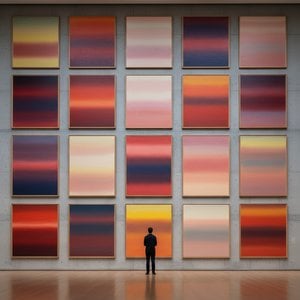
마크 로스코 최고작 25선을 만나보세요. 추상 표현주의 거장의 색채로 표현된 심오한 감정과 예술의 세계를 탐험하고, WahooArt에서 명화 복제본과 특별한 인테리어 아이디어를 찾아보세요. 지금 바로 컬렉션을 확인하세요!

Explore 10 iconic paintings dominated by black tones, from Rembrandt’s chiaroscuro to Goya's dark expressions. Discover the stories behind these masterpieces & find museum-quality art reproductions for your home at .

카지미르 말레비치의 최고작 25선을 만나보세요. 추상 미술의 혁신적인 세계, 슈프레마티즘의 정수를 담은 작품들의 이야기와 영감을 WahooArt에서 경험하세요. 고품질 아트 프린트와 인테리어 데코 아이디어를 지금 바로 확인하세요! WahooArt.com

Journey through Wassily Kandinsky's 25 most iconic abstract paintings. Explore his revolutionary use of color, form & spiritual expressionism. Find museum-quality Kandinsky reproductions and elevate your home decor with WahooArt.com. Discover all masterpieces on WahooArt.com!
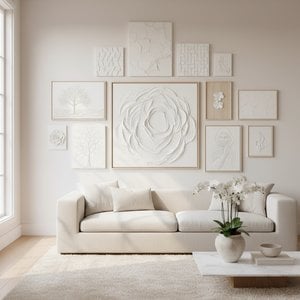
Explore 10 iconic white paintings by Monet, Whistler & Rothko! Discover the stories behind these serene masterpieces and their impact on art history. Find museum-quality reproductions for your home decor at .

 실제 크기로 보기
 보내기
보내기 공유하기
공유하기
 상세 보기
상세 보기 가이드 보기

 이미지 다운로드
 유사 작품 더 보기
 X-레이
X-레이 슬라이드 쇼 보기
 통계 정보
통계 정보


 상세 보기
상세 보기









 유리 옵션은 110cm 미만 크기에서만 선택 가능합니다.


