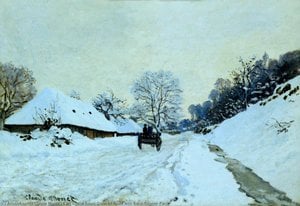
A Glimpse of Parisian Life: Monet’s “Untitled (989)”
Claude Monet's "Untitled (989)," a captivating depiction of a bustling city street, offers more than just a snapshot of urban life in late 19th-century Paris. It’s a vibrant testament to the Impressionist movement’s core philosophy – capturing fleeting moments and the subjective experience of light and color. This particular work, painted around 1885, embodies Monet's fascination with the interplay between observation and perception, inviting us into a scene brimming with energy and quiet contemplation simultaneously. The painting isn’t simply a record of a street; it’s an evocation of atmosphere, a distillation of the sensory experience of being present in that specific place at that particular time.
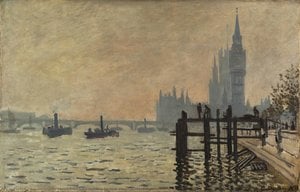
The composition is remarkably dynamic. A broad avenue unfolds before us, populated by figures engaged in their daily routines – men and women strolling, perhaps heading to work or simply enjoying the afternoon. The architecture behind them—a substantial hotel building—provides a solid anchor for the scene, yet it’s rendered with Monet's characteristic loose brushstrokes and emphasis on color rather than precise detail. Notice how he doesn’t attempt to recreate the building’s exact form; instead, he uses blocks of color and broken lines to suggest its presence, contributing to the overall sense of movement and immediacy. The prominent American flag fluttering above the street is a subtle yet significant element, reflecting the growing influence of American culture in Paris during this period and adding a layer of patriotic sentiment to the scene.
Impressionism: Light, Color, and the Fleeting Moment
Monet’s approach to painting—often referred to as “plein air” or working outdoors—was revolutionary for its time. He sought to capture not just what he *saw*, but how he *felt* about what he saw. This is vividly demonstrated in "Untitled (989)" through the use of broken color and short, visible brushstrokes. Rather than blending colors smoothly on the palette, Monet applied them directly to the canvas, allowing the viewer’s eye to mix them optically. This technique creates a shimmering effect, particularly noticeable in the reflections on the street surface and the dappled light filtering through the buildings. The painting is bathed in a warm, golden light, characteristic of Monet's later work, suggesting either early morning or late afternoon – times when the light is most diffuse and atmospheric.
The artist’s training under Eugène Boudin, who championed *en plein air* painting, was instrumental in shaping this approach. Boudin instilled within Monet the understanding that true observation required direct engagement with nature, a departure from the academic tradition of studio-based painting. This commitment to capturing the ephemeral qualities of light and color is what defines Impressionism and distinguishes it from earlier artistic styles.
Symbolic Layers and Historical Context
Beyond its immediate visual appeal, “Untitled (989)” offers a glimpse into the social and cultural landscape of late 19th-century Paris. The bustling street scene reflects the rapid urbanization and industrialization that were transforming the city at this time. The presence of the American flag speaks to the growing transatlantic exchange of ideas and influences, as well as the increasing prominence of the United States on the world stage. It’s a period of significant change and dynamism, mirrored in Monet's art.
Interestingly, this painting is part of a series by Monet focused on capturing scenes from Argenteuil, a town near Paris where he lived for several years. This series demonstrates his consistent interest in portraying the everyday life of ordinary people within the context of their surroundings. The work’s lack of a specific title further emphasizes its focus on capturing a general feeling and atmosphere rather than a particular subject or event.
Bringing Monet's Vision Home: A High-Quality Reproduction
WahooArt offers meticulously crafted, hand-painted reproductions of Claude Monet’s “Untitled (989)” that faithfully capture the artist’s unique style and luminous palette. Our skilled artisans use archival-quality materials to ensure that these reproductions will retain their beauty and vibrancy for generations to come. Whether you're an art enthusiast, a collector seeking to expand your collection, or simply someone looking to add a touch of Impressionist elegance to your interior décor, our reproduction provides an authentic and accessible way to experience the magic of Monet’s vision. Explore the artwork further on our website: https://www.WahooArt.com/en/art/claude-monet-untitled-989-9GETKQ-en/



 미리보기
미리보기
 손으로 그린 그림 구매
 공유하기
공유하기 공유하기
공유하기
 상세 정보
상세 정보

 다운로드
다운로드
 유사 작품
유사 작품 X-레이
X-레이 슬라이드 쇼
 더 보기
더 보기






































 유리 옵션은 110cm 미만 크기에서만 선택 가능합니다.